

TL;DR
- A form submission is not PPC success. One account showed a 5.8% conversion rate and a $10.12 CPA, yet only 0.5% of leads became opportunities and ROI after six months was minus $21,812.
- CRM integration is the most valuable fix. Create conversion actions for every CRM lifecycle stage, keep them as secondary, and add them to monthly reporting.
- PPC shouldn’t live only at the bottom of the funnel. Brand awareness, demand generation, demand capture, sales support and customer retention can all use paid media.
- The ad platforms aren’t built for B2B. Low conversion volume, long sales cycles, high CPCs and niche products all work against automated bidding.
- Three settings help: micro conversions, data-driven attribution instead of last click, and a conversion window that matches your sales cycle.
About the Session
- Event: PPC.London 2026
- Date: 25 September 2026
- Venue: De Vere Grand Connaught Rooms, London
PPC.London is a one-day, in-person conference built around practitioners who run paid search accounts. Sessions are deliberately short and focused on what works inside real accounts.
About the Speaker
Sophie Logan is Community & Editorial Manager / PPC Specialist at Rough Agenda, the team behind brightonSEO, Hero Conf and MeasureFest, where she helps shape the speaker line-up and content. She also works with lead gen and B2B brands through her own business, MarketingSoph. She is a Diamond Google Ads Product Expert, a regular contributor to Search Engine Land, and was ranked 12th in the Top 50 Most Influential PPC Experts of 2026.
Her own client base is mostly B2B and software brands, and the whole talk came from that perspective.
Where Strategies Go Wrong 1: Focusing on Quantity Rather Than Quality
Sophie opened one section with a provocative slide: “Why I’m okay with a 0.87% conversion rate.”
She tells most new clients that PPC will probably look worse once she has looked into it. In her words, that happens nine times out of ten.
Her example: an account with a 5.8% conversion rate and a $10.12 CPA. The client was delighted with the dashboard. Then she followed the leads through. Only 0.5% became opportunities, and after six months the ROI was minus $21,812.
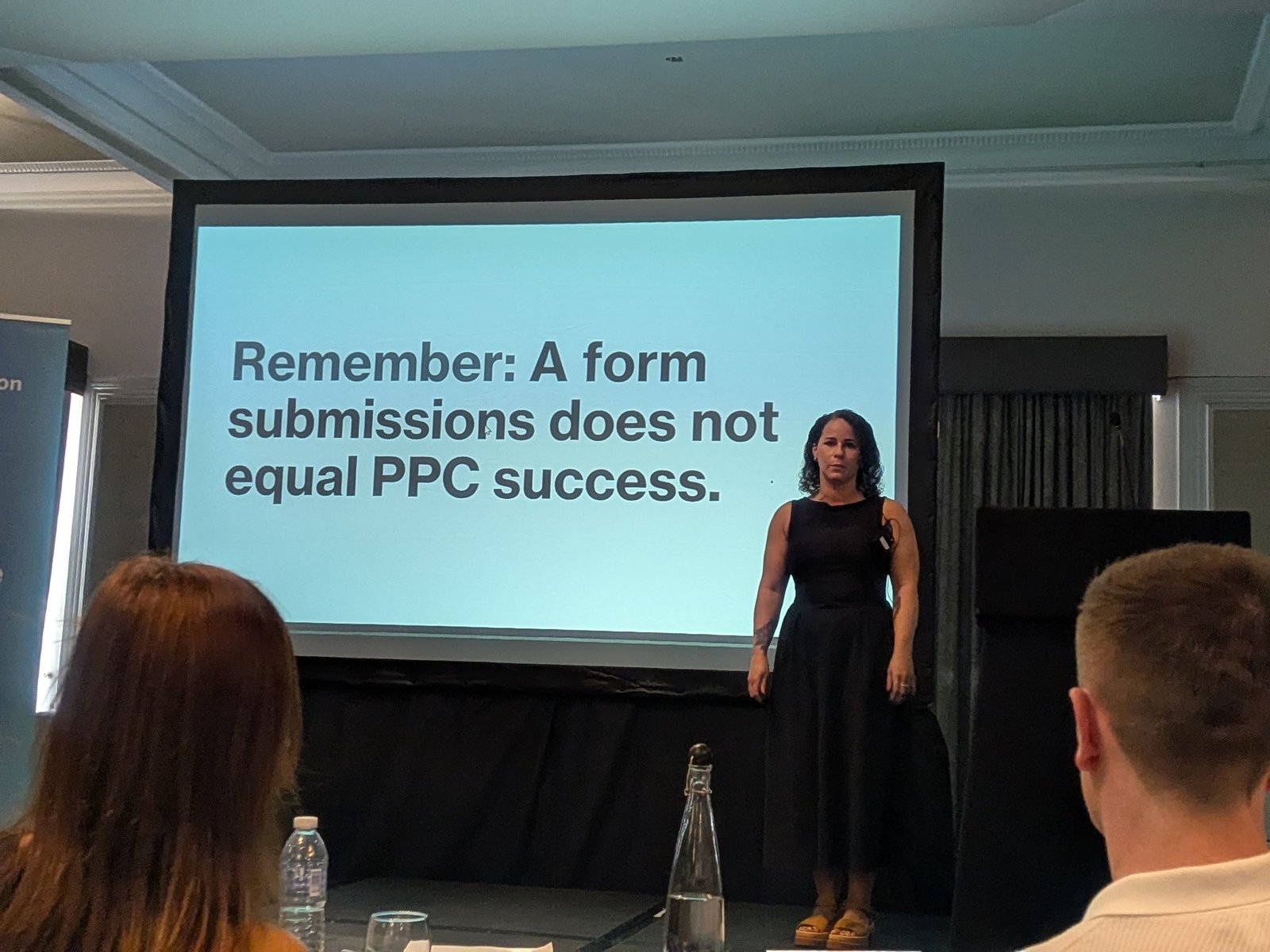
Her fixes:
- Integrate your CRM. It isn’t quick. It isn’t easy unless you use Salesforce or another leading CRM. It can disconnect without warning and lose conversion data. It is still the most valuable thing a B2B account can have, and she is surprised how often it is missing.
- Track actions beyond form submissions. Create conversion actions for all CRM lifecycle stages, such as SQL, SAL, opportunity and customer, so you can see the quality of your leads. Set them as secondary. Add them to your monthly reporting, and educate stakeholders on what the numbers mean.
- If you can’t integrate, check manually. At a previous business, on the first of every month she went into HubSpot, pulled the PPC leads and asked the sales team where each one stood. Old-fashioned, but it showed her the real quality of her leads.
- Turn on enhanced conversions. She disliked them at launch because of the idea of handing Google more data. Now she loves them: they match your first-party data to recover conversions that would otherwise go unrecorded, and feed more data to the platform. In her accounts, she sees roughly a 5 to 6% increase in conversion volume reported in Google Ads.
Where Strategies Go Wrong 2: Only Using PPC at the Bottom of the Funnel
Sophie was open about one reason she pushes PPC into every stage of the strategy: job security. If she only captured existing demand, she believes clients would eventually cut her. Her more serious point is that PPC for B2B isn’t just for capturing demand.
Her stages (she acknowledged others use different terms):
- Brand awareness. Subtle, educational and insightful, “giving”. Free and ungated, with no strings, while building lists for later. Her example was Kiuwan, which ran a display ad offering a free secure code guide without even asking for an email address.
- Demand generation. Introduce the product or service, address pain points, and offer the solution. Lookalike audiences, solution-based messaging and trust. Her example was a short Demandbase video on YouTube. She admitted she didn’t follow the content, but the right audience would. Demand Gen campaigns in Google Ads support lookalike audiences, so you don’t have to go to LinkedIn for this. Her advice for B2B: take your current customer list, build a lookalike, test Demand Gen, ideally with video.
- Demand capture. Why us, stronger CTAs, and a push to act now. Search campaigns stay essential here. Copy is crucial, use assets, and optimise. Her example was a Beauhurst search ad. She urged the room to write ad copy themselves, or at least check what Google generates, and to keep a routine for optimising responsive search ads. You get one chance at that searcher’s attention.
- Sales support. For her, this is where the job almost begins, because B2B sales cycles are long. Target active leads, build trust, and use persuasive content such as customer quotes and reviews. Sales teams appreciate knowing marketing still has their back.
- Customer retention. Encourage usage and involvement with user guides, feature announcements and webinars. At renewal, clients look at how much the platform was actually used before paying the bill, so she keeps users logging in.
As budgets tighten, PPC is often the first line businesses look at cutting. Her slide summed it up: PPC can play a pivotal role in all stages of the marketing journey.
Where Strategies Go Wrong 3: Expecting PPC Platforms to Automatically Be B2B Friendly
In Sophie’s view, the platforms aren’t made for B2B, aren’t made for lead gen, and definitely aren’t made for B2B lead gen. But with a few tweaks they can be better. The common challenges:
- Low conversion volume. One of her clients gets about five conversions a month. That is a good result for them, but it isn’t enough data for the platform.
- Long sales cycles. One client’s average is 183 days.
- High CPCs, often on searches that turn out to be irrelevant.
- Niche products or services. Selling an account-based marketing tool is much harder than selling a pair of trainers.
Her three tweaks:
1. Micro Conversions
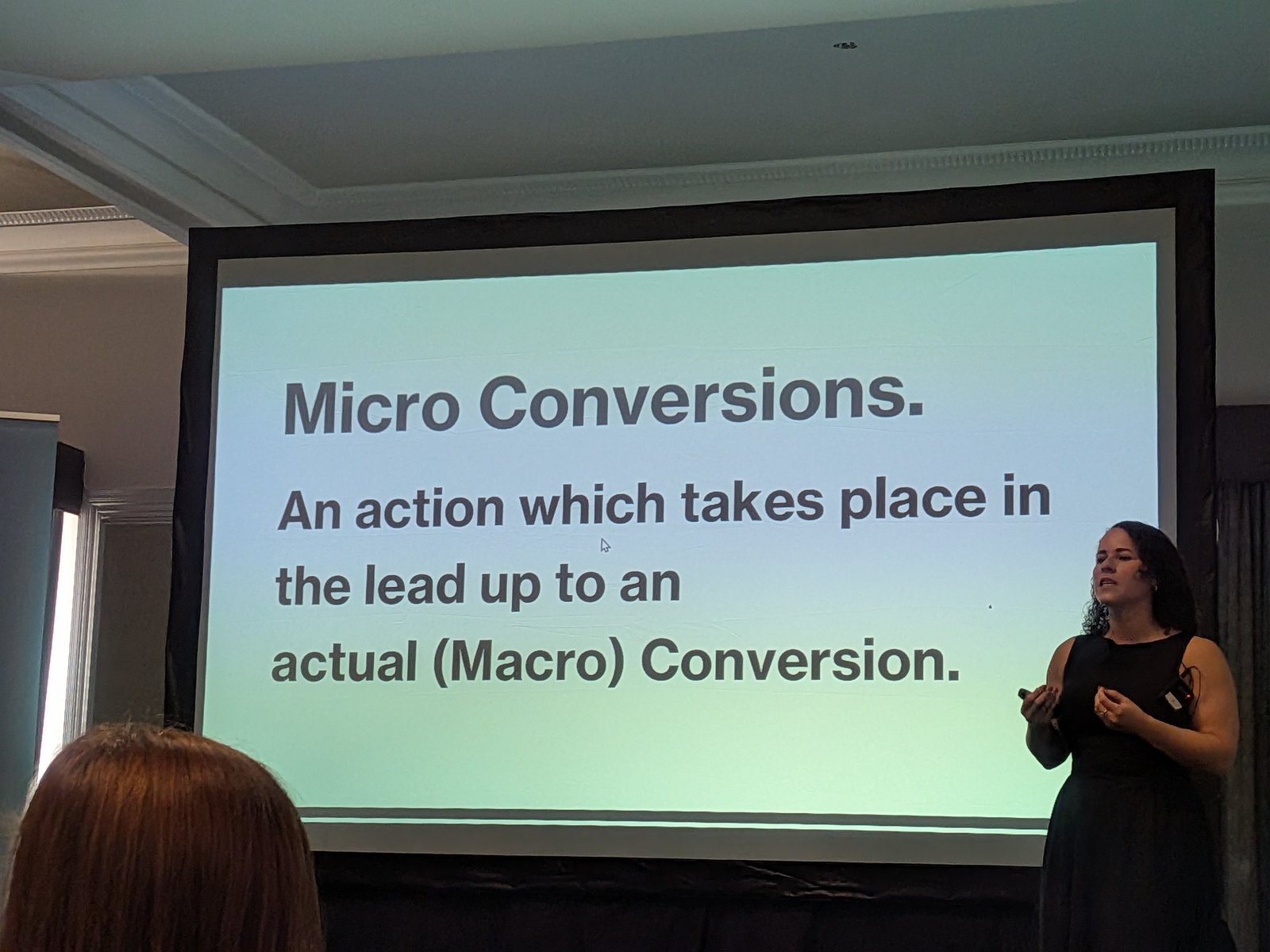
A micro conversion is an action that takes place in the lead up to an actual (macro) conversion, such as visiting the pricing page or starting to fill in a form. In her experience, automated bidding needs around 30 conversions in 30 days to work well, and she will never get there for her clients with final conversions alone.
Set them up in Google Ads and mark them as primary so bidding actually counts them. The caveat: she has had a client get very excited about a jump in conversions that turned out to be micro conversions. Keep your reporting clean by segmenting by conversion action.
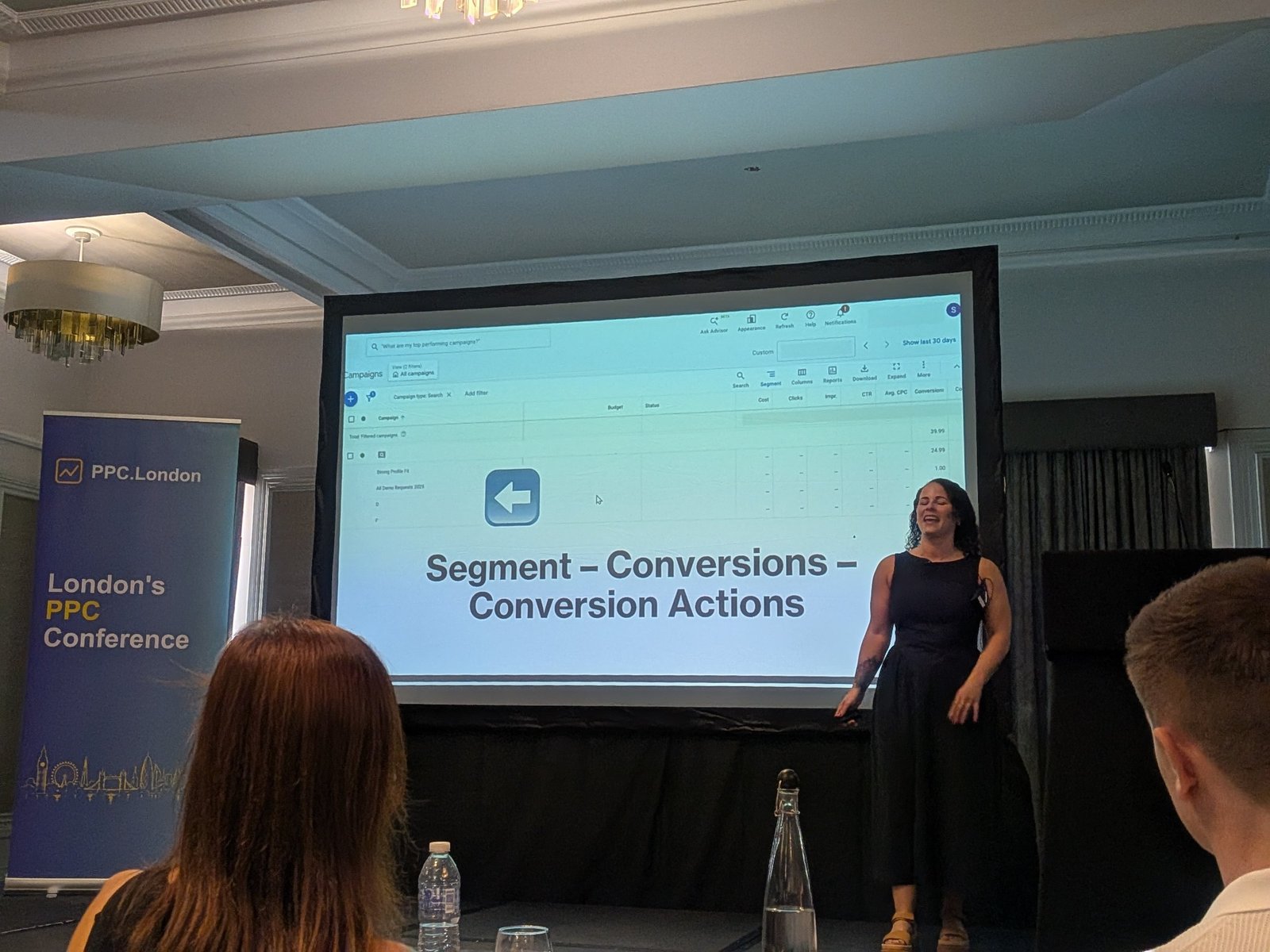
2. Attribution
Her slide was simple: let go of last click and embrace data-driven attribution. She audited a large account last year that still used conversion settings from the days when Google Ads was called AdWords. Take five minutes with a coffee, open your conversion settings, and check which attribution model you are using.
3. Conversion Window
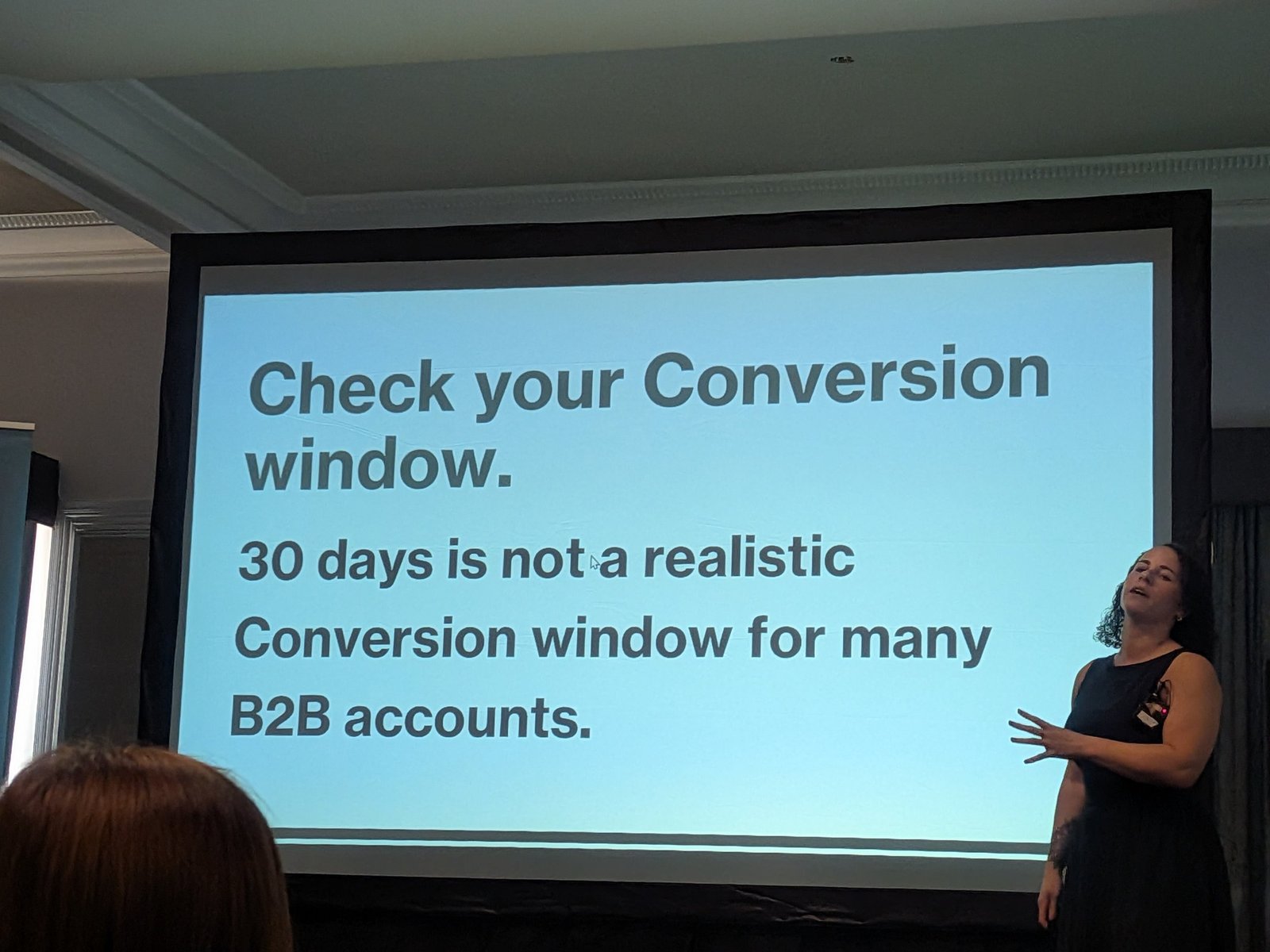
The default is 30 days. Her example: if it takes 43 days to convert and you use a 30-day window for a “new customer” conversion, your campaign gets nothing. The platform never learns that the click worked, and your hard work shows up as nothing to stakeholders. Google Ads lets you raise the click-through window to 90 days, which solves the problem for many accounts.
For conversion lags beyond 90 days, such as 100 days or, for one of her clients, over a year, she recommends paying for an external tool. She sees it as worth setting aside a small part of the monthly budget, because without it you may be missing leads, missing ROI, or wrongly concluding that PPC isn’t working.
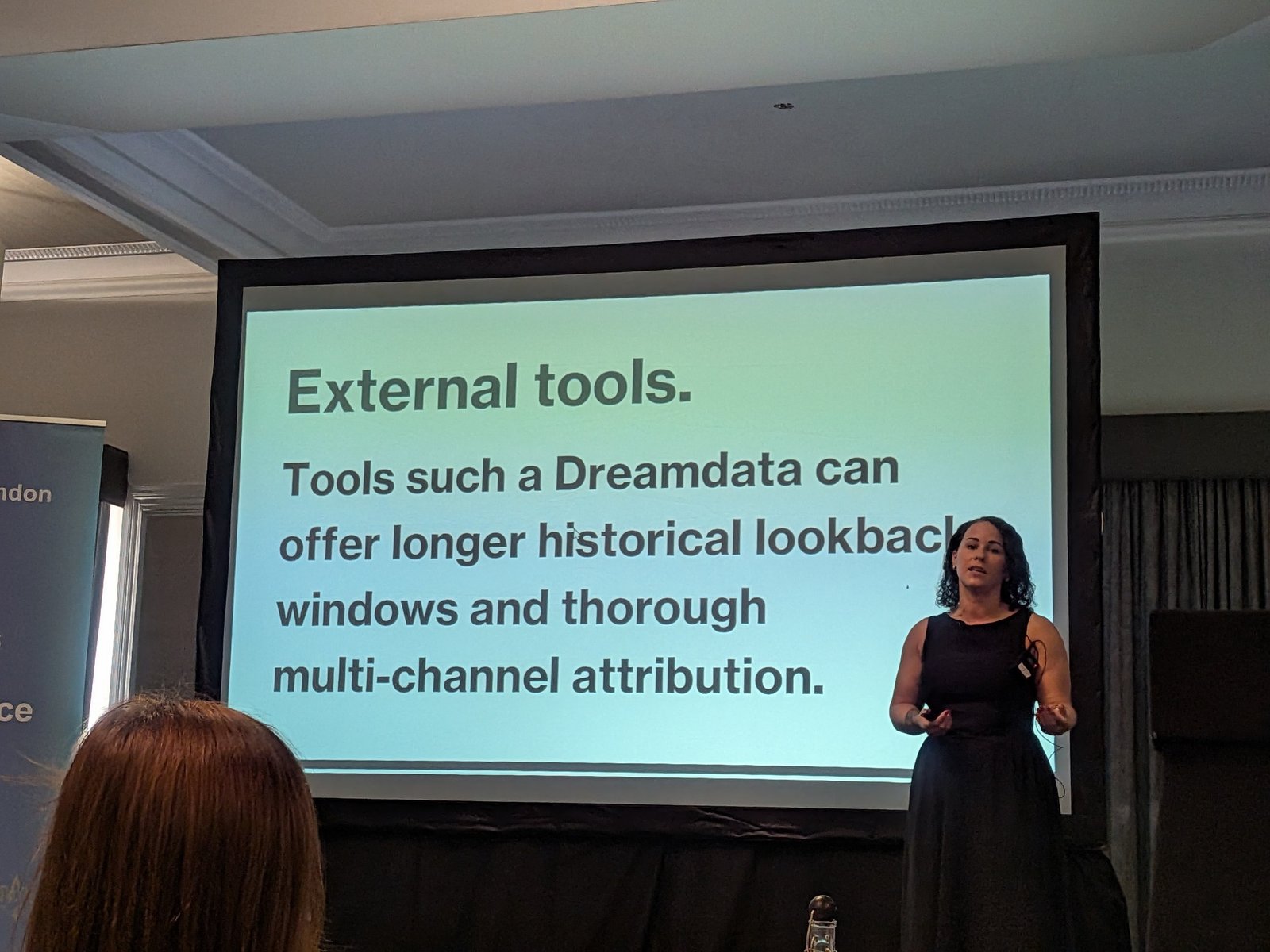
She uses Dreamdata for its long historical lookback window. She admitted its multi-channel attribution can feel like a lot, but in her view paying to see what is really happening beats keeping your fingers crossed. Her closing line for this section: make sure you’re not underselling your work because of ineffective settings.
Summary: Three Things to Take Away
Sophie closed with three points.
- Conversion quality is queen. Report on the quality of conversions. Radical honesty is hard, but it matters for everyone involved. She has taken on clients who believed PPC was working well, only for her to find it was losing them money. That conversation is uncomfortable, but facing what is actually happening is better for your own progress and for your clients.
- Full strategy involvement. Be there throughout the journey, and make PPC an integral part of all marketing efforts.
- B2B friendly settings. Google, Microsoft and LinkedIn aren’t made for B2B, especially for niche products and services. It will never be perfect, and she would love to see an ad platform made specifically for B2B. Until then, small tweaks can make a big impact on results.
From the Q&A: Micro Conversions in Practice
An audience member asked whether she sets conversions at campaign level or lets them apply across the whole account.
Sophie said her situation is simple. Her clients are software companies that mainly want a demo booking or a contact form submission, so her conversion setup is straightforward and she leaves the conversions running across the account.
She still watches them, as with anything automated. She has seen a pricing page micro conversion drive growth in clicks that didn’t turn into real leads. Overall she trusts them, because with only around five conversions a month, having some signal is better than none. Her closing advice: if you use micro conversions, don’t set them and forget them.
What Not to Do
- Don’t judge success by form submissions. Follow leads through to opportunities and revenue.
- Don’t run B2B PPC without CRM data. If integration isn’t possible yet, check lead status with sales every month.
- Don’t limit PPC to capturing demand. An account that only works at the bottom of the funnel is the easiest line to cut.
- Don’t publish AI-generated ad copy unchecked. You only get one chance at a searcher’s attention.
- Don’t let micro conversions inflate your reports. Segment by conversion action before sharing results.
- Don’t leave attribution on last click or the conversion window at 30 days. Match settings to your real sales cycle.
Next Steps
- Check whether your CRM is connected to Google Ads. If it is, add each lifecycle stage as a secondary conversion action. If it isn’t, list which stages you could send back first.
- Pick last month’s PPC leads and ask sales what happened to each one. This gives you a quality baseline in an afternoon.
- Turn on enhanced conversions. Then compare reported conversion volume before and after.
- Define two or three micro conversions. Pricing page visits and form starts are good candidates. Set them as primary and add a segmented report.
- Open your conversion settings. Check the attribution model and the conversion window against your average sales cycle.
- Map your campaigns to funnel stages. If everything sits in lead generation, plan one test in awareness or retention.
Personal Takeaways
I’ll be honest, I went in slightly worried I wouldn’t keep up with a PPC talk. I came out with ideas I can use across marketing as a whole.
Following lead quality all the way through the CRM is exactly the same thinking we need in SEO. The idea that every channel should play a role at every stage of the funnel applies far beyond paid media. And Sophie’s point about being honest with clients, even when the numbers aren’t great, is one I really want to hold on to.
Related Resources
- Slide deck: Your B2B PPC Strategy Isn’t Working (Speaker Deck)
- PPC.London 2026 speaker line-up
- Speaker: Sophie Logan (PPC.London)
- Sophie Logan on brightonSEO
- Sophie Logan’s articles on Search Engine Land
- Dreamdata: the B2B attribution tool she uses for long lookback windows
- Rob Evans’ session report: the next session, on why Google Ads conversions so often don’t match business value
- Azeem Ahmad’s session report: why UK and US customers behave so differently, and how search behaviour has split into four paths
Written by Ayaka Uchida
CEO, A-Digital Works
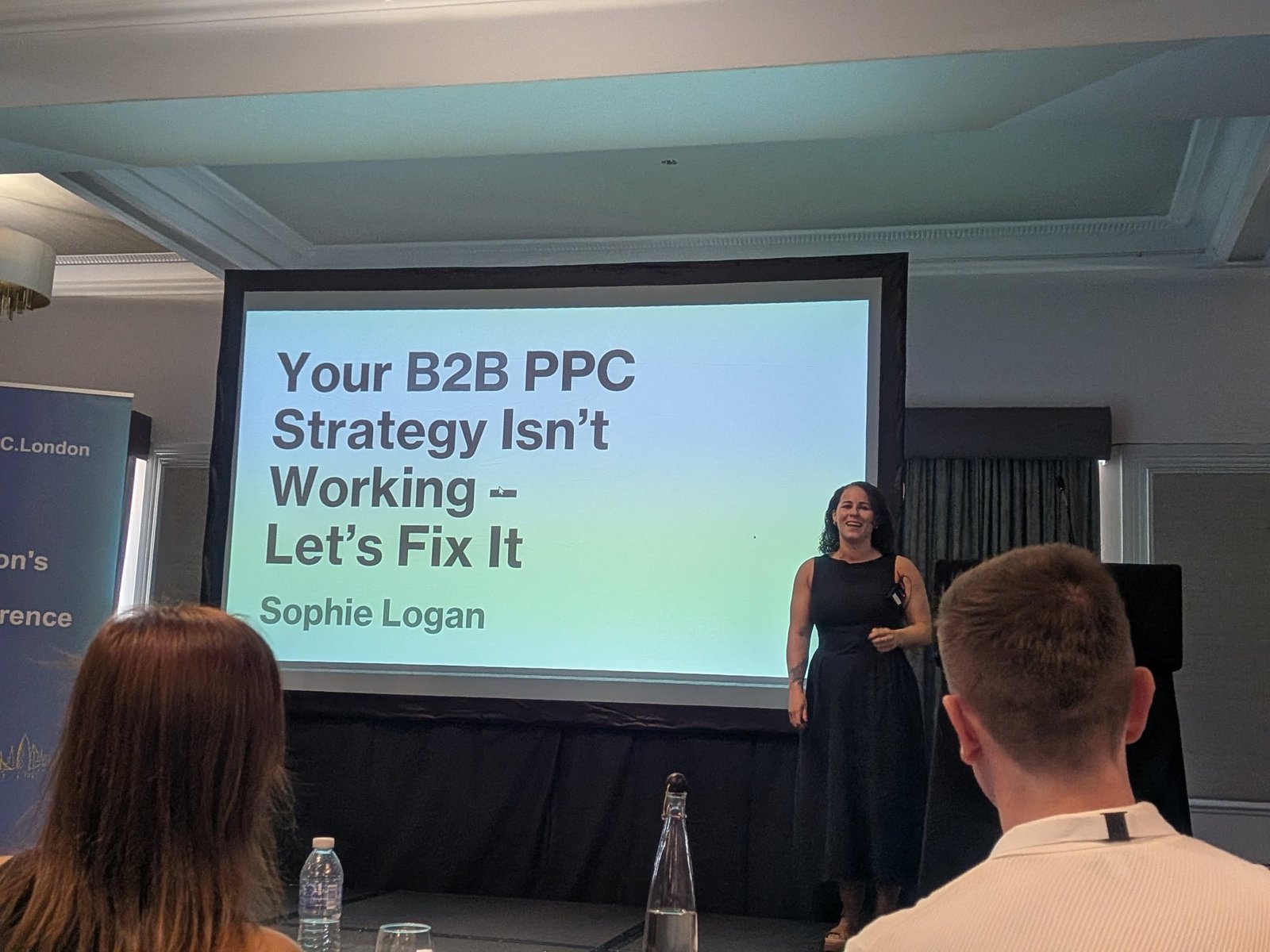
This report covers Sophie Logan’s session “Your B2B PPC Strategy Isn’t Working, Let’s Fix It” at PPC.London 2026, 25 September 2026.
