

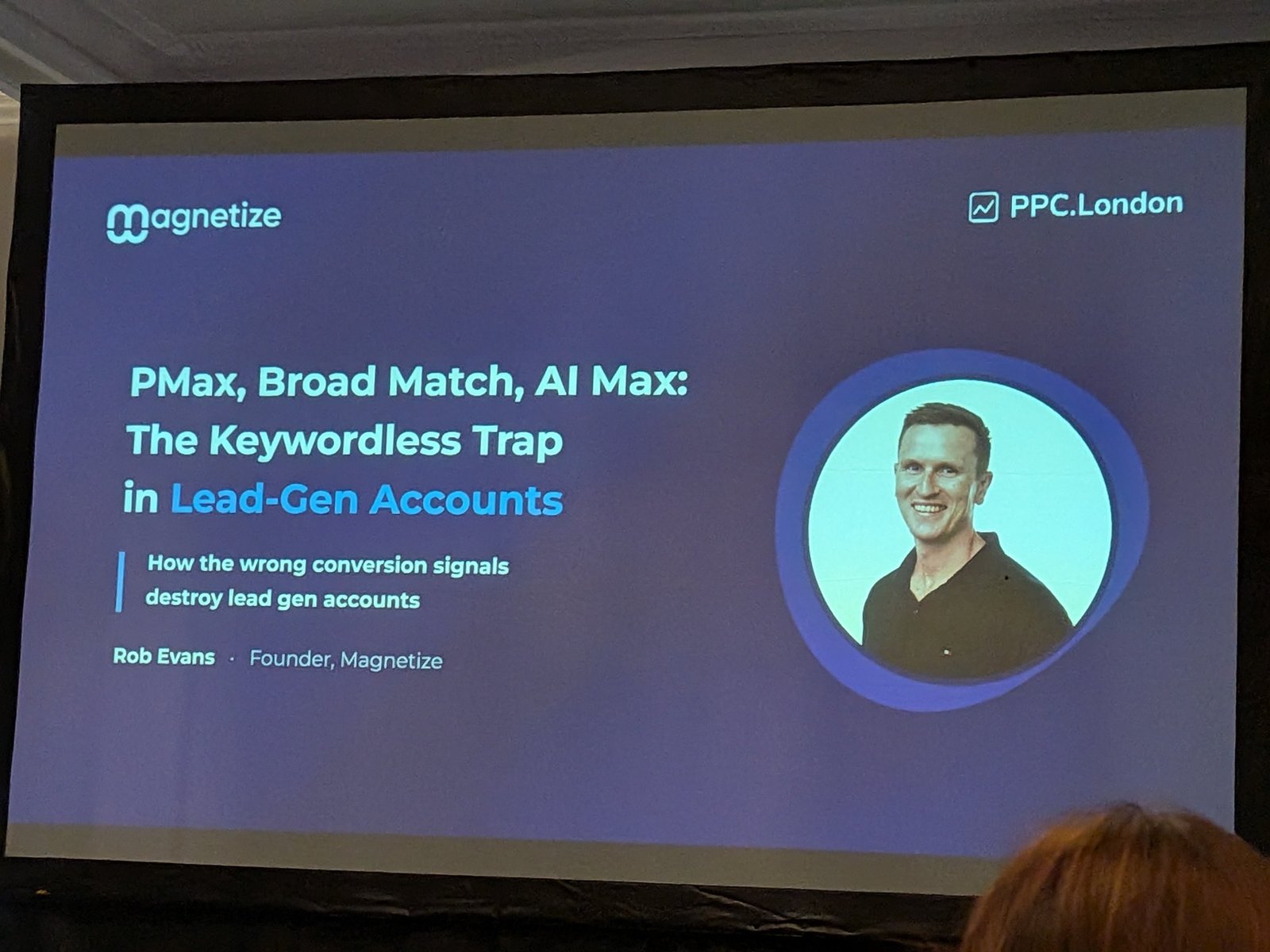
TL;DR
- Google Ads conversions often don’t match business performance. In lead gen, conversions can climb while real sales fall.
- Google’s bidding does exactly what you ask. If job seekers or bots are the cheapest conversions available, that is what it will find.
- Broad match, PMax and AI Max make this worse. Their reach is too wide for negative keywords to keep up, so the conversion signal is the main lever left.
- CRM integration fixes the signal. Sending only qualified enquiries, or lifecycle stages with values, back to Google Ads changes what the algorithm learns.
- Funeral plan case study: cost per sale fell from £1,253 to £845, monthly sales rose from 74 to 149, and PMax grew from 20% to 80% of the account.
- Home care case study: after CRM integration, the form fill to sale conversion rate rose from 6.8% to 13.2%.
- No CRM? Adjust conversion values. Valuing a form fill above a low-intent call cut calls from ads from 35 to 7 and lifted form fills from 3 to 22 in three weeks.
About the Session
- Event: PPC.London 2026
- Date: 25 September 2026
- Venue: De Vere Grand Connaught Rooms, London
The talk walked through four real client accounts in home care, fertility, funeral plans and mortgages. In each one, the dashboard said things were going well while the business said otherwise.
About the Speaker
Rob Evans is the founder of Magnetize, a PPC agency specialising in service businesses with complex buying journeys, including healthcare, financial services, and funeral care. He has worked in PPC for over 15 years, building lead-gen accounts around value-based bidding and CRM-to-Google-Ads integrations. His work has won multiple industry awards, including Best Use of Search in Healthcare (UK Search Awards) and Best Use of Lead Generation in Search (UK Paid Media Awards).
Before Magnetize, he held marketing leadership roles in service businesses. Three years ago, Magnetize was a one-person agency.
The Problem: Conversions Up, Business Down
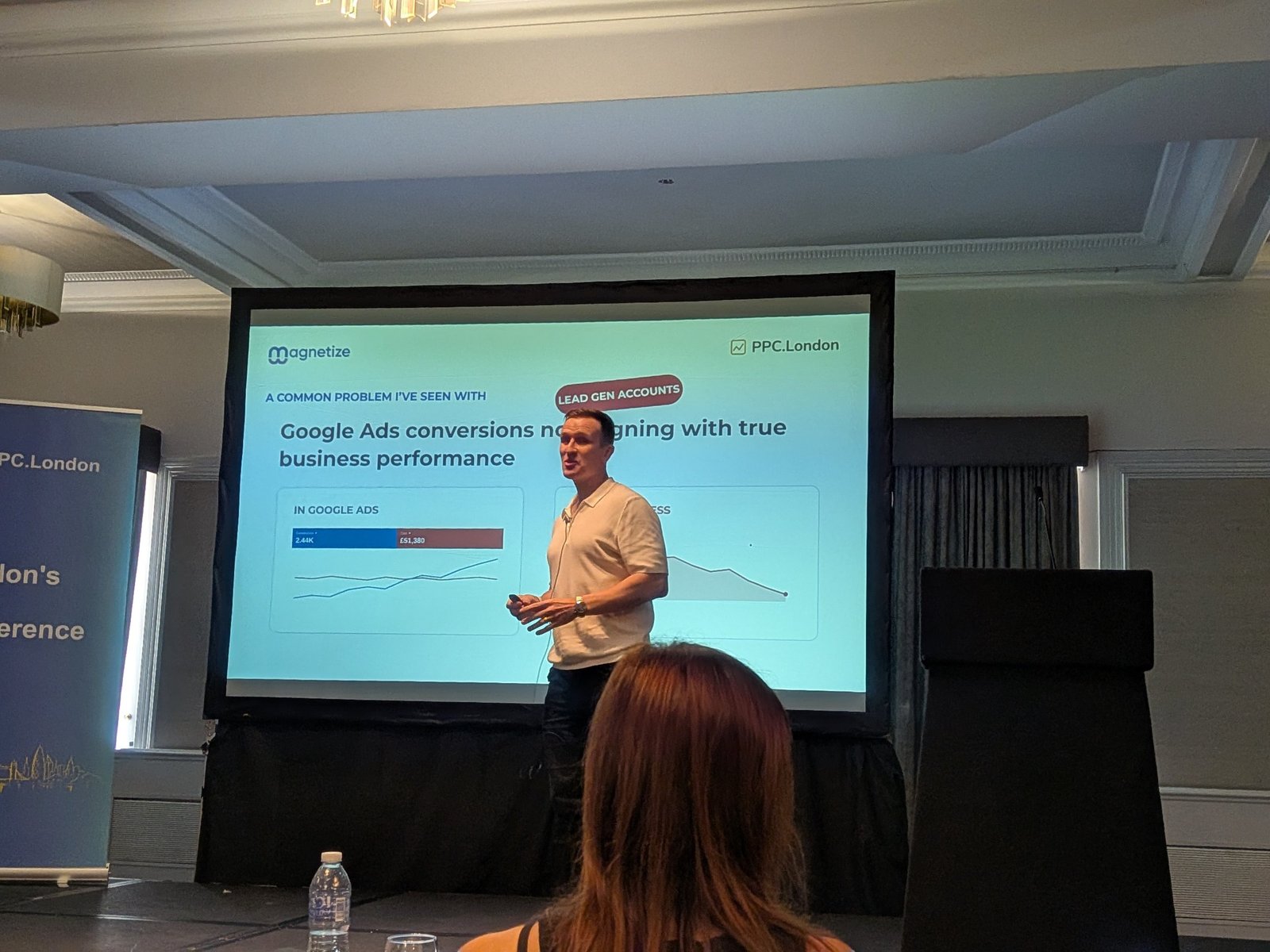
Rob opened with the most common problem he sees in lead gen accounts: conversions in Google Ads can be very high while actual business performance is dropping. When he asked the room who had seen this, plenty of hands went up.
Case 1: The Home Care Provider and the Job Seekers
Three years ago, Rob pitched for his first major lead gen client, a national home care provider spending around £50,000 a month on Google Ads. PPC was performing so badly that they were considering switching it off.
The account ran only exact and phrase match search campaigns and relied mainly on lead forms. Form completions looked healthy in Google Ads, but the business was declining. When he spoke to the sales and marketing teams, the same complaint kept coming up: too many job seekers were filling in the forms.
He tried three fixes in turn:
- Negative keywords. He excluded “jobs”, “careers” and every related term he could think of as phrase match negatives. It didn’t work, because job seekers were searching the same terms as customers, such as “home care”, clicking ads written for customers, and landing on pages built for customers.
- A qualifying question on the form. If someone answered yes to “Are you looking for a care job?”, the submit button disappeared and a link to the job application page appeared instead. Job seekers simply answered no.
- CRM integration. This was the fix that worked.
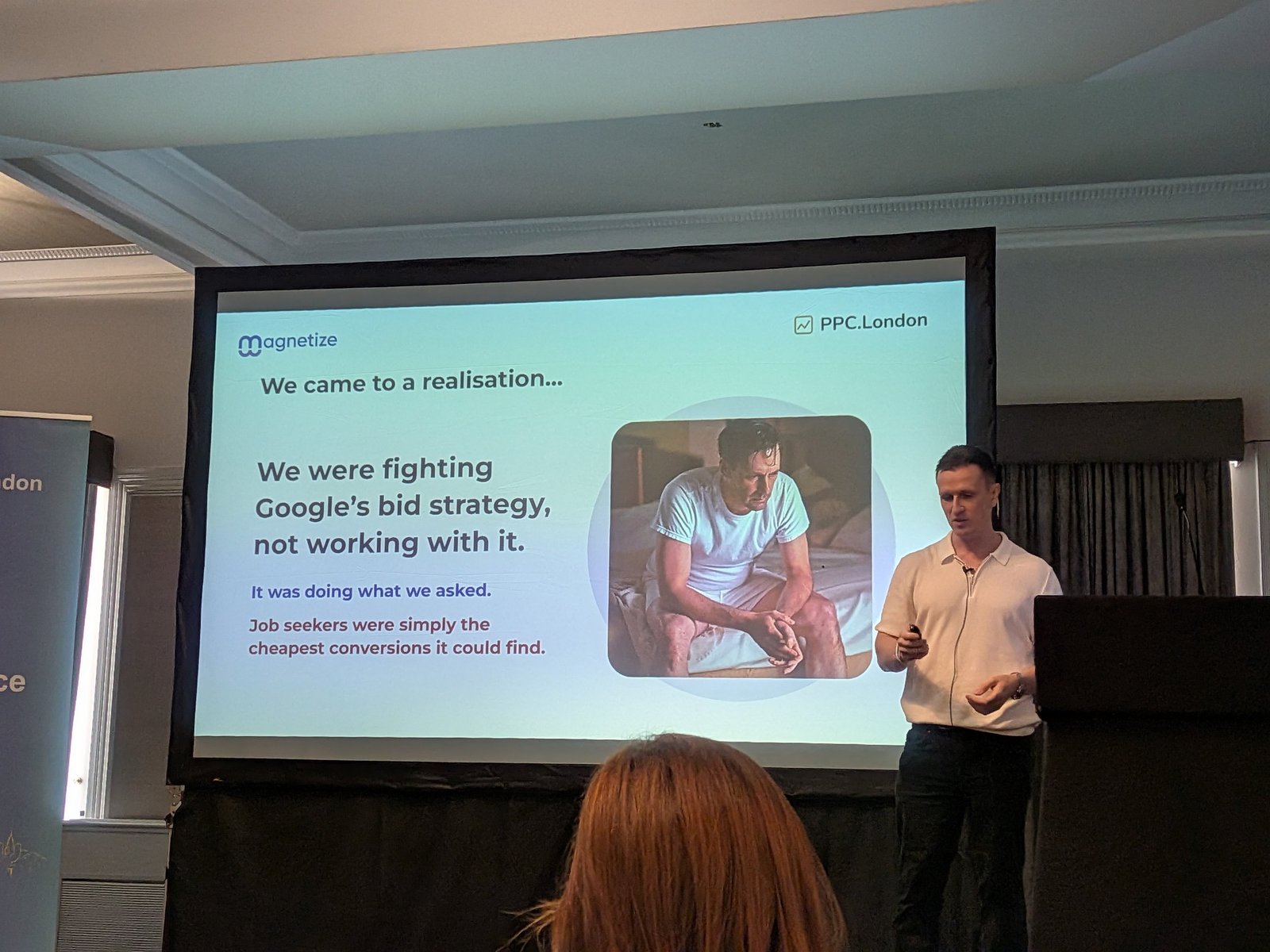
The turning point was a realisation: they were fighting Google’s bid strategy, not working with it. Google was doing what it was asked. Job seekers were simply the cheapest conversions it could find. Because healthcare is regulated, first-party audience targeting was limited, so integration was the only option left.
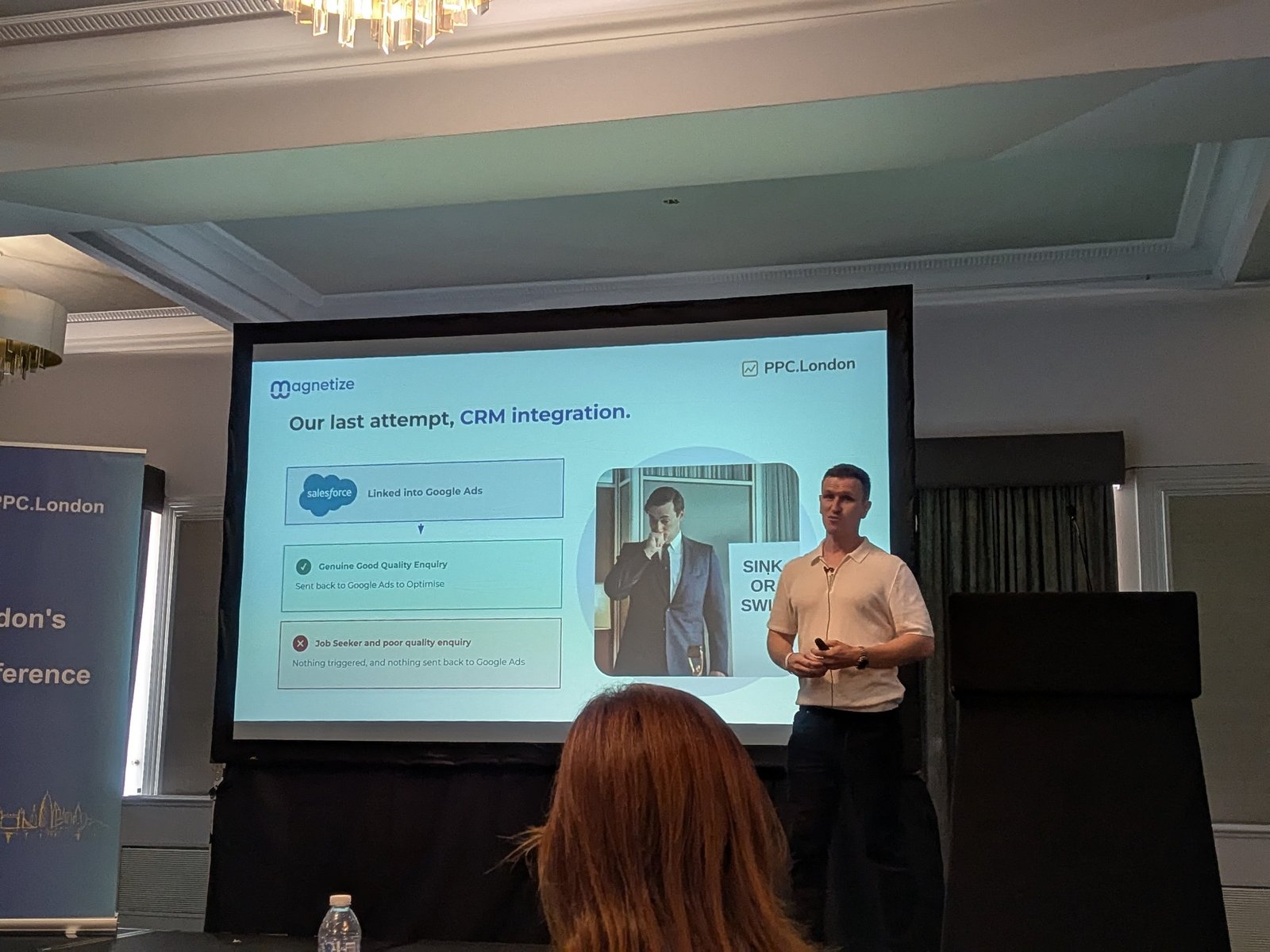
Getting there took time. In a large organisation, it meant sign-off from several departments, then coordinating IT, the Salesforce team and Google’s tech team. Once live, the call centre phoned back every form enquiry. Genuine, good quality enquiries were marked with a new lifecycle stage and sent back to Google Ads. Job seekers and poor quality enquiries triggered nothing.
Job seekers and prospective customers have very different demographics, so this changed what Google optimised towards. The form fill to sale conversion rate rose from 6.8% to 13.2%, an increase of 95%. The client kept PPC running, scaled it, and is still a Magnetize client. The work won Best Use of Search in Healthcare at the UK Search Awards.
For Rob, this was the moment he understood how critical it is to match conversion signals to genuine business value.
Why Keywordless Campaigns Raise the Stakes
In the home care account, polluted conversion signals broke performance even with exact and phrase match and a long negative keyword list. Broad match, PMax and AI Max aren’t built for search term control. They cast the net far wider, so negatives can’t keep up and new irrelevant traffic keeps arriving.
Rob described these campaign types as a double-edged sword. Feed them the wrong signals and they learn from low quality traffic. Feed them the right signals and they learn from your actual customers. Either way, their extra reach means they will find more of that traffic, across far more places and searches.
Case 2: The IVF Provider and the Bot Calls
A national IVF provider was spending around £130,000 a month, mainly optimising for inbound phone calls. CRM integration had been recommended, but was still waiting on internal processes.
Last September, Google Ads reported a record month. Phone calls jumped from 581 in August to 1,025 in September, a 76% increase. Something didn’t look right. All the growth came from one PMax campaign, at a cost per call far lower than anything else in the account.
The channel breakdown told the story. Calls from display and YouTube had jumped from 11 to 754, and display and YouTube cost had risen from £3.3k to £19.5k. When the team checked with the business, genuine sales were down. The cause turned out to be bots triggering fake calls through display and YouTube inside PMax, something Rob says is fairly common.
The long-term fix sat with the call tracking provider. As a short-term fix, they optimised to form fills only, not calls. Spend on display and YouTube dropped, and spend on search went back up.
Case 3: The Funeral Plan Provider and Value-Based Bidding
Two years ago, with Magnetize now a team of three, Rob won a national funeral plan provider spending around £100,000 a month. This time, CRM integration was part of the plan from the start.
The starting point was poor. The account optimised for inbound calls and form fills with no CRM integration, and PMax was around 20% of spend. To break even, the business needed a cost per sale of £950. It was running at over £1,200, and PMax was even worse.
The team wired form fills, call tracking, the CRM and Google Ads together. Form fills and phone calls went into HubSpot, passing the Google Click ID through, and worked with the CMO to make sure the sales team updated lifecycle stages consistently. Without that, none of it works. Those stages were then sent back to Google Ads with values.
The values were built from the £950 margin:
- Marketing qualified lead: £95. One in ten MQLs became a customer, so an MQL was worth 10% of the margin.
- Sales qualified lead: £143. One in four SQLs became a customer, so 25% of the margin, minus the £95 already assigned at the MQL stage.
- Customer: £712, the remaining value.
£95 + £143 + £712 = £950.
All the stages added up to the actual margin. In Rob’s words, they were programming Google with the exact data it needed: this lead is more valuable, get more of it. Each stage also carries slightly different demographics and behaviour, which gives the algorithm more to learn from.
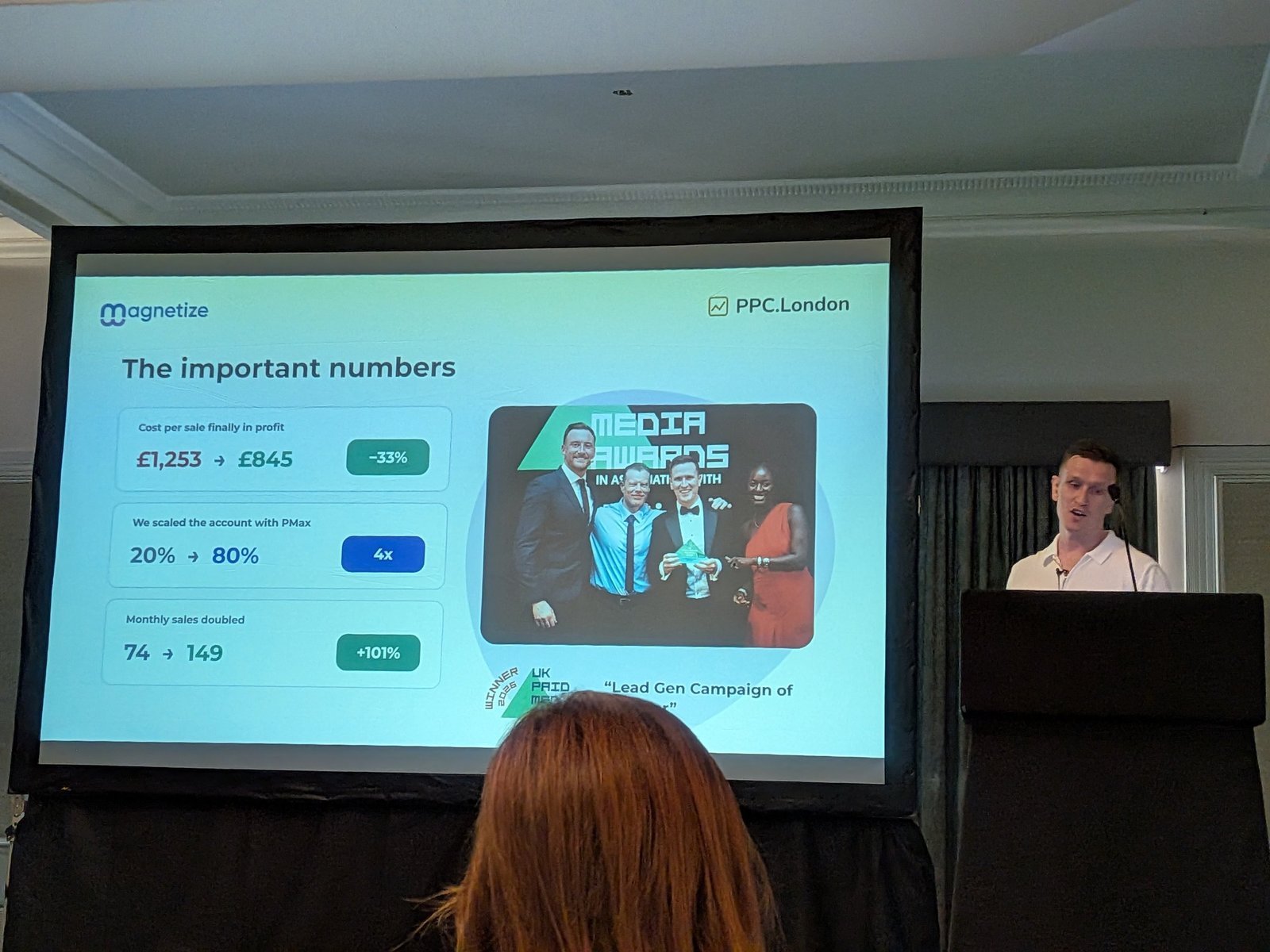
The results:
- Cost per sale: £1,253 to £845, a 33% reduction, and finally in profit. This was despite scaling the account, when diminishing returns usually push costs up.
- PMax share of the account: 20% to 80%. PMax now worked, and reached demand the account couldn’t reach before.
- Monthly sales: 74 to 149, a 101% increase.
Rob also asked Google for an independent benchmark study based on anonymised industry data. Covering October 2024 to September 2025, it showed industry CPCs rising 25% while theirs fell 45%, because they were buying traffic more efficiently. The campaign won Lead Gen Campaign of the Year at the UK Paid Media Awards 2026.
Case 4: The Mortgage Provider, Without a CRM
CRM integration isn’t always an option. Organisations can be slow, there may be no developer resource, or the budget may not justify it yet. Rob’s advice: play the cards you’ve been dealt.
This small mortgage provider ran search only, mainly on broad match, with no integration and no prospect of one. Form fills were their best leads and converted well, but volume had dropped. Meanwhile, there was a surge in calls for competitor services they didn’t even offer.
The account showed plenty of calls from ads and barely any form fills. These callers hadn’t even been on the website. There was no dynamic call tracking on the site either. The bid strategy was Maximise Conversions, which valued a call from an ad the same as a form fill.
The fix was simple:
- Lower the value of a call from an ad.
- Raise the value of a form fill.
- Switch to Maximise Conversion Value, so Google knows which conversion matters more.
Three weeks later, with the same budget and the same targeting, calls from ads fell from 35 to 7 and form fills rose from 3 to 22. The business confirmed that the calls for competitor services had stopped.
The Common Thread
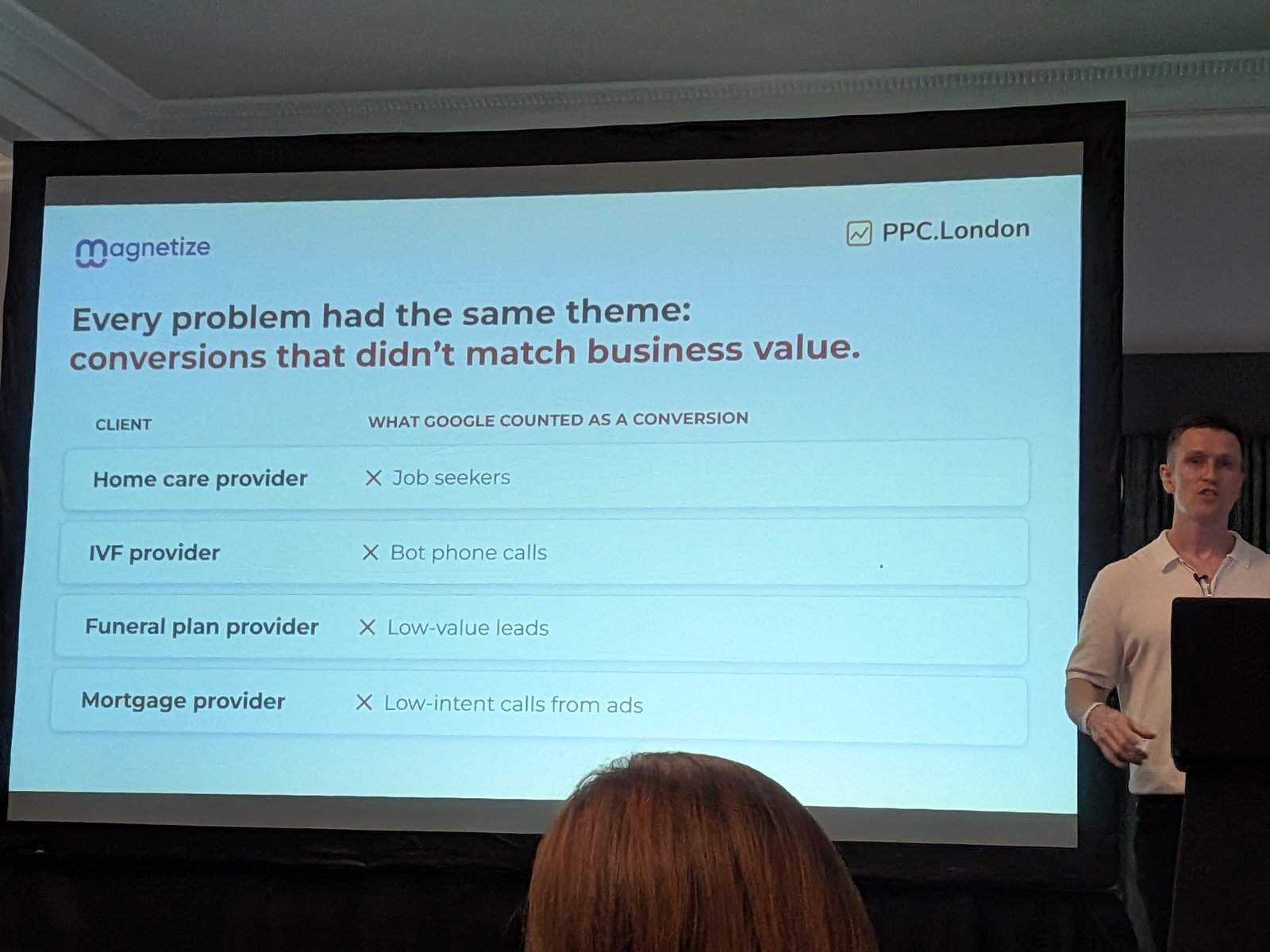
Every problem had the same theme: what Google counted as a conversion didn’t match business value.
- Home care provider: job seekers
- IVF provider: bot phone calls
- Funeral plan provider: low-value leads
- Mortgage provider: low-intent calls from ads
Every fix involved adjusting the conversion signal, because that was the main lever they had. Rob’s closing message: if you work in lead gen, don’t take Google’s conversions at face value. Always check them against what the business is actually seeing, and keep going back and forth with the client’s teams. Until true value and what Google sees are aligned, things can go wrong at any point.
What Not to Do
- Don’t judge performance on Google Ads conversions alone. Check them against real sales every month.
- Don’t rely on negative keywords to fix lead quality. Low quality users often search the same terms as your customers.
- Don’t expect form questions to filter people out. People answer whatever lets them submit.
- Don’t give every conversion the same value. A low-intent call and a strong form fill are not equal.
- Don’t celebrate a record month without checking the channel breakdown. Sudden growth in display and YouTube can be bots.
- Don’t scale PMax, broad match or AI Max on polluted signals. They will find more of the wrong people, faster.
Next Steps
- Compare last quarter’s Google Ads conversions with real sales. If the lines move in opposite directions, start there.
- Ask the sales or call centre team what bad leads look like. They often know the cause before the data shows it.
- Check the channel breakdown of every PMax campaign. Look for sudden jumps in display or YouTube conversions.
- List your conversion actions and their values. Make sure calls from ads, website calls and form fills aren’t all valued the same.
- If you have a CRM, map lifecycle stages to values. Work back from your margin so the stages add up to the real value of a customer.
- If you don’t, switch to Maximise Conversion Value with adjusted values. Then review lead mix after three weeks.
Personal Takeaways
What made this session so easy to follow was that all four case studies were real, and they came from completely different kinds of businesses: home care, fertility, funeral plans and mortgages.
The message that stuck with me most was simple: keep listening to what the client’s own teams are seeing. That matters just as much in SEO. Rankings and traffic can look great on a dashboard while the business tells a very different story, and the only way to know is to keep asking.
Related Resources
- Speaker: Rob Evans (PPC.London)
- Magnetize
- PPC.London 2026 speaker line-up
- Sophie Logan’s session report: the same day’s B2B talk, which also argues that a form submission is not PPC success and that CRM integration is the most valuable fix
- Azeem Ahmad’s session report: the session right after, on why UK and US customers behave so differently and how search behaviour has split into four paths
Written by Ayaka Uchida
CEO, A-Digital Works
This report covers Rob Evans’ session “PMax, Broad Match, AI Max: The Keywordless Trap in Lead-Gen Accounts” at PPC.London 2026, 25 September 2026.
