

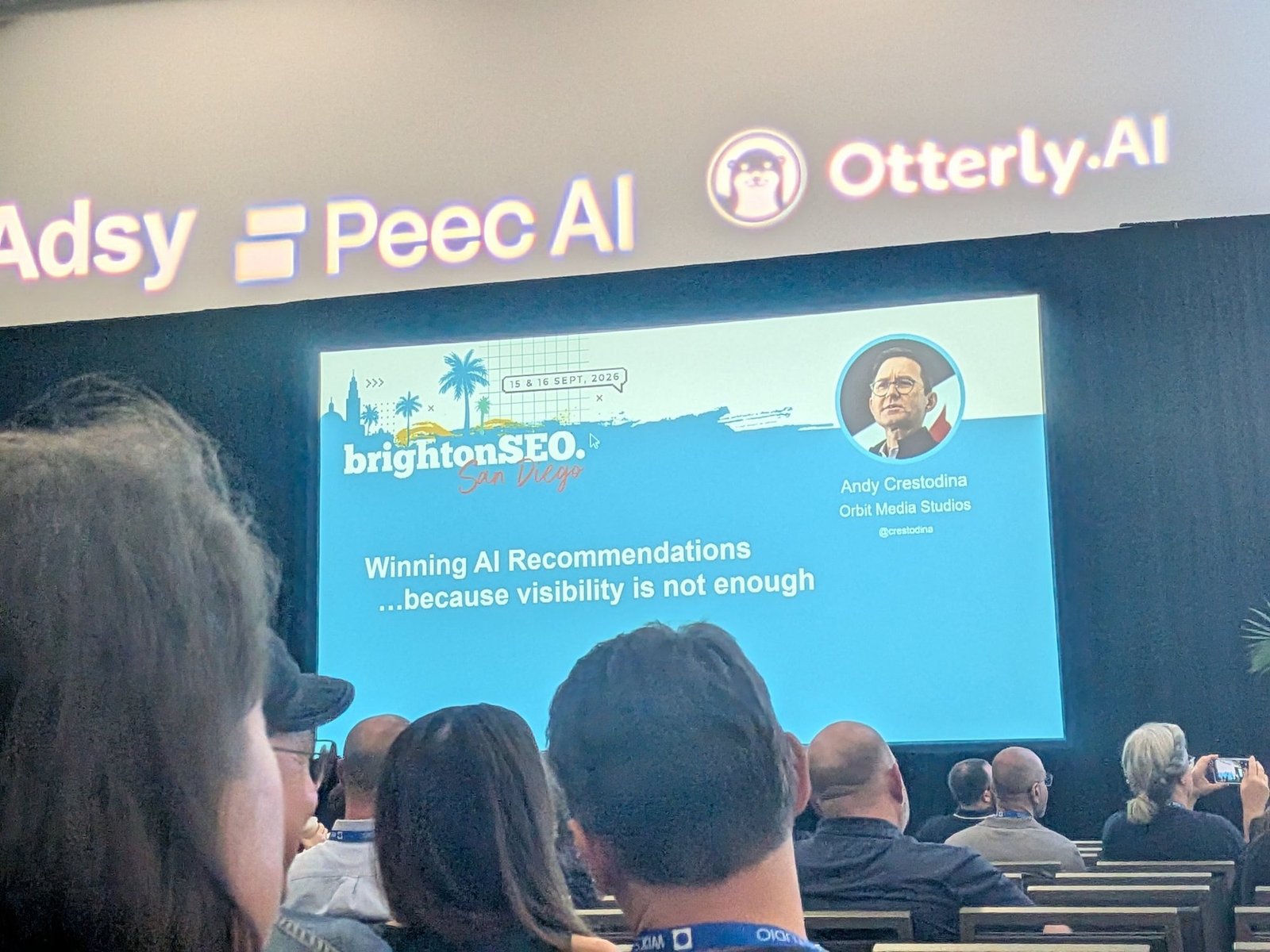
TL;DR
- The disruption started long before AI. Andy has tracked search results for the same queries since 2014. Definitions, featured snippets, People Also Ask and the rest pushed the first organic result far down the page years ago. AI accelerated a decline that was already well underway.
- Consideration has moved off your site and into the answer. People used to compare options by clicking back and forth between tabs. Now they compare inside the conversation, and never see your page while deciding.
- Low volume, high intent. Visits referred by AI are a small fraction of traffic, but across the accounts he aggregates they convert at a far higher rate than other sources. Much of it isn’t even tagged, so it lands in direct.
- The AI is a salesperson, so train it. That means answering the questions buyers actually ask, supporting every claim with evidence, and handling objections, which is conversion work as much as search work.
- Your FAQ list should come from sales calls, not from a keyword tool. Export the transcripts, have AI synthesise them, and you have the real questions. Third-party “people also ask” data is not what your prospects ask.
- The job title is changing. From SEO to credibility engineer.
About the Speaker
Andy Crestodina is co-founder and CMO of Orbit Media Studios, a 50-person digital agency in Chicago focused on web design and website optimization. He has written more than 600 articles on content strategy, SEO, analytics, AI and visitor psychology, reaching around three million marketers a year.
He closed brightonSEO San Diego 2026 with the final keynote.
The Problem: This Didn’t Start With AI
Andy’s opening move was to take the industry’s favourite panic and complicate it.
Yes, an AI tool can now produce, in seconds, an article at the standard that used to take a skilled writer a day, for anyone who asks. Yes, traffic is falling. And yes, there are now thousands of AI tools, which he dismissed briskly: a list of thousands of tools is not a strategy.
But then he pulled up his own long-running data. He has been tracking search results and SERP features for the same queries since around 2014, saving screenshots year after year. Put the 2014 version of a results page next to the 2026 version and the story is obvious: the number one organic result is now far down the page, below feature after feature after feature.
That erosion has nothing to do with AI. It ran through the dictionary and definition boxes that removed the reason to click for a definition, then featured snippets, then People Also Ask, then local packs, then everything since. AI is the latest layer, not the first.
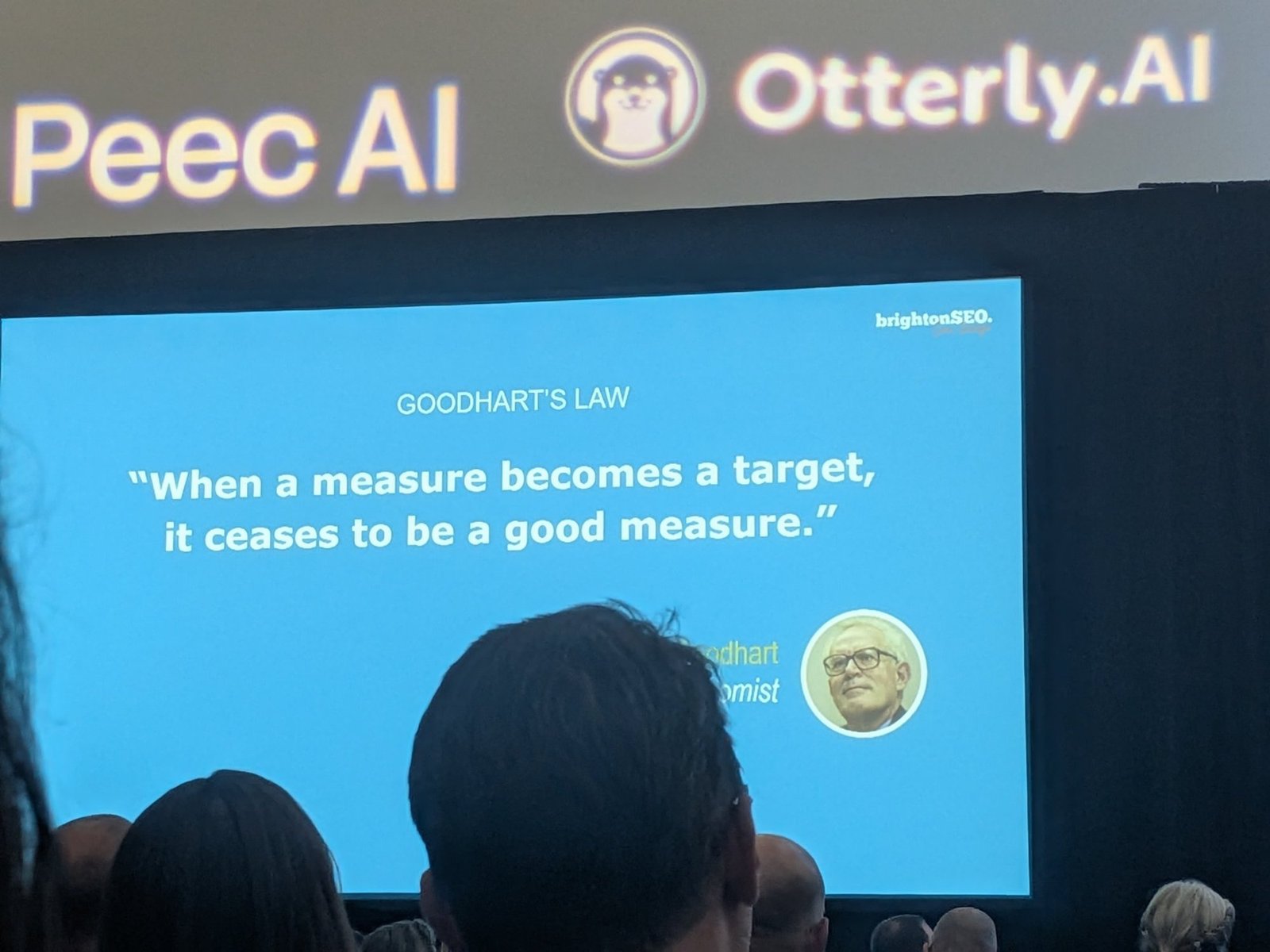
He brought in Goodhart’s law to explain why the industry keeps getting caught out: when a measure becomes a target, it ceases to be a good measure. Traffic became the target, and stopped describing the thing we actually care about.
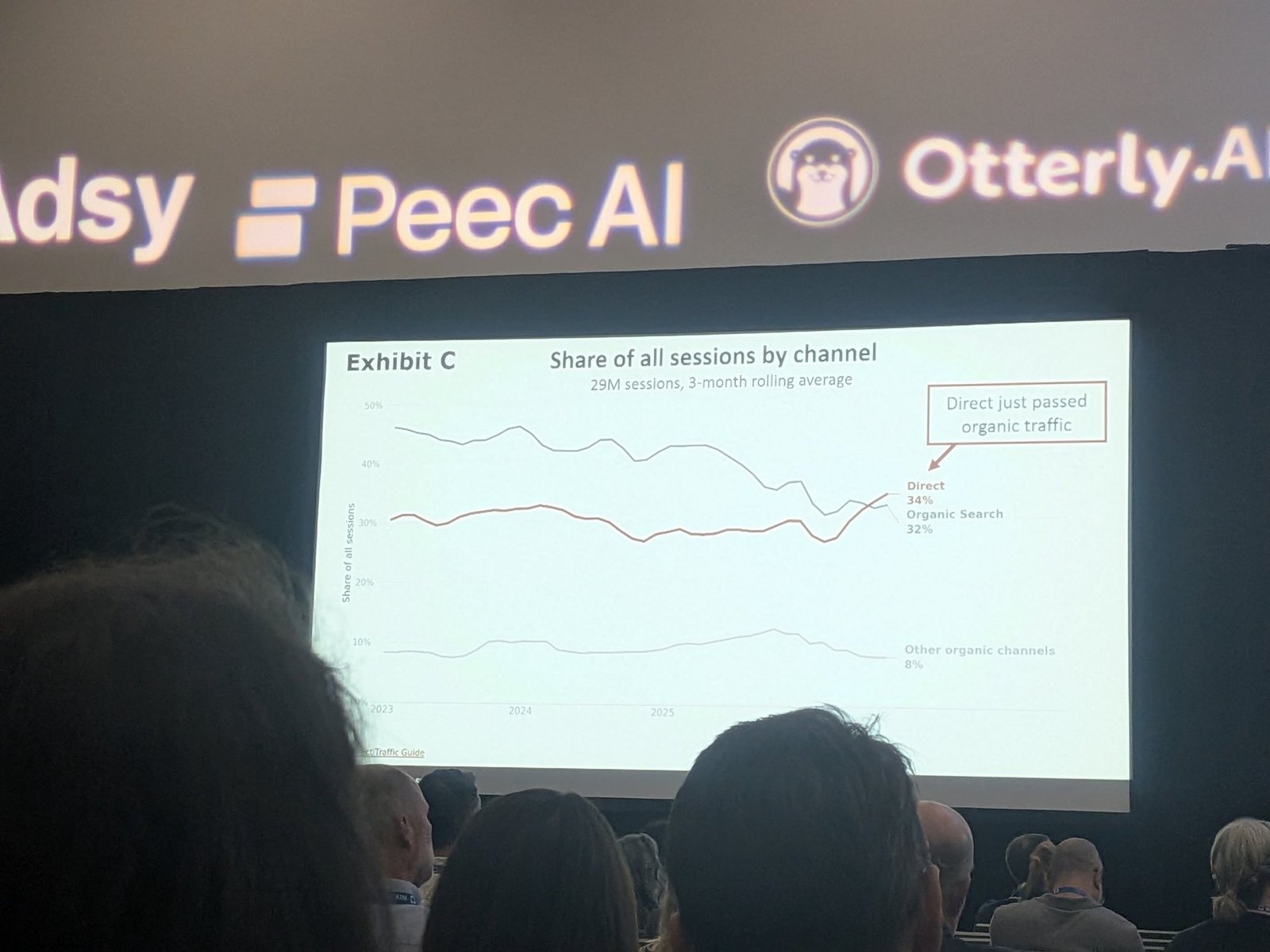
The Shift: People Now Consider Inside the Answer
This was the heart of the talk.
In the old model, the user landed on your page and did their comparing there. They clicked a result, hit the back button, clicked another, opened tabs, weighed options. Optimization meant conversion work on your pages, because consideration happened on your site.
In the new model, the consideration happens inside the conversation, and the back button is gone. The person forms a shortlist, weighs options and reaches a decision while talking to an AI. By the time they arrive at your site, if they arrive at all, they have already decided.
Two consequences follow, and they pull in opposite directions:
- Volume is much lower. AI referrals are a small share of visits.
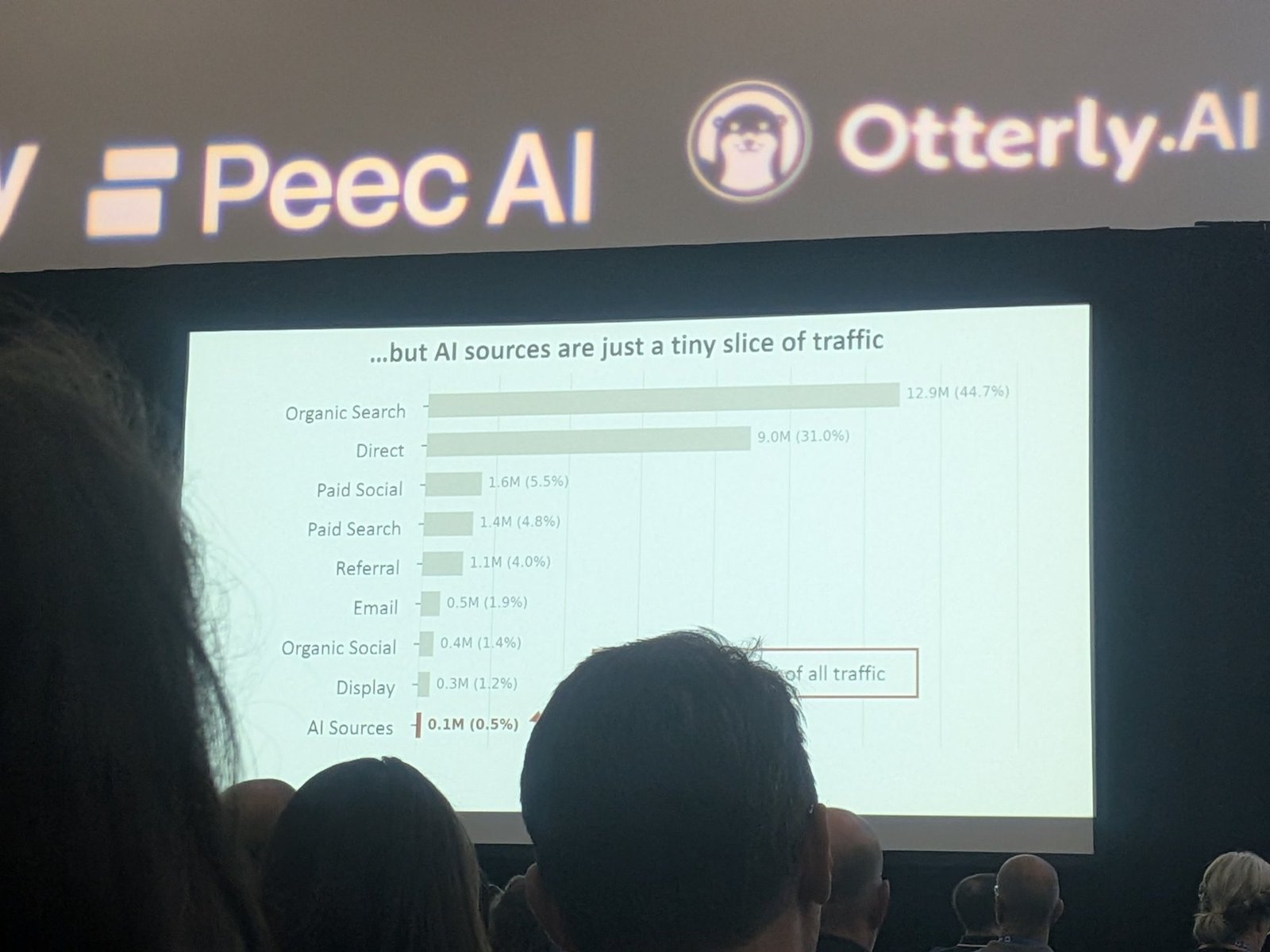
- Conversion rates are much higher. Andy was careful to say he does not like showing single accounts, so he aggregates across the many GA4 properties he has access to. On that aggregated data, traffic arriving from AI sources converts at a multiple of every other source. These visitors are already warm, because the persuading happened before they arrived.
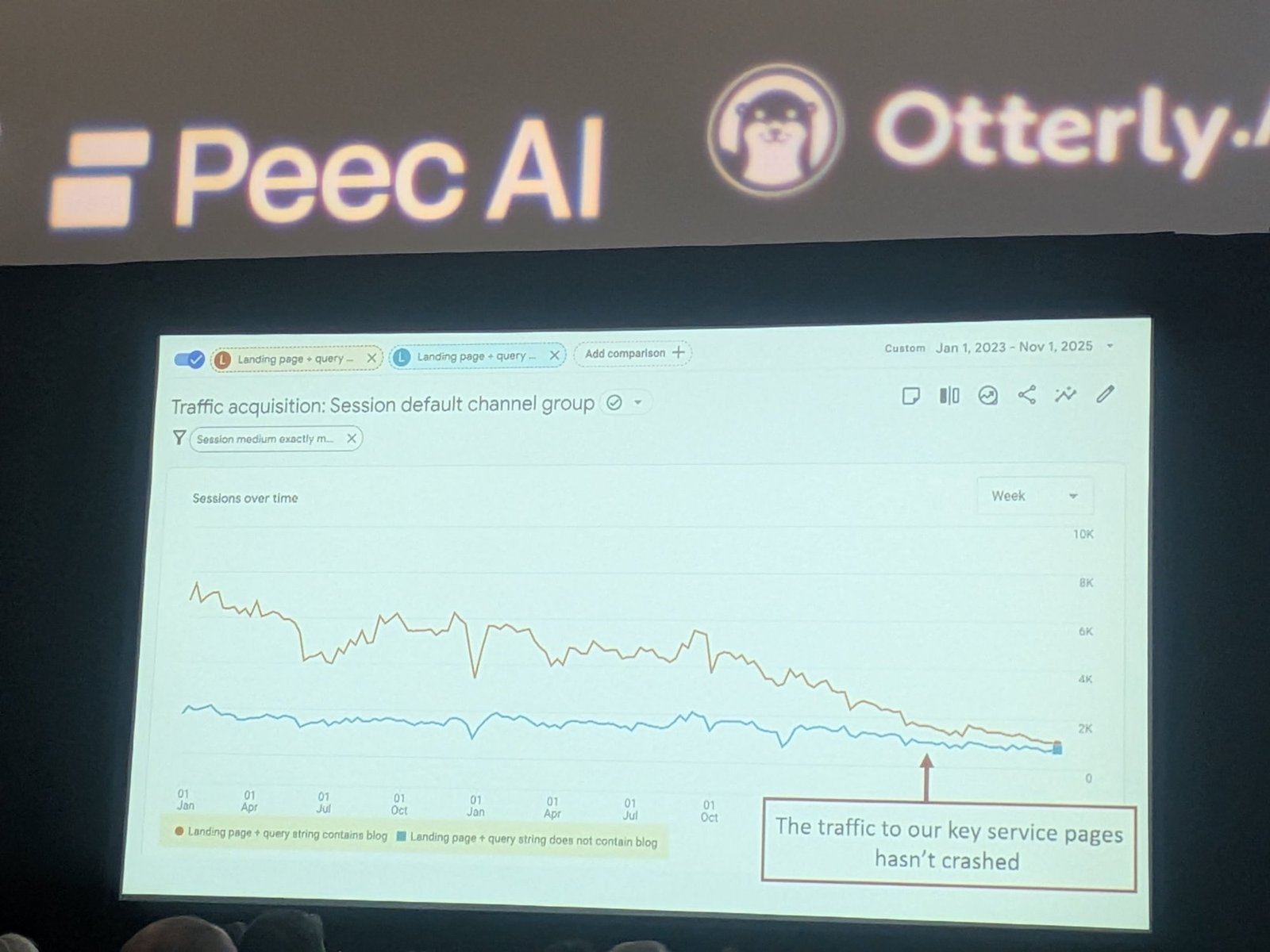
He also made the point that a lot of this traffic is invisible. Someone can talk to an AI for five minutes, get a recommendation, and go straight to the business. If the link wasn’t tagged, that visit shows up as direct, and nobody credits the AI conversation that caused it.
The Reframe: AI Search Optimization Is SEO Plus Conversion Optimization
His metaphor for the shift: this is not just about being the cheese, it is about the whole mousetrap.
The system on the other side is not a ranking algorithm sorting documents. It is an intelligence making a recommendation, which means the work of influencing it looks less like technical SEO and more like a sales call. As he put it, what wins a sales call is not being famous.
So think of the AI as a salesperson who has read everything and is asked, by someone who trusts them, which option is best. Our job is to train that salesperson. That means:
- Knowing the top questions buyers ask
- Having the best answers to them, published
- Supporting the claims with evidence
- Handling the objections before they are raised
If you have ever built a sales enablement deck, this is the same work, aimed at a different reader.
He also demonstrated a quick diagnostic: ask an AI what it knows about your brand, then ask it to compare you against your named competitors, then ask what would make it recommend you. Read the answer as you would read a prospect’s objections.
First-Party Questions: Your Sales Calls, Not a Keyword Tool
This was the most pointed section, and the most immediately useful.
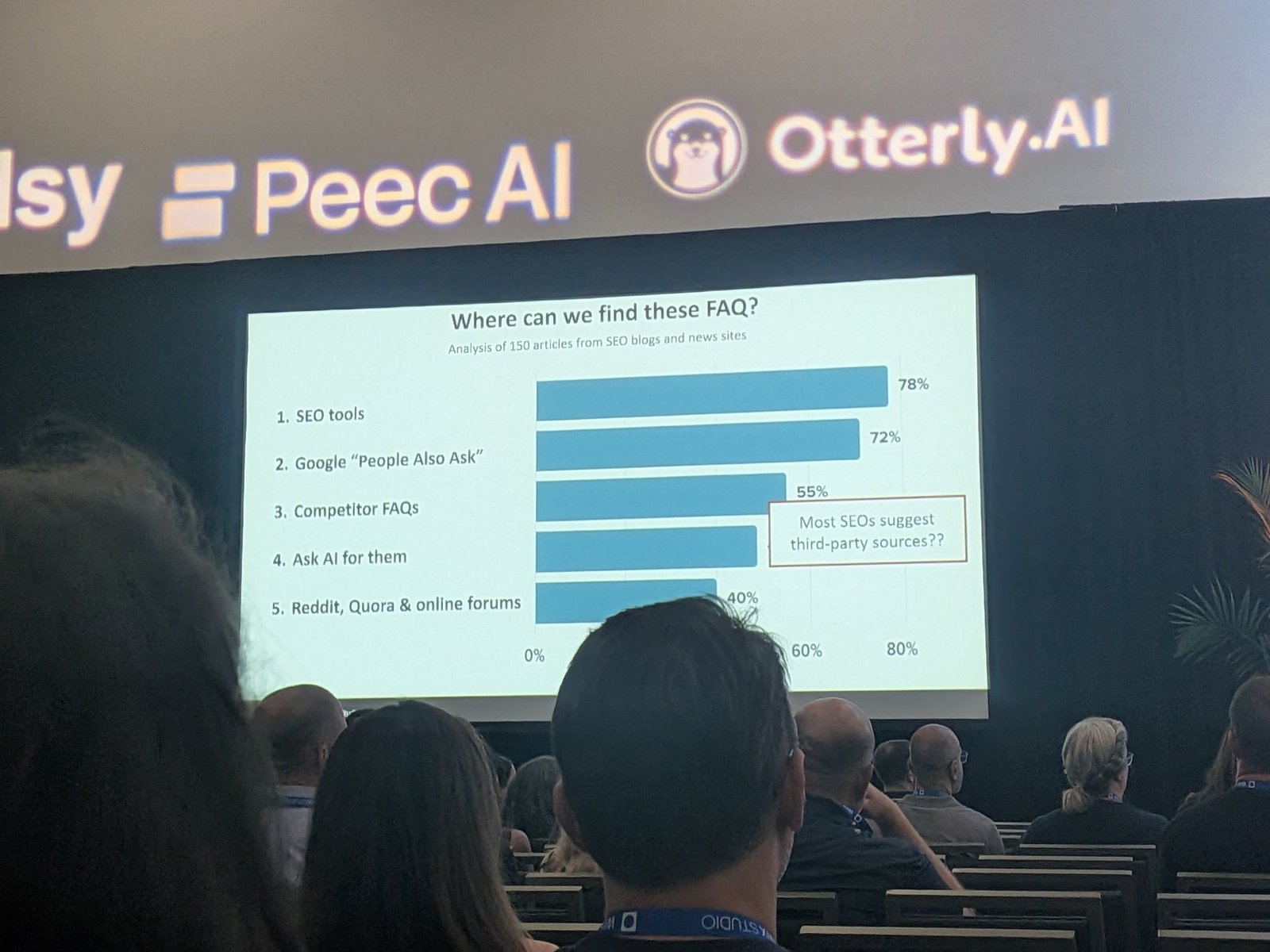
Andy said he reviewed a large number of published articles on AI search best practices, and found the top recommendation was almost always the same: publish FAQs. Fine. But then look at where people are told to get those questions, People Also Ask, question research tools, third-party data, and the advice falls apart.
How would a third-party tool know what your buyers actually ask? Those are questions other people typed into a search box. They are not your prospects’ questions.
The real source is one most marketing teams never open: sales call recordings. Almost every call is recorded now. Export the transcripts, hand them to an AI, have it synthesise and condense them, and you can then ask the pile directly: what do our prospects actually ask us, and how often?
He showed his own version of this, built from his own calls: a ranked list of the real questions prospects ask him, which grows as he takes more calls, with relative change tracked over six months so he can see which concerns are rising and which are fading.
Once you have that list, the next step is almost embarrassingly simple. Publish the answers. The questions your prospects ask on calls are the same questions they ask the AI, so the pages that answer them well are the pages that get used to answer them.
Schema: A Map of What You Failed to Say
Schema markup is usually the number two recommendation in those same articles, and Andy’s angle on it was different from the usual one.
He does not treat schema as a technical checkbox. He treats it as a checklist of everything that could be on the page. Take a page, identify its goal, and ask an AI which schema types could apply to it. The answer comes back with things you had not thought about: a HowTo schema that expects a step-by-step process the page never explains, an audience schema that expects a defined audience the page never names, a related service or product schema the page never connects to anything.
Each of those is a content gap, not a markup gap. The schema vocabulary is, in effect, a structured list of the things a thorough page would contain.
Evidence: Trust Is a Probability, Not a Vibe
Then the part that connected the whole talk.
His definition, which he credited to marketing literature: trust is the perceived probability that choosing your brand will lead to the outcome you want. Not a warm feeling. An estimate of odds, made by someone who is trying to avoid being wrong.
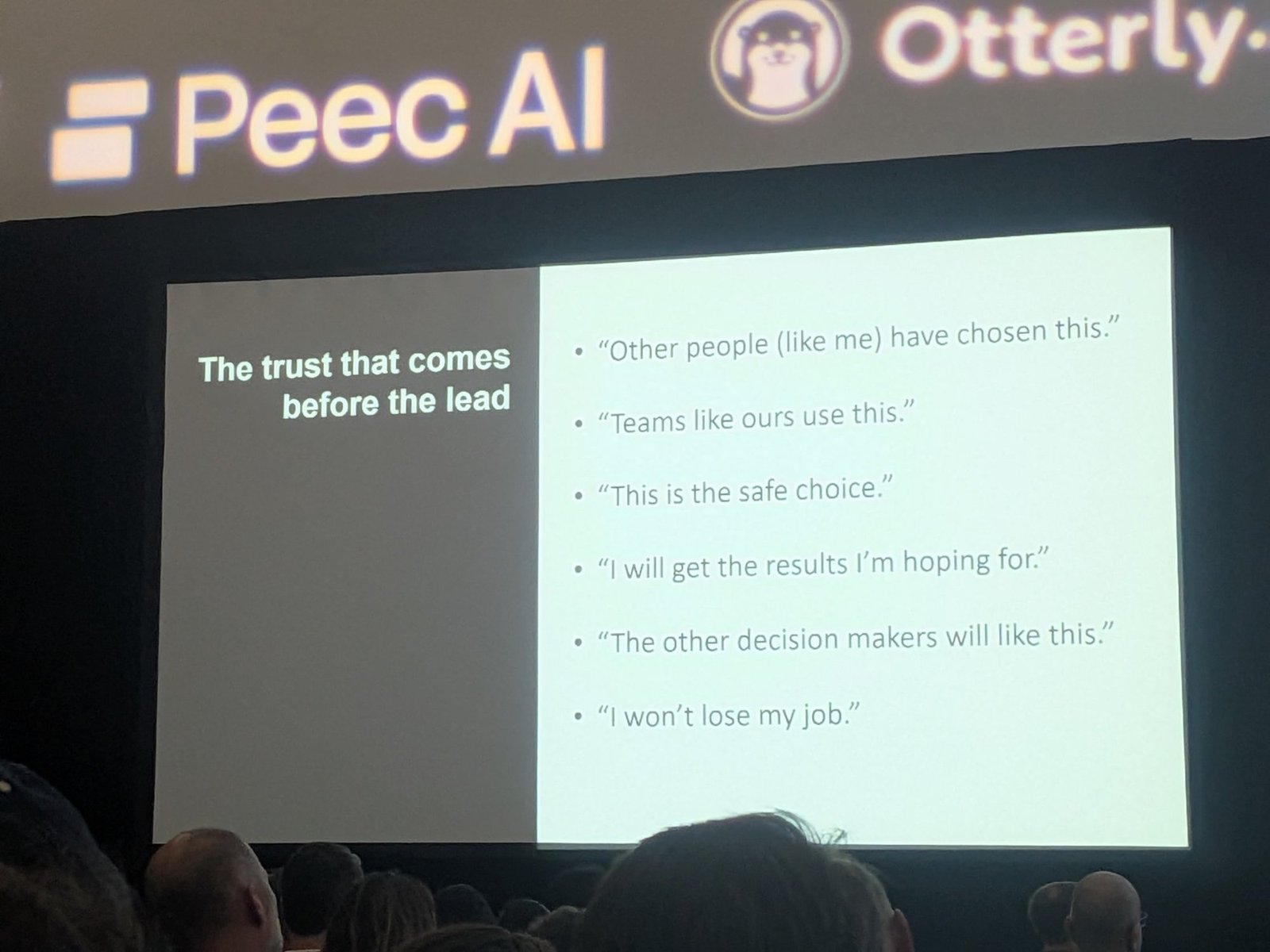
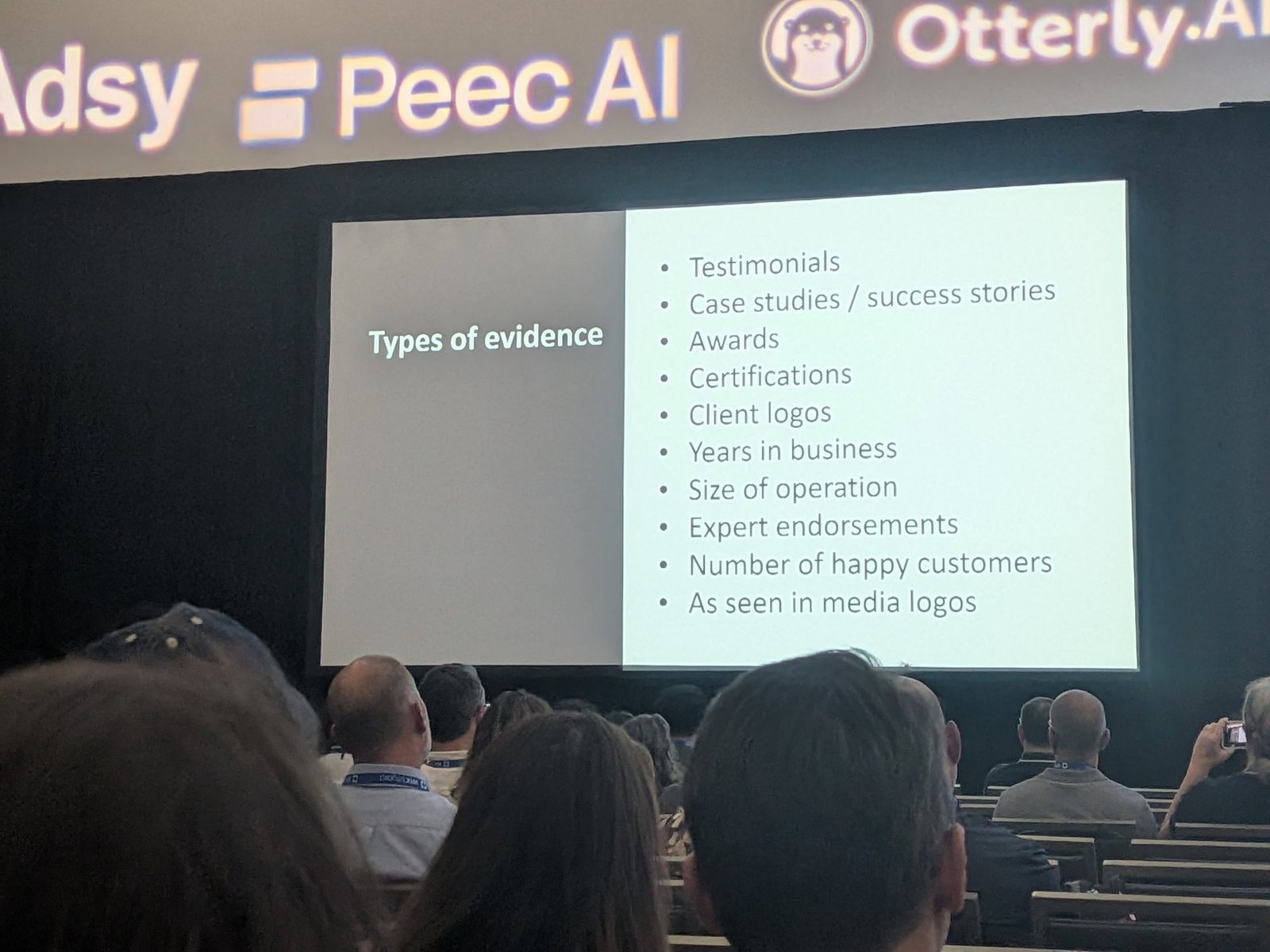
That reframes the job. A buyer choosing a supplier is managing anxiety, and evidence is what reduces it. Testimonials, specifics, named people, numbers, proof.
Then he turned it on our own pages: most pages are a pile of unsupported claims. Claim, claim, claim, none of them backed. And an AI reading that page has nothing to quote.
His method for fixing it is one anyone can run this week:
- Screenshot the page in sections, not as one full-page image, so you can evaluate each area separately.
- Ask an AI to check each section for evidence, flagging every claim that isn’t supported.
- Go and find the support. Replace assertions with specifics.
His worked example was a page claiming “experienced engineers and technicians” and “certified specialists”. How experienced? Certified in what, by whom, when? Each vague phrase is either an opportunity for evidence or a sentence that should be cut.
His summary: evidence is as important for AI recommendation as it has always been for conversion. We should have been doing this all along. E-E-A-T never really said otherwise.
Personas: Read Your Own Page as the Buyer
The second evaluation pass is empathy, done systematically.
Build a genuinely detailed persona, not a one-paragraph sketch. Andy’s are long: role, goals, skills, responsibilities, day-to-day challenges, pain points, the questions they ask, the objections they raise, what their day actually looks like, and what their life is like before and after the problem gets solved.
He was generous about where the thinking came from, naming the people he has learned persona and buyer-psychology work from, including Joanna Wiebe of Copy Hackers, who he credited with making personas a category in the first place, and specialists in behavioural science and cognitive bias.
The part he emphasised most: the before and after. For an industrial maintenance manager, the real reason he is on your page is not a feature comparison. It is that he is the person who keeps the plant running, and the plant stopping is the thing he is afraid of. That is the psychology the page has to meet.
Then you do the pass: look at the page from inside that persona and ask what it fails to address. Which of their questions does it never answer? Which objection does it never handle? What does it assume they already know? His example page scored poorly on several criteria, which is the point of doing it.
He was clear this is not an abstract exercise. Every gap it surfaces is a specific edit you can make today.
One Log-File Finding: The Homepage
One data point from his log analysis stood out. Looking at AI crawler and assistant requests hitting his site, the homepage was visited by AI far more than any other page type, by his count around fifteen times more.
Which makes a certain sense. If the model wants to know what a company is, it goes to the front door. Whatever a model believes about your brand, your homepage is a large part of where that belief comes from.
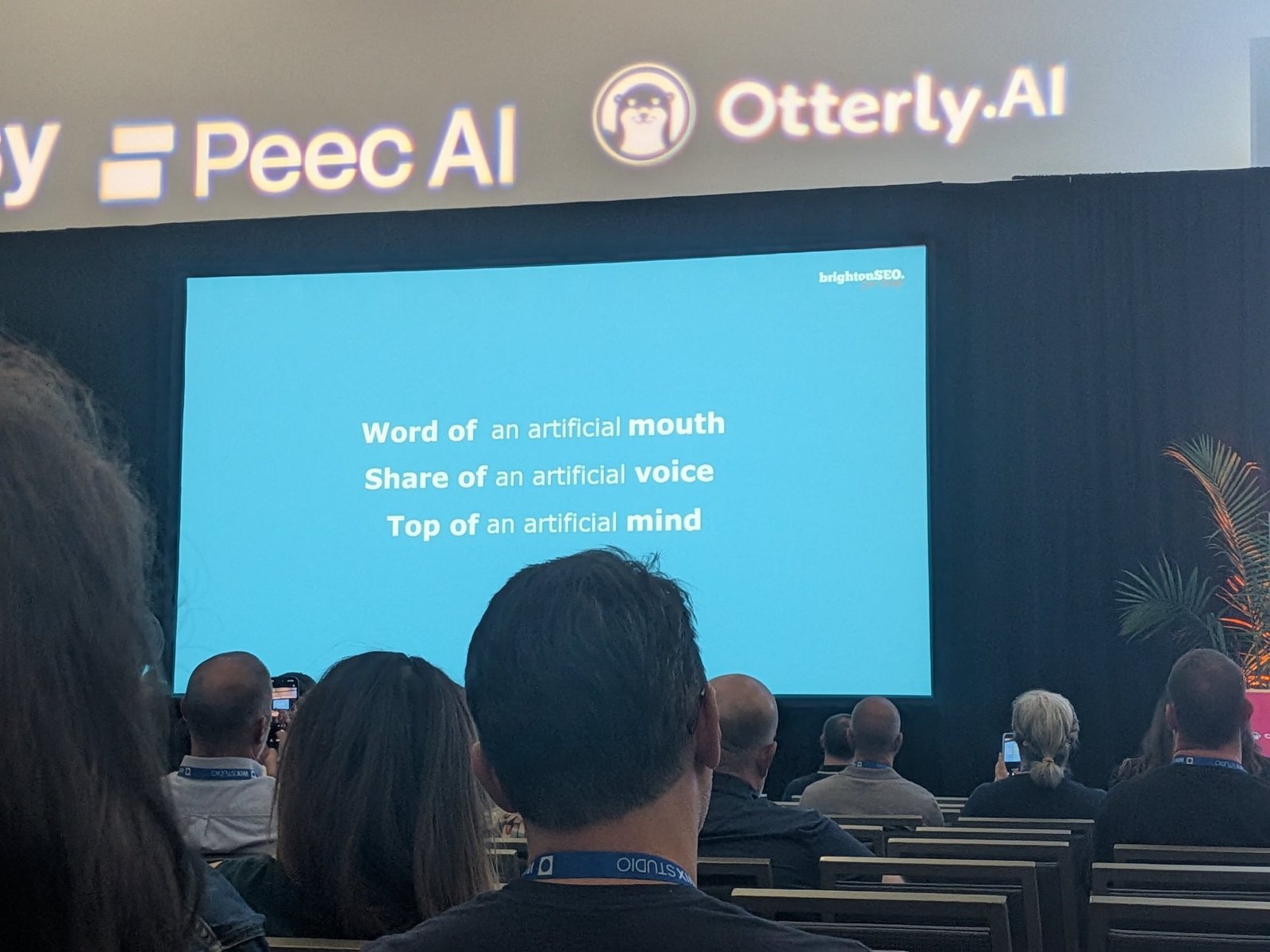
The Blueprint
- Stop reporting on traffic alone. Goodhart’s law applies: it stopped being a measure the moment it became the target.
- Check your AI referrals against conversion rate, not volume, and accept that much of it is hiding in direct.
- Export your sales call transcripts and have an AI synthesise the actual questions prospects ask, ranked.
- Publish the answers to the top questions, plainly, on pages that can stand alone.
- Run schema as a content audit. Ask what schema types apply, then treat the fields you cannot fill as content gaps.
- Screenshot your key pages in sections and have an AI flag every unsupported claim.
- Replace claims with evidence. Numbers, names, certifications, specifics.
- Build a deep persona and re-read the page from inside it, listing what it fails to address.
- Look at your homepage the way a model would, since that is the page it reads most.
What Not to Do
- Don’t blame AI for the whole decline. SERP features have been pushing organic results down the page since long before this.
- Don’t build your FAQ from third-party question data. Those are strangers’ questions.
- Don’t treat schema as a technical checkbox. Read it as a list of what your page should contain.
- Don’t publish unsupported claims. They convert badly and they give the model nothing to quote.
- Don’t write a one-line persona. The useful detail is in the before and after.
- Don’t judge AI traffic by volume. Judge it by what it does when it arrives.
- Don’t collect tools instead of building a strategy.
Next Steps
- Pull last quarter’s sales call transcripts into one file this week.
- Ask an AI for the top twenty questions, ranked by frequency, and compare them with your current FAQ page.
- Pick your most commercially important page and run the screenshot-and-evidence check on it.
- List every unsupported claim it surfaces, and assign each one either a piece of evidence or a deletion.
- Ask an AI what it knows about your brand, then ask what would make it recommend you over the competitors you name.
Personal Takeaways
This was the right talk to close on, because it pulled the whole day back to something older than AI search.
What I’m taking away:
- “Trust is the perceived probability that choosing your brand leads to the outcome you want” is the best sentence I heard all week. It turns a vague goal into something you can actually engineer, and it explains why evidence beats adjectives.
- It lands on exactly the same point as Christian Desert’s talk, from a completely different direction. Christian’s data said replace adjectives with verifiable numbers because that is what gets extracted. Andy’s argument is that you should do it anyway, because it is what reduces a buyer’s anxiety. Same edit, two reasons.
- The sales-call FAQ method is the thing I’ll use first. For a consultancy, the questions that come up in a first call are already written down somewhere, and nobody mines them. [CONFIRM: for our own consulting enquiries, and for the language-school side, the recurring first-call questions are a content plan we already own.]
- “Low volume, high conversion” matches Baruch Toledano and Thomas Peham. Three separate datasets this week said the same thing: AI’s contribution is real, converts well, and is largely invisible in analytics because it arrives untagged.
- The homepage finding changes where I’d start on a client site. If it is the page models read most, it deserves more care than the blog post we were about to optimise.
- A caveat on the numbers. Andy was careful to aggregate rather than cherry-pick single accounts, which I respect, but most of the specific figures went past quickly in the room. I have kept the ones I am confident about and left the rest out.
Related Resources
- Speaker: Andy Crestodina
- Orbit Media Studios
- Christian Desert session report: evidence and specifics as what gets cited
- Thomas Peham session report: why AI’s contribution hides from analytics
- Laura Beatty session report: auditing existing pages for what they fail to deliver
Written by Ayaka Uchida
CEO, A-Digital Works
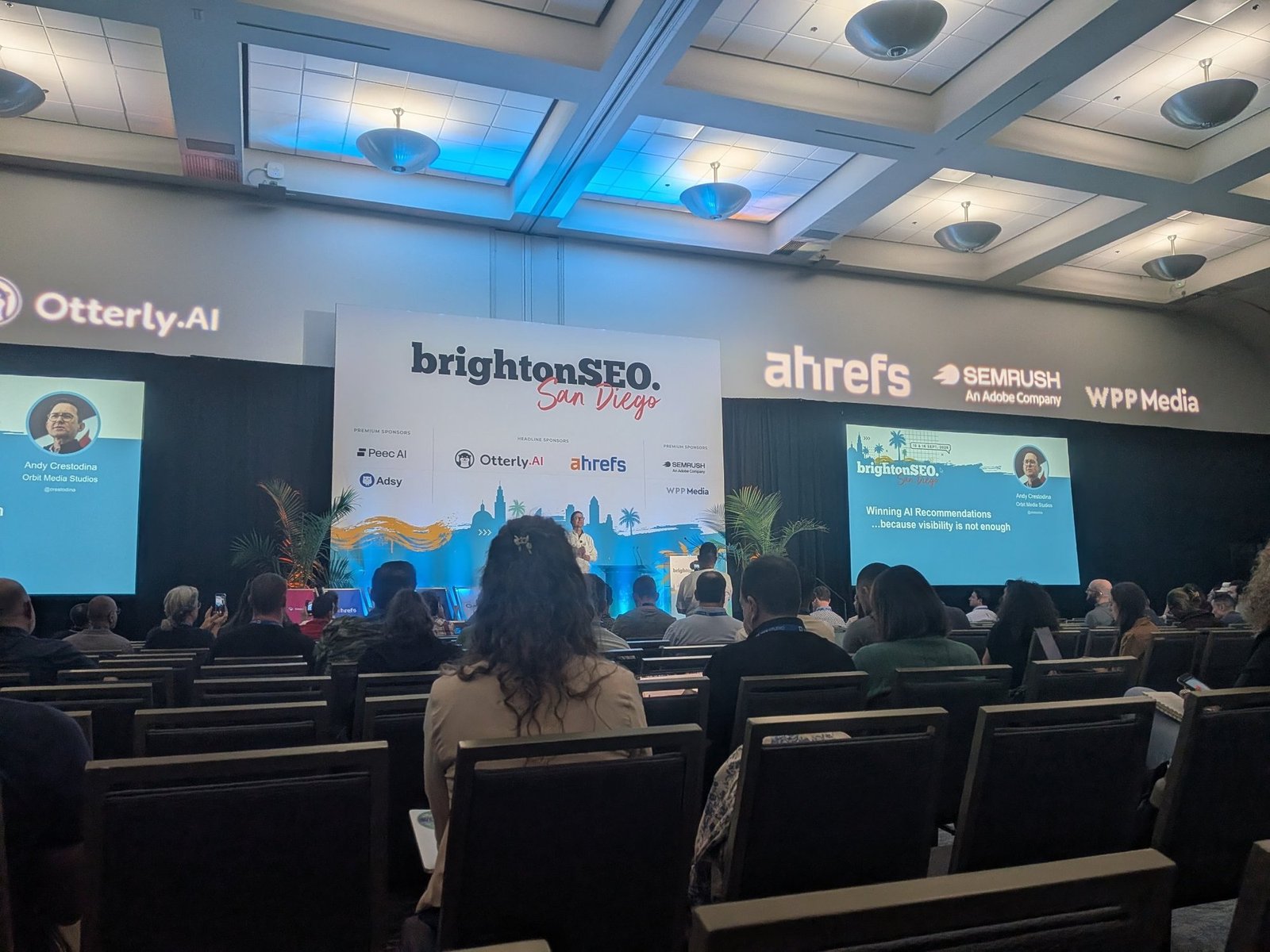
This report covers Andy Crestodina’s closing keynote “Winning AI recommendations… because visibility isn’t enough” at brightonSEO San Diego (16 September 2026).
