

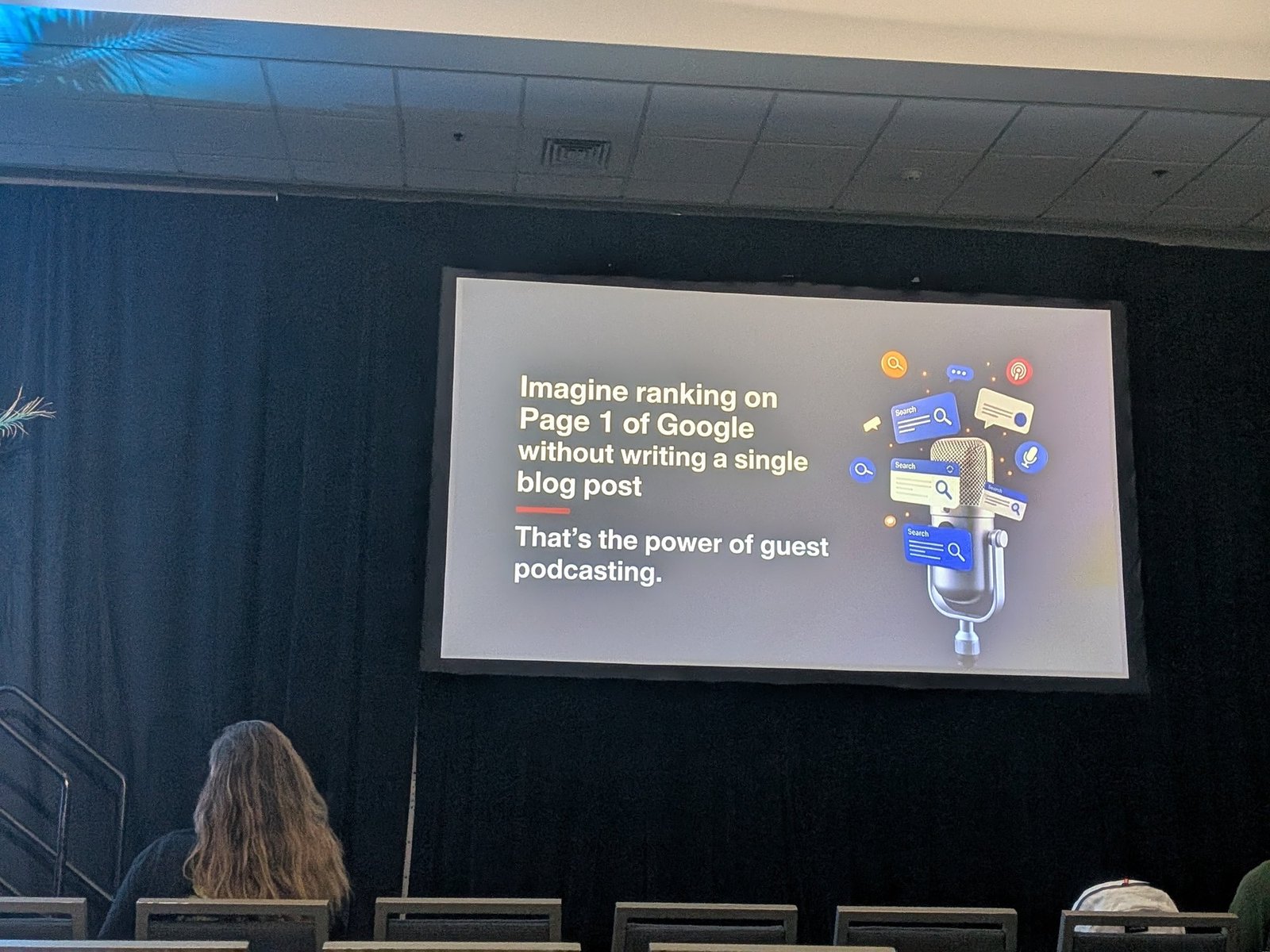
TL;DR
- Guest podcasting is content you don’t have to write. One appearance can produce a show page, backlinks, a transcript, a blog post, and a month of social clips.
- The show’s website matters as much as its audience. Brandon favors shows that publish a separate page for each episode, with show notes and links back to the guest.
- Score shows on three things: relevance, authority, and an active audience. A show with 50 listeners who are all your ideal customers can beat a big show nobody in your market hears.
- Recording is 30% of the work. The other 70% is promotion, following up with hosts, and repurposing the episode.
- It connects to AI search, even though the talk didn’t dwell on it. Consistent naming and text-based episode pages give AI systems more sources to recognize you by. Thomas Peham’s experiments earlier in the day point the same way.
About the Speaker
Brandon Leibowitz is the founder of SEO Optimizers, a Los Angeles agency he has run since 2007, working mainly with small and mid-sized businesses. He has appeared as a guest on around 300 podcasts.
His podcasting started by accident. In 2020 he could no longer teach his classes in person, moved them to Zoom, and turned the recorded audio into a makeshift podcast. A few months later someone invited him onto their show, and he realized being a guest gave him most of the benefits of podcasting with far less work.
This was his second year speaking on the topic at brightonSEO San Diego.
The Problem: Backlinks and Trust Are Harder to Earn
Brandon framed the problem as one most SEOs know well. Competition keeps rising, trust is harder to build, and the industry spends enormous effort chasing backlinks, while Google keeps signaling that it rewards brands people actually trust and search for.
His own site illustrates the alternative. By his account, it earned about 500 backlinks between 2007 and 2020. Since he started guesting on podcasts in 2020, backlinks and traffic have grown significantly, and people regularly tell him they found him through a podcast. He was careful to add that correlation isn’t always causation.
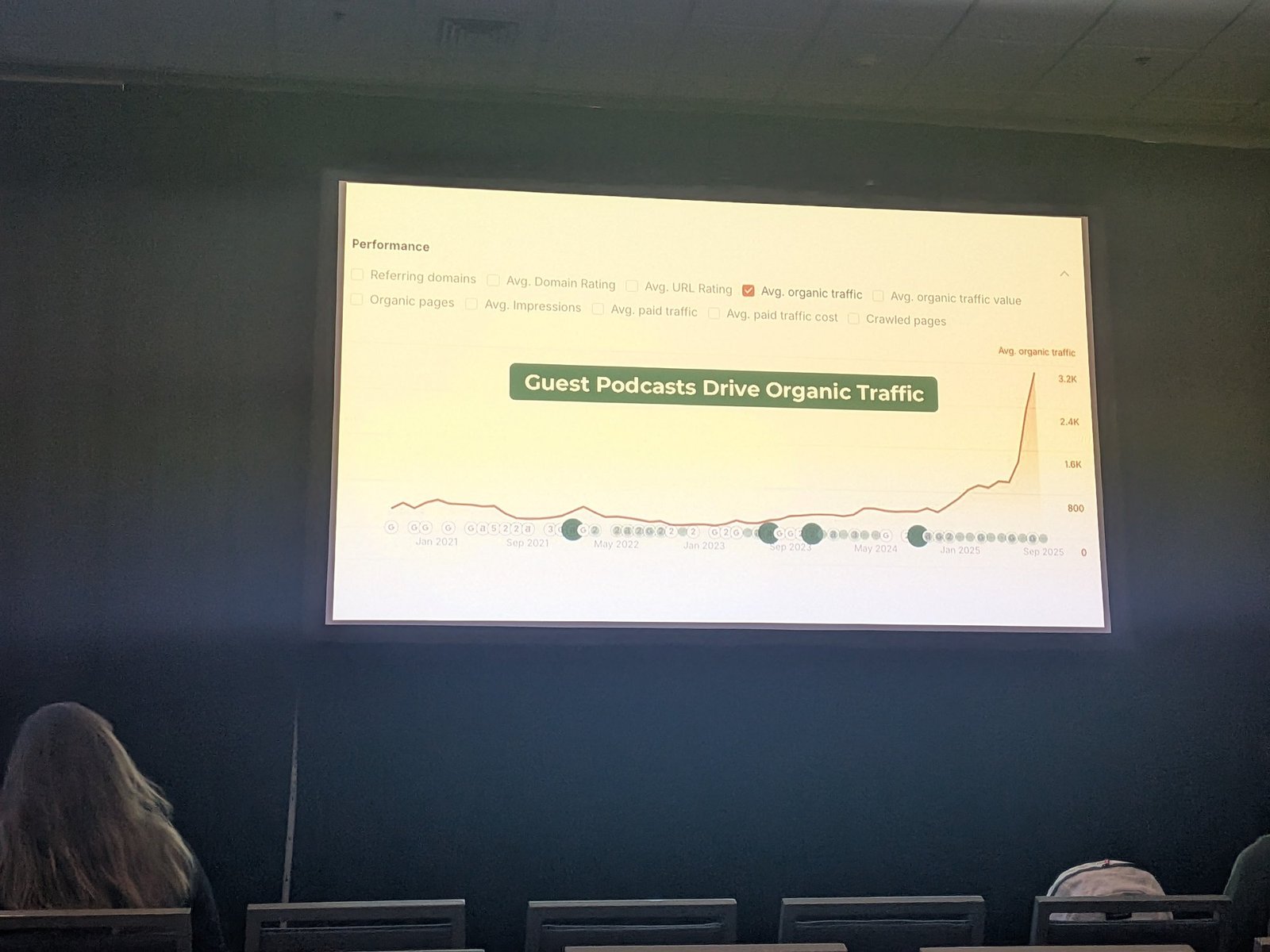
His Ahrefs chart showed average organic traffic below roughly 800 from 2021 through 2024, then climbing sharply through 2025 to around 3,200 by September 2025.
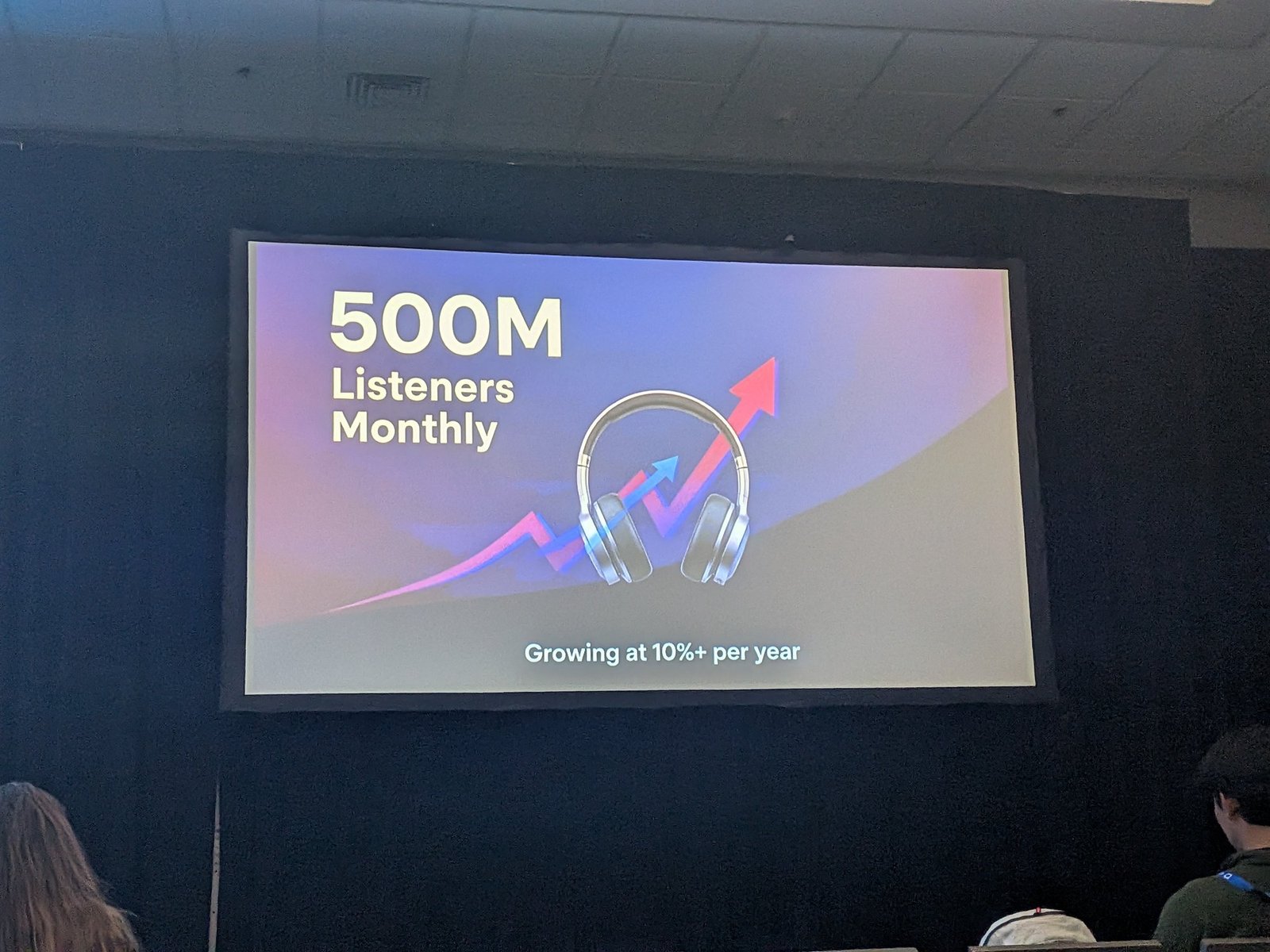
Podcasts are also a large and growing audience. His slide put it at 500 million monthly listeners, growing at more than 10% per year.
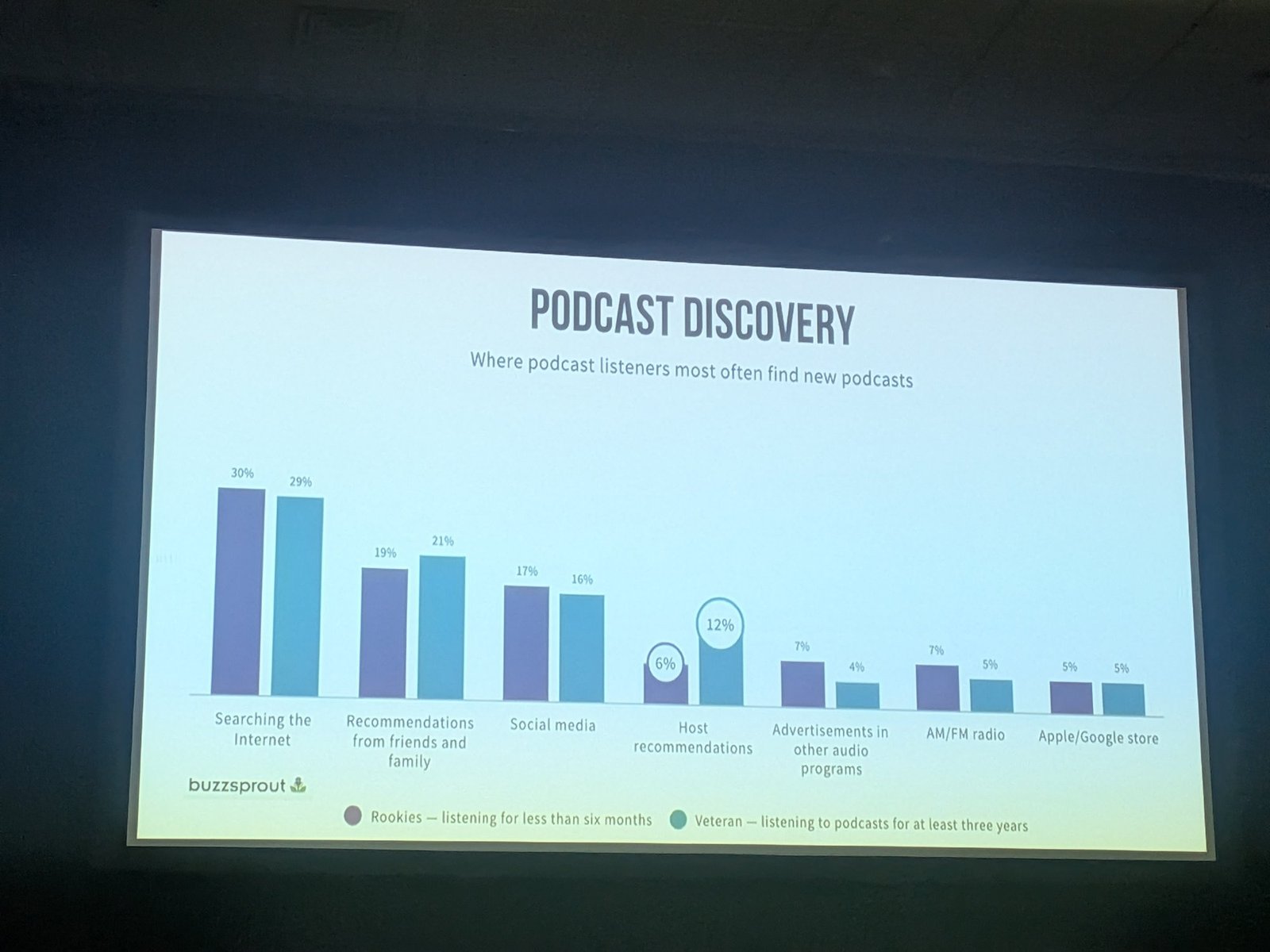
The discovery data, from Buzzsprout, shows why this is a search topic at all. Searching the internet was the most common way listeners found new shows: 30% of new listeners (under six months) and 29% of veterans (three years or more). Recommendations from friends and family came next (19% and 21%), then social media (17% and 16%). Host recommendations doubled with experience, from 6% for new listeners to 12% for veterans.
The Solution: Why Guest Podcasting Works
Brandon’s case was that guesting hits every goal at once:
- Backlinks. A single appearance can generate links from the show’s website, the YouTube description, syndication sites, and newsletters.
- Borrowed trust. The host has spent years building an audience. Being introduced by them is a warm introduction, not a cold pitch.
- Brand search. Listeners hear you repeatedly across shows, move from seeing you as a stranger to trusting you, and eventually search for your name or company.
- AI and LLM visibility. Podcast content is indexed and picked up by AI systems, adding to the sources that describe you.
- Attention. He noted that many listeners stay for the whole episode, giving you 20 to 45 minutes of focused attention while they drive or wash the dishes.
Finding the Right Shows
Look for a Real Website
The most important filter, in his view, is whether the show has its own website with a separate page for every episode. A show that only lives on Spotify or YouTube still helps, but a dedicated episode page with your bio, links, and show notes becomes an asset you can use. He also pointed out that some sites list every episode on one page without linking to individual episode pages, which is much weaker.
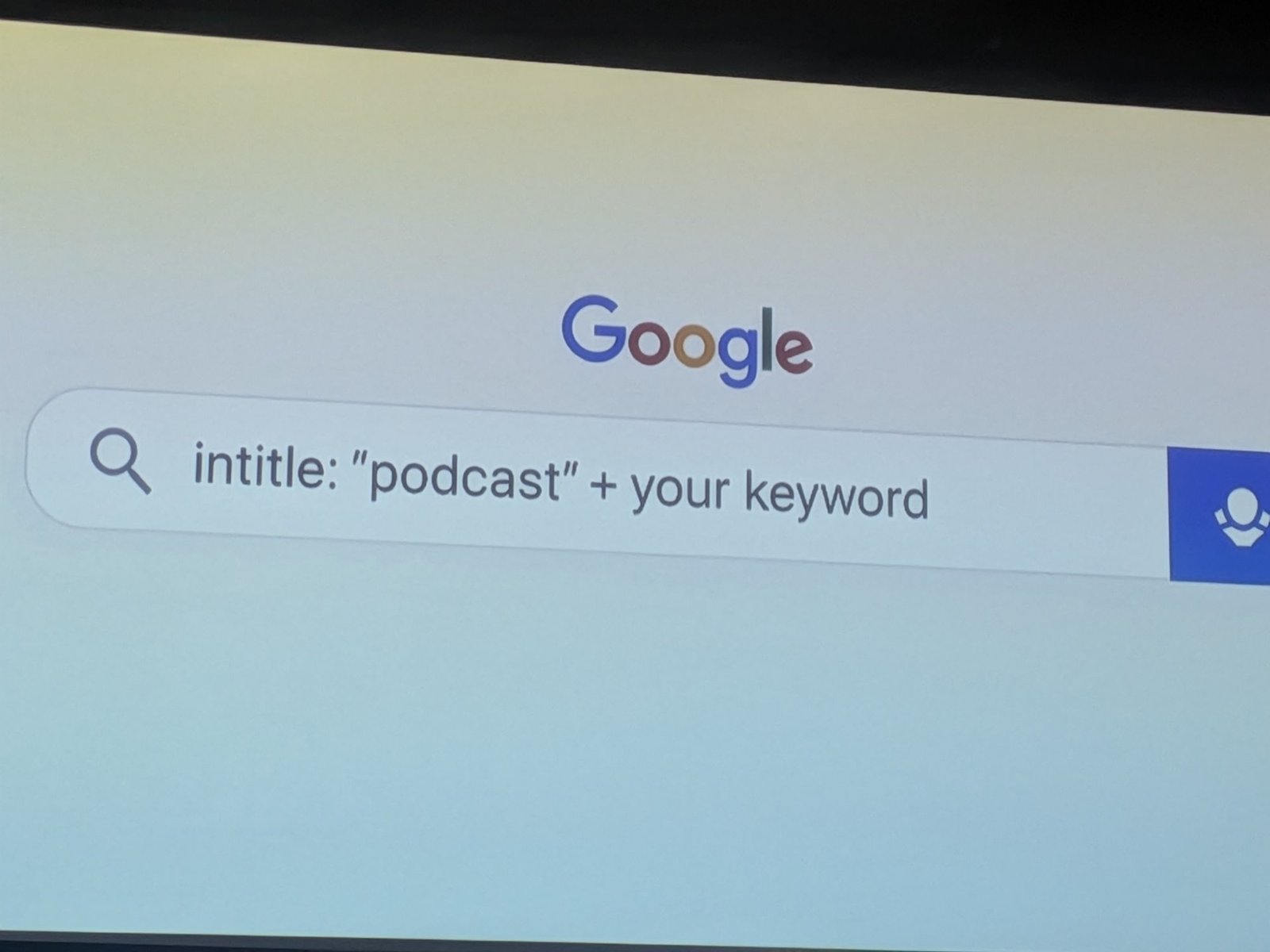
His go-to method is the Google operator intitle:"podcast" plus your keyword. Use one or two keywords; long-tail phrases return odd results. Shows that rank in Google are shows Google already trusts, and some of that trust carries over to you. Skip the Spotify and YouTube results and look for the show websites.
Use Discovery Tools, and Your Competitors
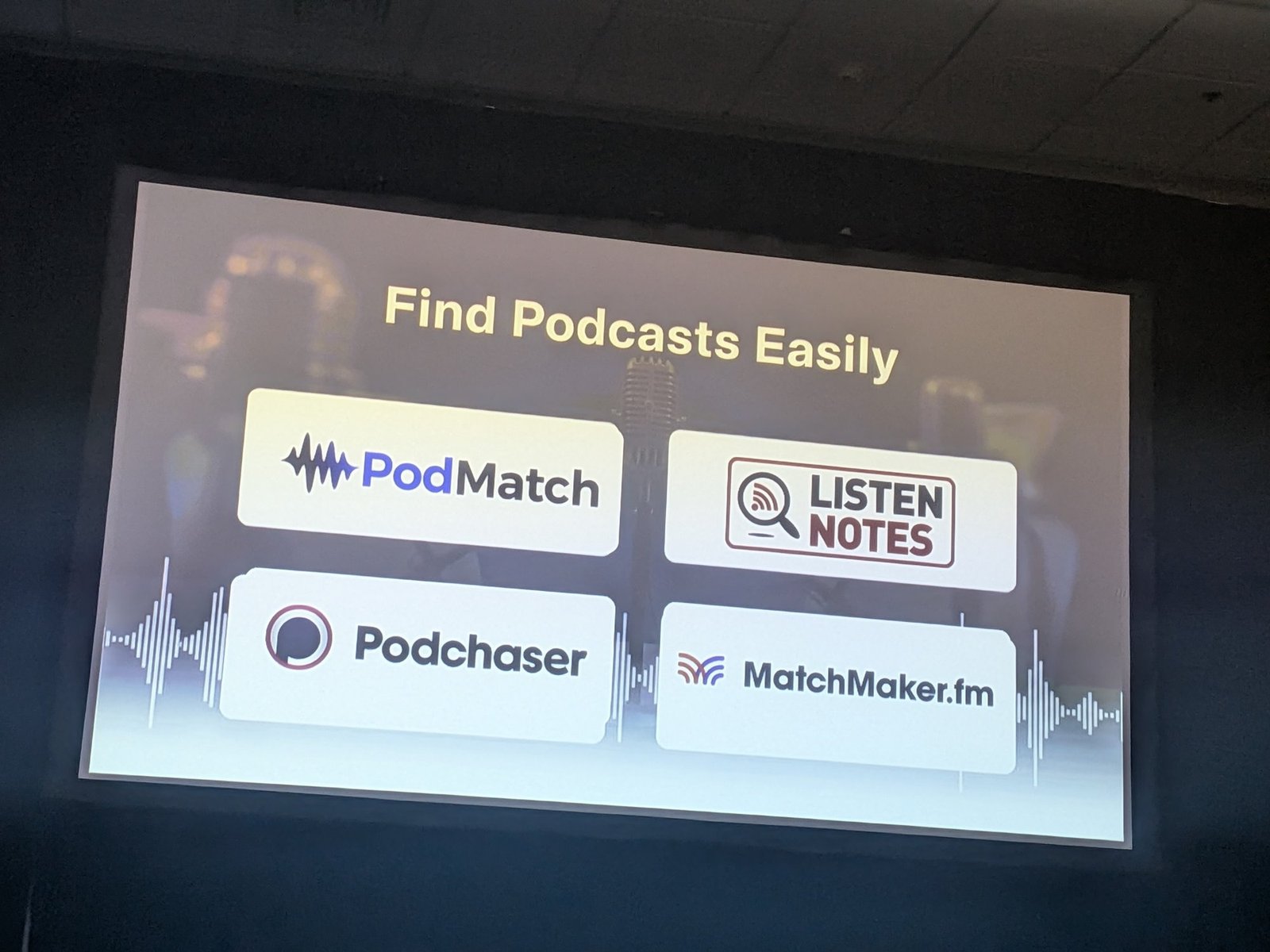
He recommended four tools: PodMatch, Listen Notes, Podchaser, and MatchMaker.fm. PodMatch, which is how he started, works like a dating profile: you create a profile, get matched with hosts, get ghosted a few times, and some matches turn into real bookings. Newer podcasts dominate these platforms, so qualify each match, although there are hidden gems.
His favorite trick borrows from backlink research. Enter a competitor or another subject-matter expert into these tools, pull every episode they’ve appeared on, and that’s your outreach list. If a show hosted someone similar, it’s likely to want you too.
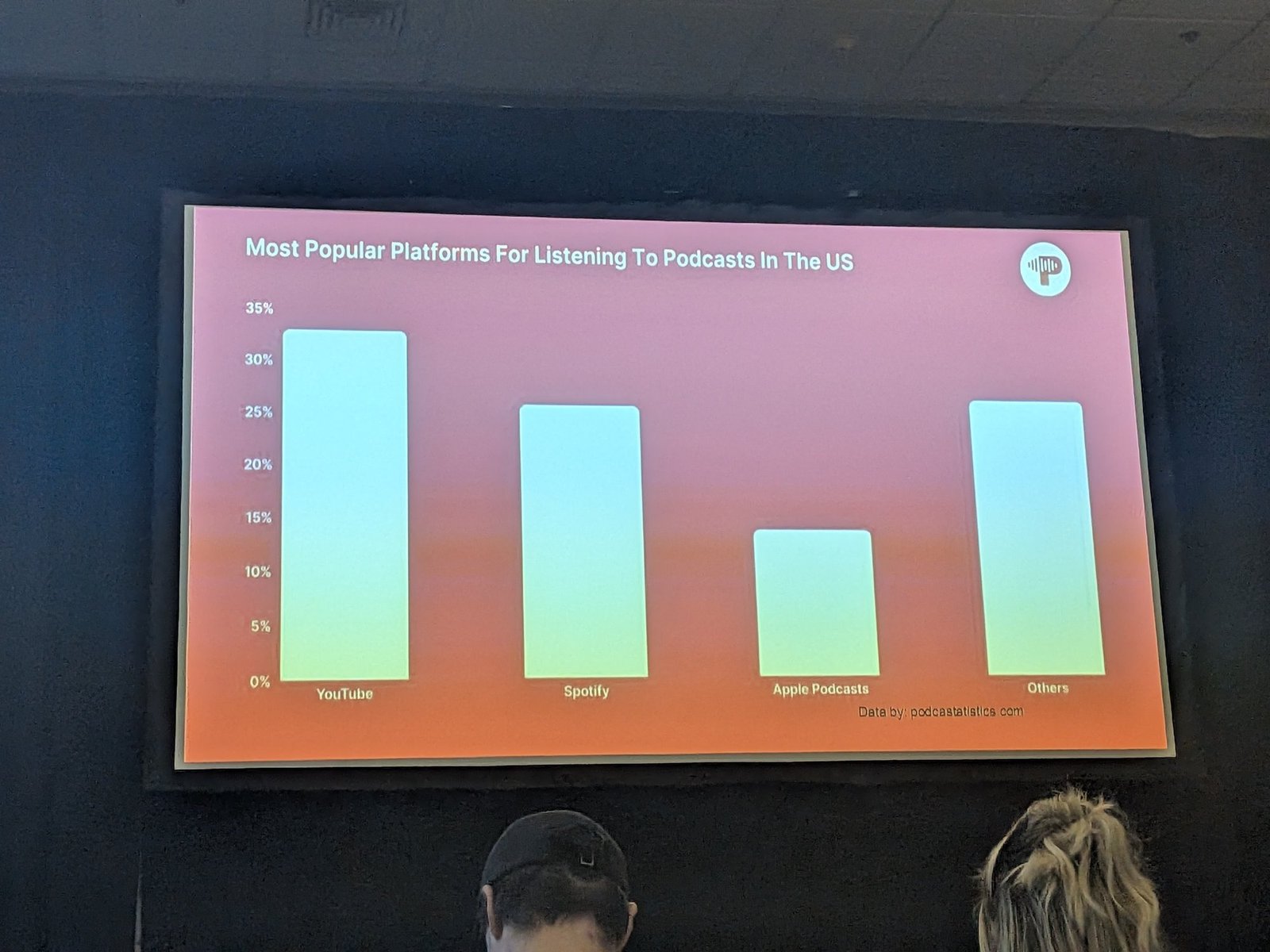
On platforms, YouTube led in the US at roughly a third of listening, ahead of Spotify at about a quarter and Apple Podcasts at under 15%. He added that all three now show video, so podcasts are video content as much as audio.
Score Every Show
Brandon keeps a simple spreadsheet and scores each show on three factors: relevance to his audience, authority (including whether it has a website), and an active audience. One out of three is fine; three out of three is a strong opportunity.
His comparison: a show with high authority but no relevance won’t move the needle if none of your customers listen. A show with relevance and a proper website might only get 50 listeners per episode, but if all 50 are your ideal customers, it’s worth far more.
Pitching, Recording, and Promotion
Pitch Like You Know the Show
Big shows get pitched every day, and most pitches are generic. His advice:
- Personalize the subject line. Name the show instead of writing “I want to be a guest on your podcast.”
- Offer a few topics. Show your range, and include angles the show hasn’t covered.
- Use AI to find the gaps. Have it analyze past episodes and identify topics the host hasn’t discussed yet.
- Avoid the obvious topic. Everyone wants him to talk about SEO and AI, so he deliberately mixes it up.
- Mention distribution. Say you’ll share the episode on social media and with your email list.
He showed one of his own early pitches as the bad example: all about himself, nothing about the host, the show, or its audience.
Quality Equals Credibility
On recording, he was candid about his mistakes. He recorded his first interview on a laptop, and halfway through, the host stopped and asked to start over because the audio wasn’t good enough. You don’t need thousands of dollars of equipment, but you need a decent microphone, clear video, and good lighting. The cheapest fix is to sit facing a window.
During the interview, tell stories and give useful information, and don’t promote yourself throughout. Save it for the end, when hosts almost always ask where people can find you. Brandon points listeners to a dedicated page on his site so he can track who comes from podcasts, and recommends offering a lead magnet there.
The Other 70%
Recording, he said, is only 30% of the work. The rest:
- Follow up with hosts. Thank them and build the relationship. One host he still talks to regularly has sent him multiple referrals.
- Set up Google Alerts for your name and company. Hosts don’t always tell you when an episode goes live. The same alerts show where competitors are appearing.
- Transcribe and repurpose. You spoke the content, so the transcript gives you original material in your own voice, unlike generic AI content.
- Clip it. One episode can give you ten or more short clips, a month of social content.
- Share it with your audience. It helps the host too, which makes them happy to have you back.
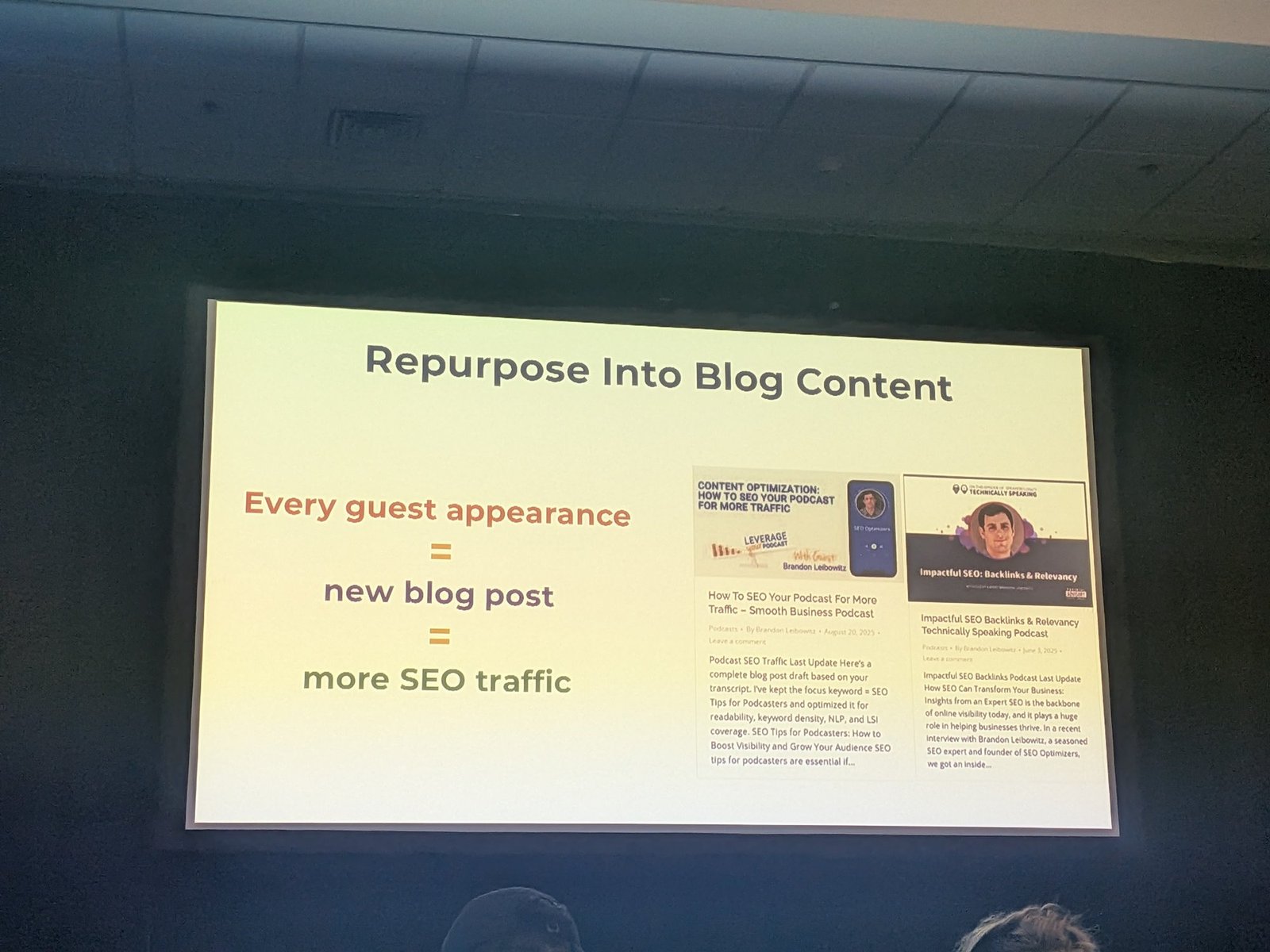
His formula on the slide: every guest appearance equals a new blog post, which equals more SEO traffic. The examples were blog posts built from his own appearances, including “How To SEO Your Podcast For More Traffic” and “Impactful SEO: Backlinks & Relevancy.”
The Blueprint
- Build a target list. Run
intitle:"podcast"searches for one or two core keywords, check PodMatch, Listen Notes, Podchaser, or MatchMaker.fm, and pull the shows your competitors have appeared on. - Score each show. Relevance, authority and website, and active audience.
- Research before pitching. Review past episodes and find topics the show hasn’t covered.
- Pitch personally. Name the show in the subject line, offer a few topics, and mention how you’ll share the episode.
- Prepare your setup. Decent microphone, clear video, natural light.
- Give value, then one call to action. Send listeners to a dedicated page on your site.
- Keep your naming consistent. Same name and company name every time.
- Promote and repurpose. Blog post from the transcript, short clips, email, and a thank-you to the host.
- Monitor. Google Alerts for your name, your company, and competitors.
What Not to Do
- Don’t spray and pray. Brandon named this as one of his biggest early mistakes. Be selective.
- Don’t judge a show only by audience size. Relevance to your customers matters more.
- Don’t send a pitch that’s all about you.
- Don’t record on a laptop mic. A poor setup can end the interview.
- Don’t promote yourself throughout the episode. Save it for the end.
- Don’t skip the call to action. Another mistake he named from his own experience.
- Don’t vary how you name yourself or your business. Inconsistency weakens the entity signals you’re building.
- Don’t treat the recording as the finish line. It’s 30% of the work.
- Don’t publish repurposed transcripts without editing. If you use AI to turn a transcript into a post, read it before it goes live. Leftover tool notes or keyword-stuffed phrasing undo the credibility the appearance earned.
Next Steps
- Run three
intitle:"podcast"searches for your main service topics this week. - Look up where two or three competitors have been guests and add those shows to your list.
- Score your first ten shows on relevance, authority and website, and audience.
- Write one pitch angle per show that its recent episodes haven’t covered.
- Create a landing page for podcast listeners before your first appearance.
- Set up Google Alerts for your name and company name.
Personal Takeaways
I didn’t expect a podcasting talk to connect so well with the AI search sessions from the morning, but it did. It was also one of the most practical talks of the day, full of mistakes Brandon made himself.
What I’m taking away:
- Brandon’s “50 ideal listeners” example lines up with Thomas Peham’s data. Thomas found that 40.83% of YouTube videos cited by AI search had fewer than 1,000 views, and that every AI system he tested cited the blog version of a piece over the video version. Together, the lesson is clear: a niche show with a proper text-based episode page may do more for AI visibility than a big show with no page at all.
- Checking for per-episode pages is a filter I hadn’t used. No other speaker this week framed guest appearances around what the host’s website publishes. It’s a simple test that separates a branding exercise from a search asset.
- The competitor research trick is immediately usable. It’s the same logic as a backlink gap analysis, applied to podcasts.
- This fits our own business well. For a consultancy working between Japan and the UK, EU, and US, and for a language-learning platform, guest spots on niche business or Japan-focused shows could reach exactly the right people without producing a new article every week.
- The traffic results need context, and Brandon gave it himself. He said openly that correlation isn’t causation, and the chart didn’t mark when each appearance happened. It illustrates the idea rather than proving podcasts alone caused the growth.
- AI was a side note, not the focus. The session host even noted that Brandon mentioned AI less than any other speaker. The AI connection is real, but the evidence for it came from other talks.
Related Resources
- Session: Content (brightonSEO San Diego 2026)
- Talk: How guest podcasting becomes an SEO growth engine
- Speaker: Brandon Leibowitz
- Thomas Peham session report: the YouTube and video-versus-blog experiments that support Brandon’s advice
- Laura Beatty session report: the next talk in the same session
Written by Ayaka Uchida
CEO, A-Digital Works
This report covers Brandon Leibowitz’s session “How guest podcasting becomes an SEO growth engine” at brightonSEO San Diego (16 September 2026).
