

TL;DR
- Search is growing, websites are shrinking. Google search volume rose 6.9% while visits to 100 large US sites fell 9.2%.
- AI traffic is growing fast, but it doesn’t make up the loss. AI assistant traffic grew 183%, yet total traffic is still down 4.7% year on year.
- Mentions are the new metric. In ChatGPT, brands are named 2.1x more often than they are linked.
- B2B and B2C are not the same game. In B2B, AI mostly cites competitors’ sites. In B2C, it mostly cites independent third parties.
- Original data wins. Pages with original data earned 3.3x the AI citations, yet only 2.7% of pages have any.
About the Session
- Event: Spotlight by Semrush 2026
- Date: 13 October 2026
- Venue: Old Billingsgate, London
- Stage: Signals Stage
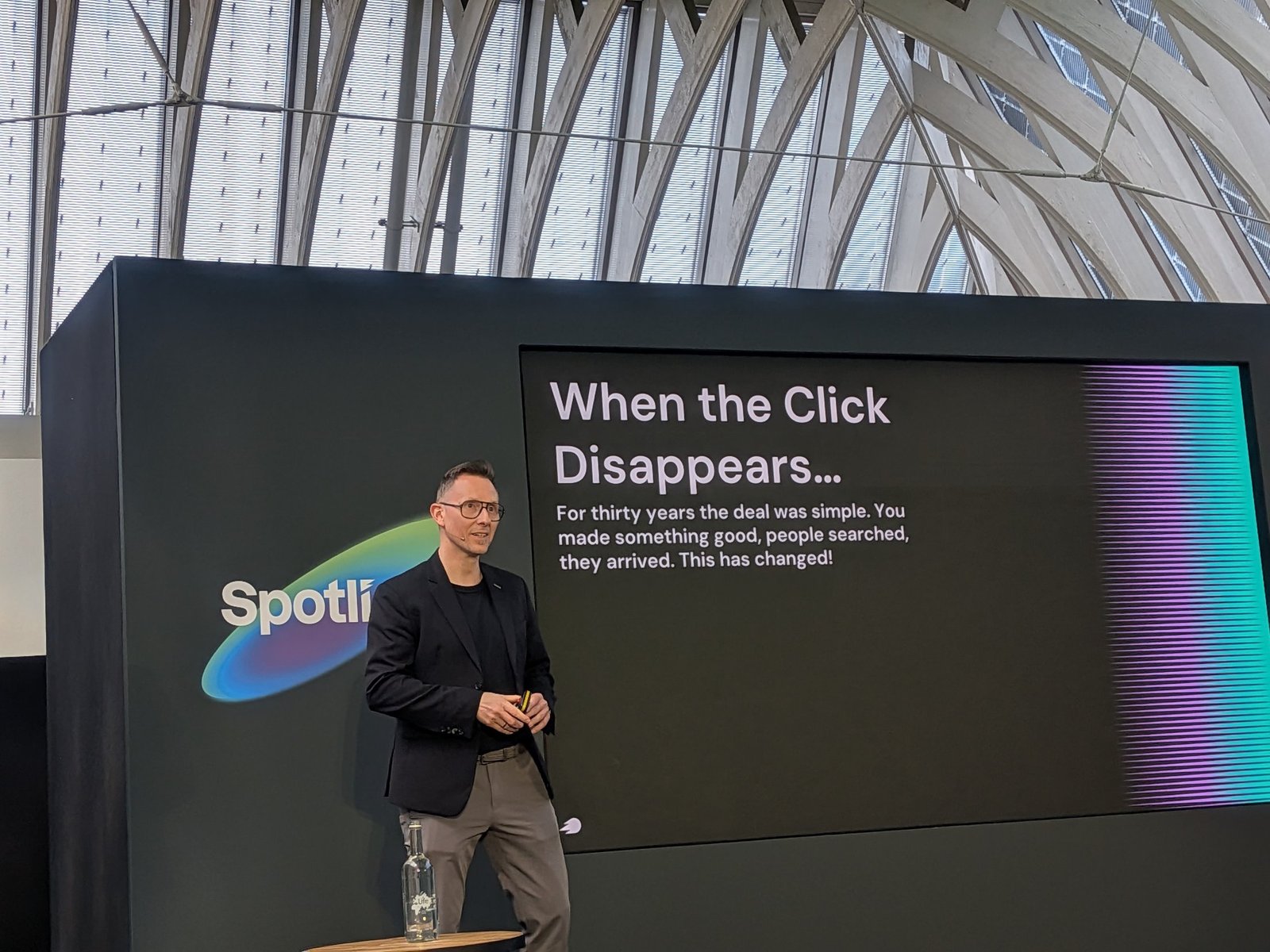
Marcus opened with a selfie with the crowd, which he said helps him calm down. He also shared that his very first international talk in English was in London, back in 2008.
His starting point: for thirty years, the deal was simple. You made something good, people searched, and they arrived. That has changed. So what does it actually mean when the click disappears? He answered with fresh data from Semrush and several third-party studies.
About the Speaker
Marcus Tober is SVP of Enterprise Solutions at Semrush and the founder of Searchmetrics. With 22 years of experience in SEO and software products, he is one of the veterans of the industry. At Semrush, he focuses on removing the dependencies and issues between SEO, product, engineering and marketing.
Search Is Growing, Websites Are Shrinking
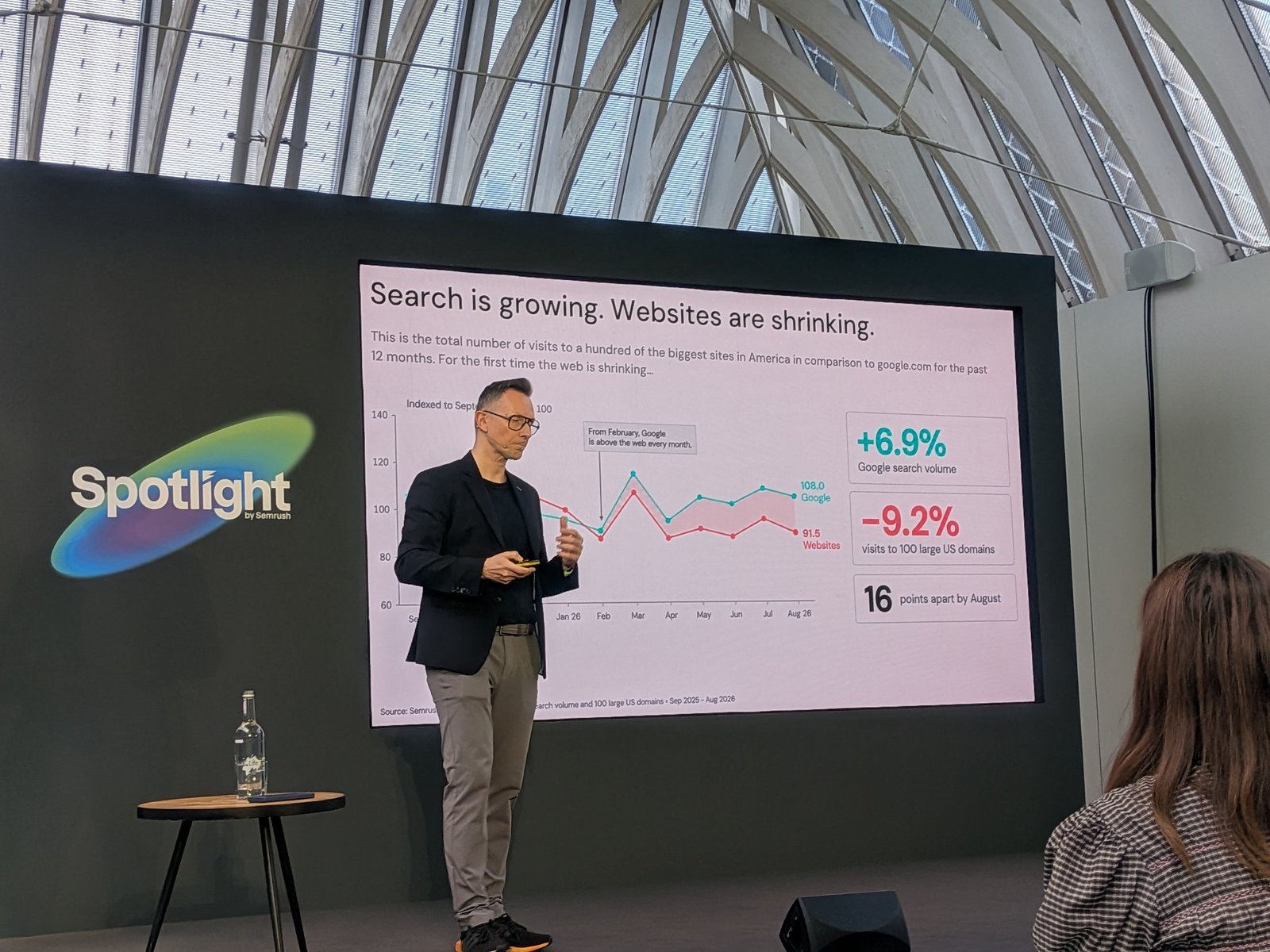
Many people assumed Google was finished. The reality is that Google and ChatGPT are used side by side. Google search is still growing, and ChatGPT has more than one billion weekly users.
Semrush compared visits to 100 of the biggest sites in the US with Google.com over 12 months:
- Google search volume: +6.9%
- Visits to 100 large US domains: minus 9.2%
- From February, Google was above the web every month, and the two were 16 points apart by August
For the first time, the web is shrinking. The sites hit hardest are those where content itself is the business model, like price comparison or hobby sites. Transactional pages, where people actually buy, have grown.
The Funnel Has Moved Off Your Website
For 25 years, the playbook was to create top of funnel content, bring people to your site, retarget them and learn about them. That funnel is disappearing.
Top and middle of funnel now happen elsewhere: in AI answers, on Reddit, Instagram, TikTok, YouTube and WhatsApp. Someone buying a car asks AI, watches videos, then goes to the dealer already informed. Much of this is outside your control, and that is exactly where you need to gain more control.
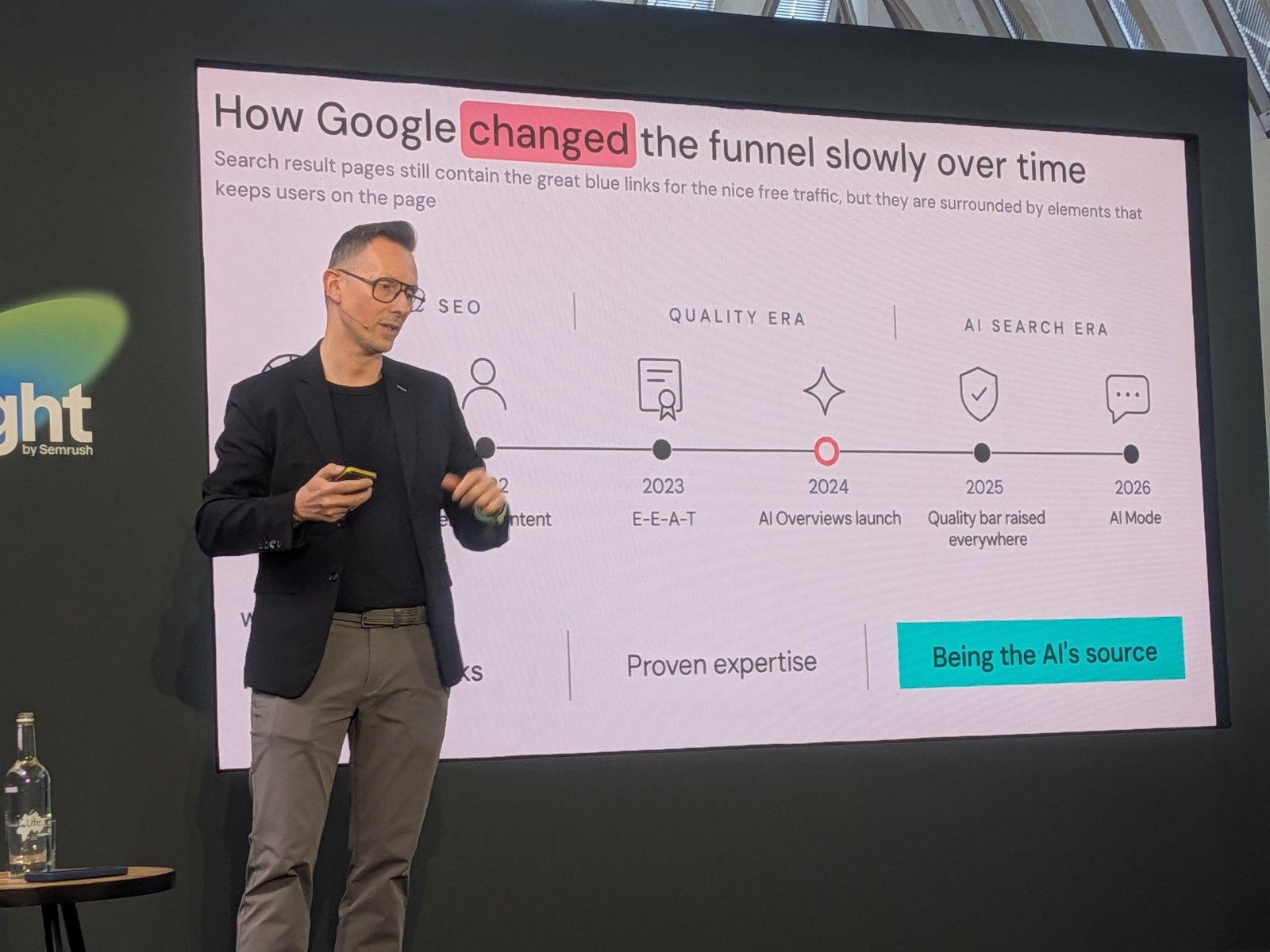
Marcus traced how Google changed the funnel step by step:
- Classic SEO: links
- Quality era: helpful content in 2022, E-E-A-T in 2023. The goal became proven expertise
- AI search era: AI Overviews in 2024, a higher quality bar everywhere in 2025, AI Mode in 2026. The goal is now being the AI’s source
Search result pages still contain the blue links, but they are surrounded by elements designed to keep users on the page.
He also looked at Search Console data from one of the largest brands in the world. The gap between growing impressions and falling clicks keeps getting wider. AI Overviews are not the only reason. Many long, question-style queries now show up as impressions from people asking questions directly in Chrome, with no intention of ever clicking.
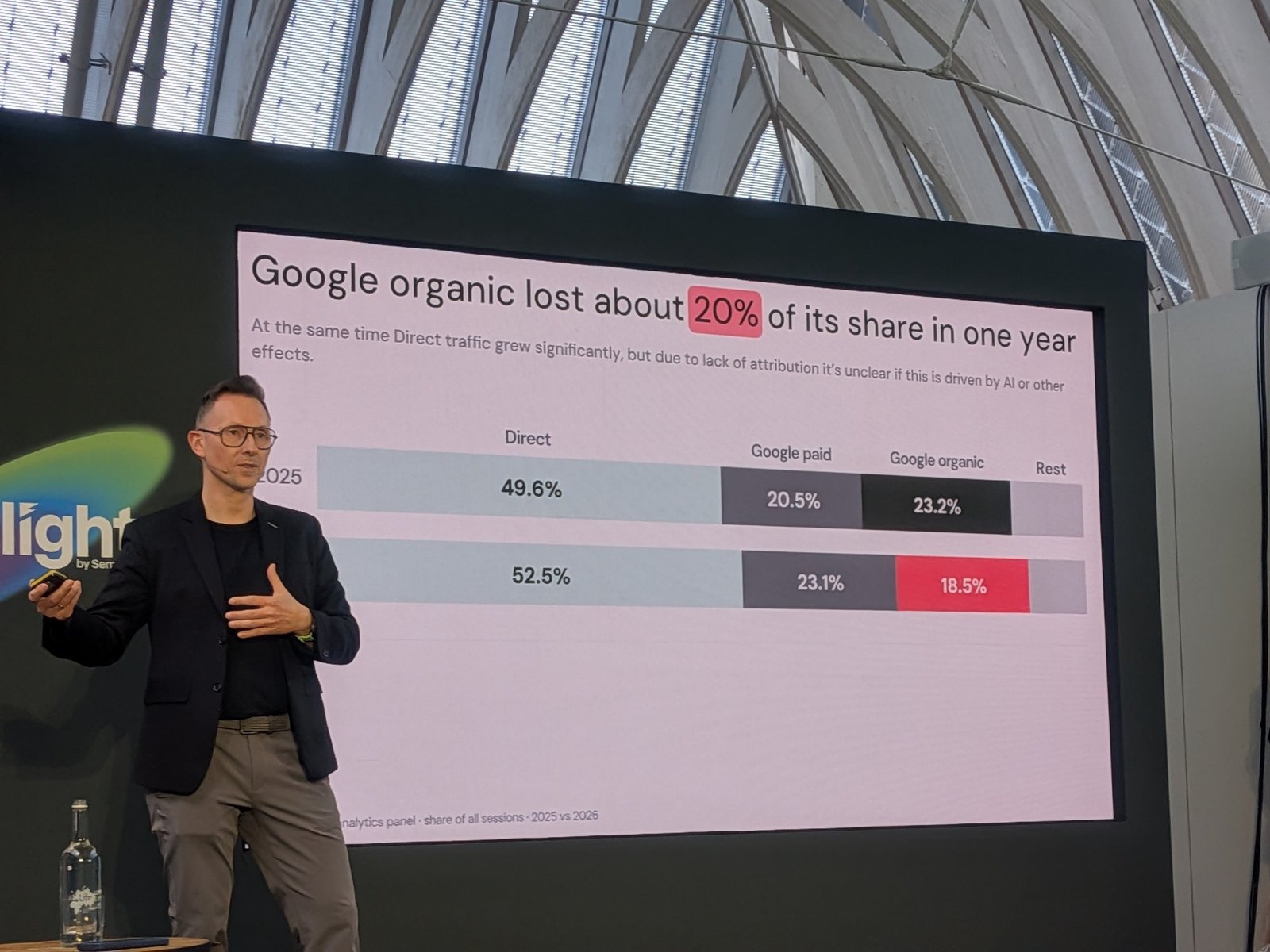
Across a large analytics panel, Google organic lost about 20% of its share of sessions in one year:
- 2025: direct 49.6%, Google paid 20.5%, Google organic 23.2%
- 2026: direct 52.5%, Google paid 23.1%, Google organic 18.5%
Direct traffic grew, but without proper attribution it is unclear whether AI is behind it.
Can AI Make Up for the Lost Traffic?
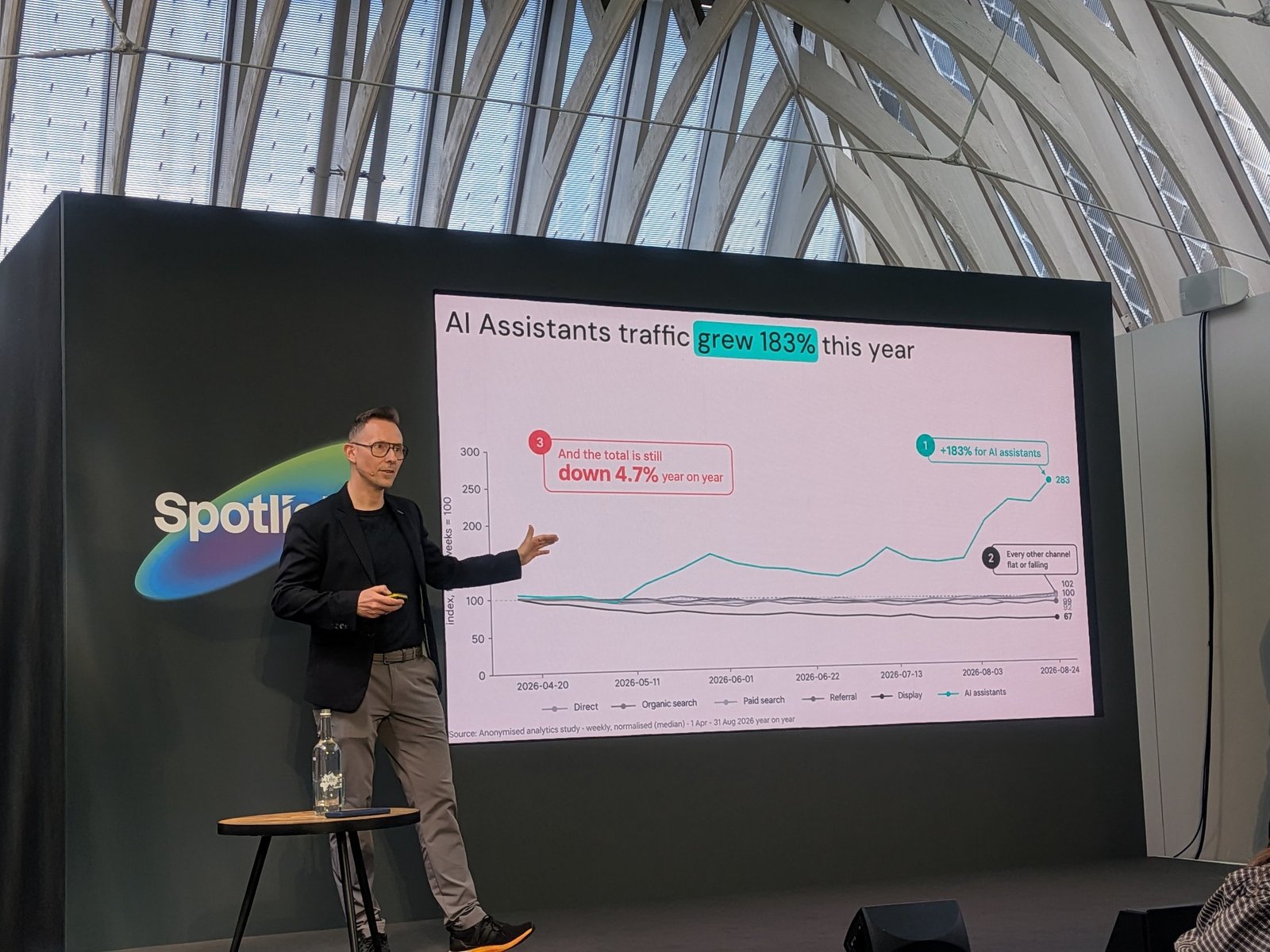
Marcus normalised analytics data from very large B2B and B2C websites:
- Traffic from AI assistants grew 183%
- Every other channel was flat or falling. Display dropped the most, simply because fewer clicks mean fewer display impressions
- Total traffic was still down 4.7% year on year
So for now, AI does not compensate for the loss.
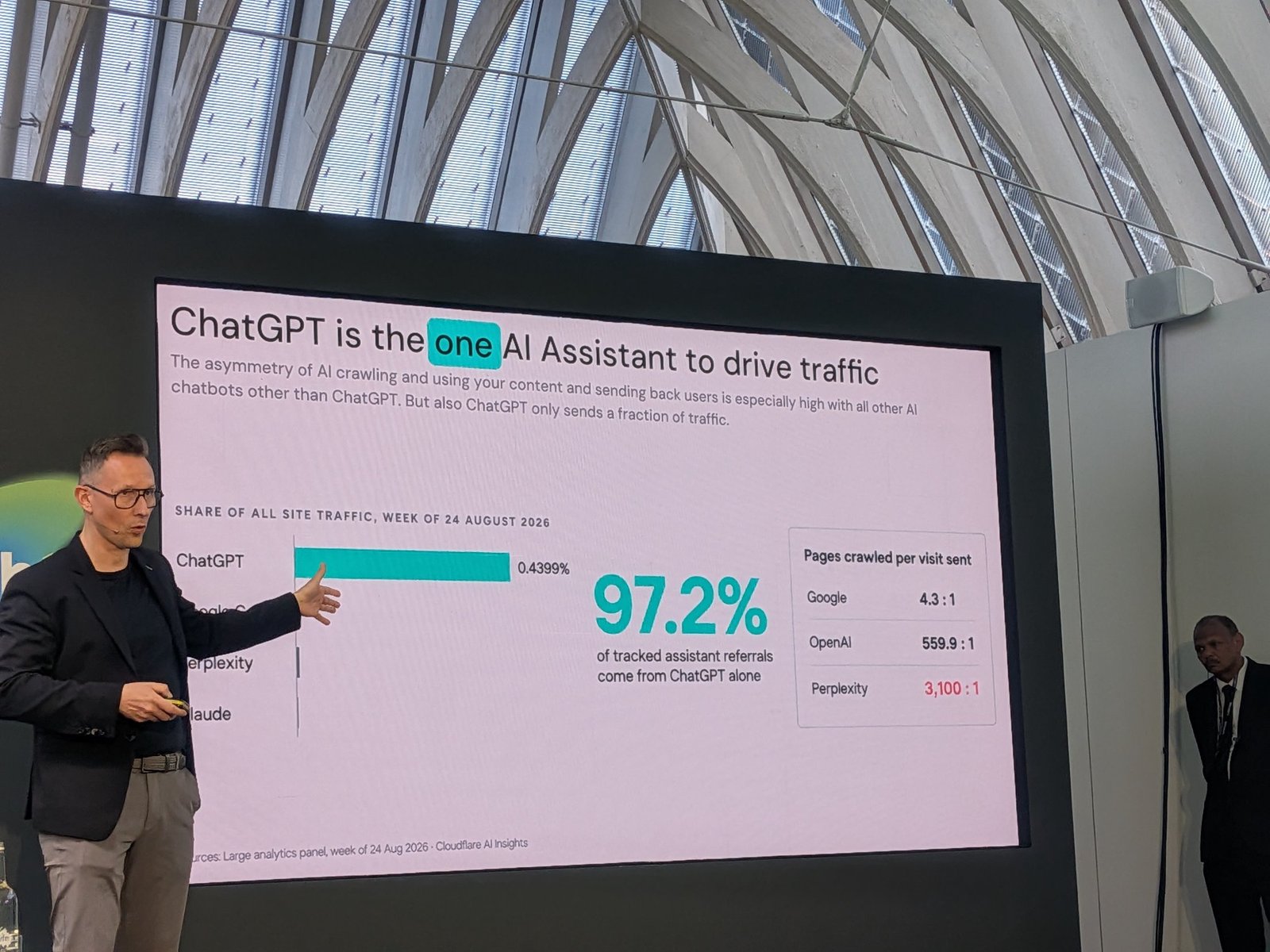
And almost all of that AI traffic comes from one place:
- 97.2% of tracked AI assistant referrals come from ChatGPT alone
- Even so, ChatGPT made up only about 0.44% of all site traffic in the week of 24 August 2026
- Pages crawled for every visit sent back: Google 4.3 to 1, OpenAI 559.9 to 1, Perplexity 3,100 to 1 (Cloudflare AI Insights)
The reason is simple. Large language models were never built to send traffic. They were built to produce text answers.
Mentions Are the New Metric
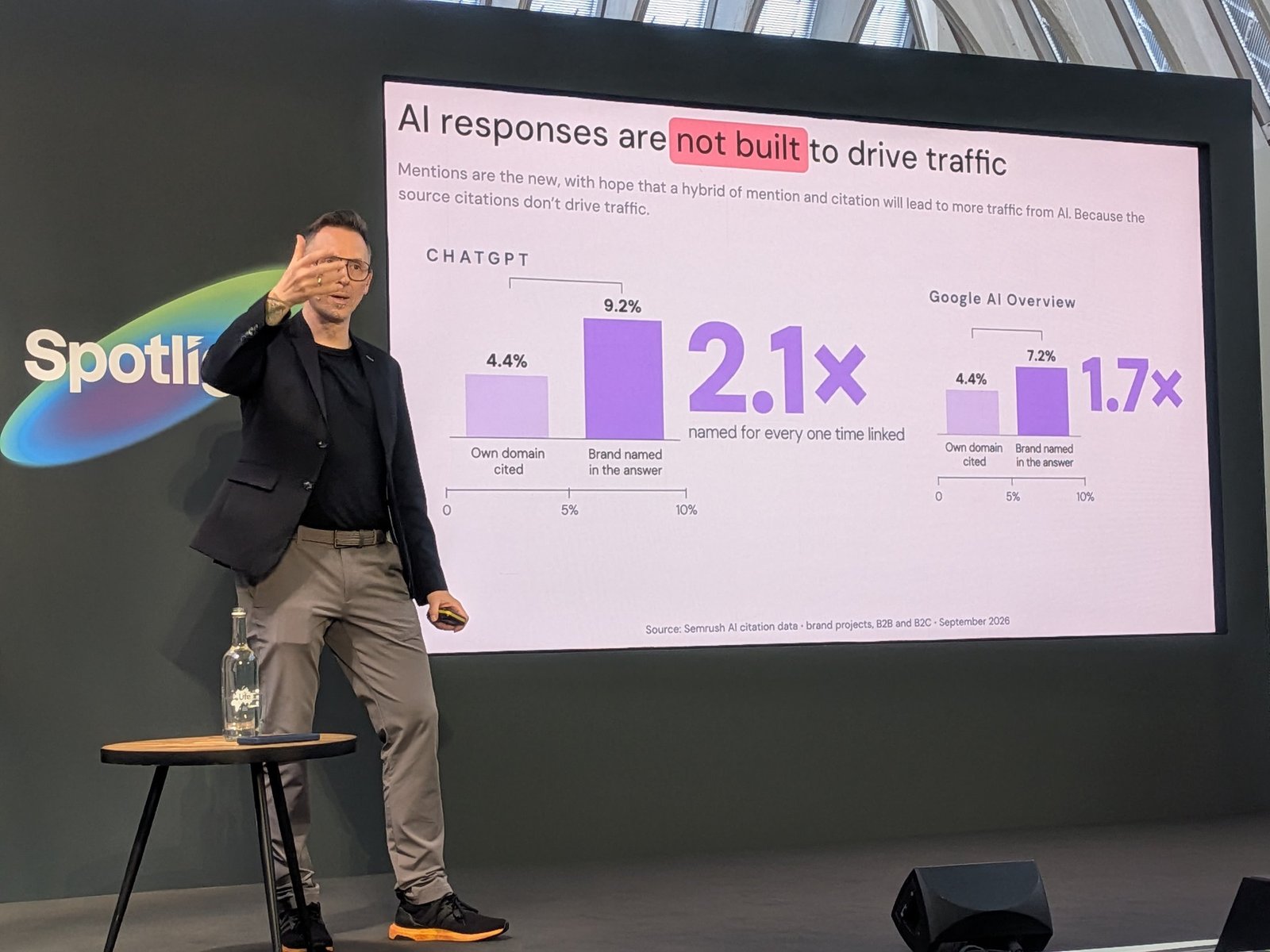
If AI is built to answer rather than send clicks, the metric to watch is mentions of your brand, products and services:
- In ChatGPT, your brand is named in 9.2% of answers but your domain is cited in only 4.4%. That is 2.1x more mentions than links
- In Google AI Overviews, it is 7.2% vs 4.4%, or 1.7x
Your brand can show up in the answer even when your URL is not the source. And the growth in direct traffic suggests people often see your brand in AI first, then come to your site already informed.
B2B and B2C Are Not the Same Game
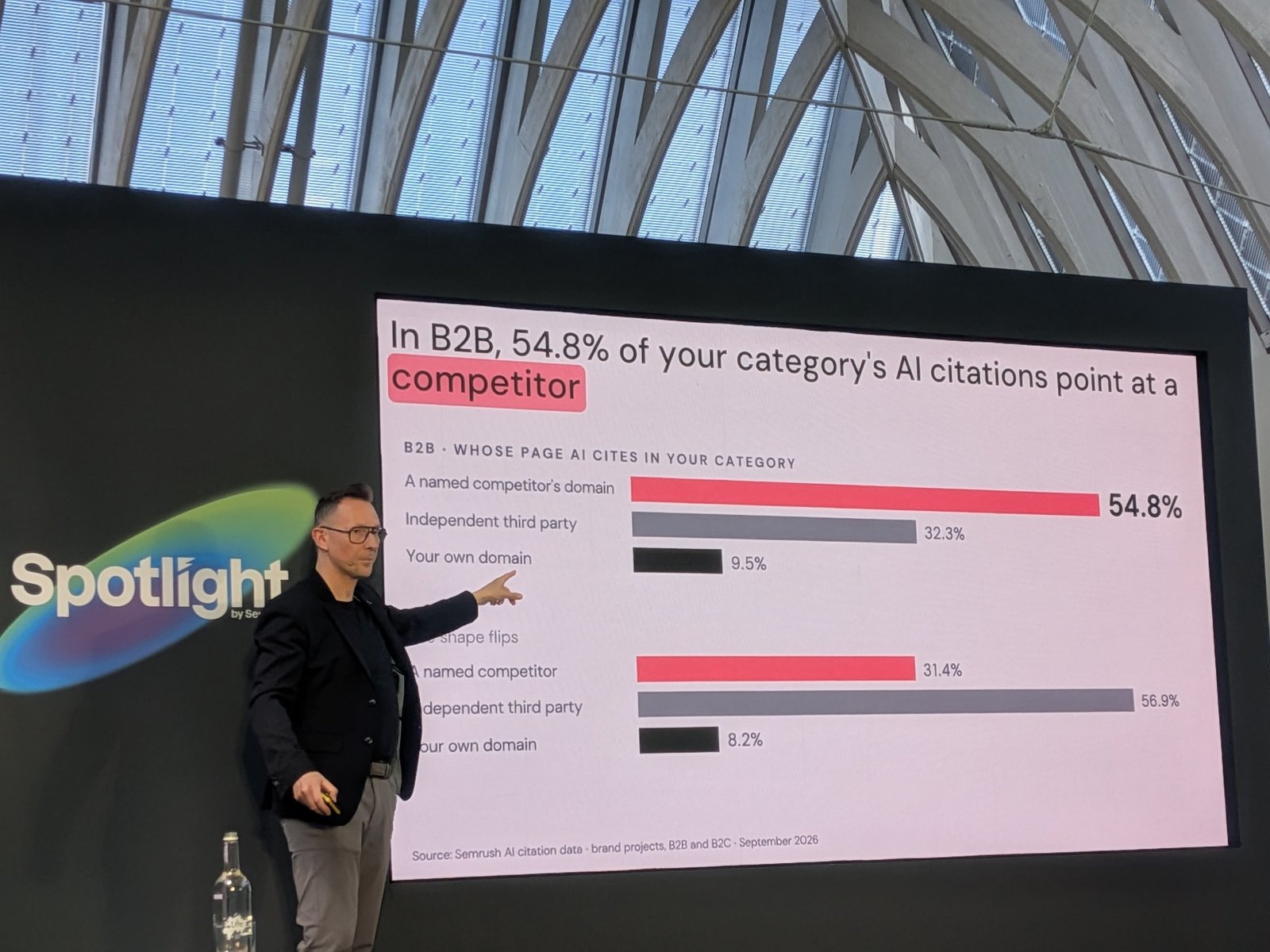
Whose pages does AI cite in your category?
- B2B: a named competitor’s domain 54.8%, independent third parties 32.3%, your own domain 9.5%
- B2C: a named competitor 31.4%, independent third parties 56.9%, your own domain 8.2%
B2B questions are about decisions, like choosing a CRM or project management software, so many competitors appear in the same answer. In B2C, like choosing running shoes, independent publishers and blogs come up more.
That makes B2C a strong case for digital PR and working with third parties to get your brand mentioned. B2B is harder, because you can’t change what is on your competitors’ sites.
Marcus also showed that on 9 August, ChatGPT’s free version, used by around 95% of users, changed the sources it relies on. It moved away from user-generated content like forums and Reddit, towards brand and company pages. That was behind the sudden jump in ChatGPT traffic in August, and it gives brands a little more control. Even so, when he checked one of the most cited Reddit threads about Semrush, competitors were mentioned right alongside it. You are never alone in an AI answer.
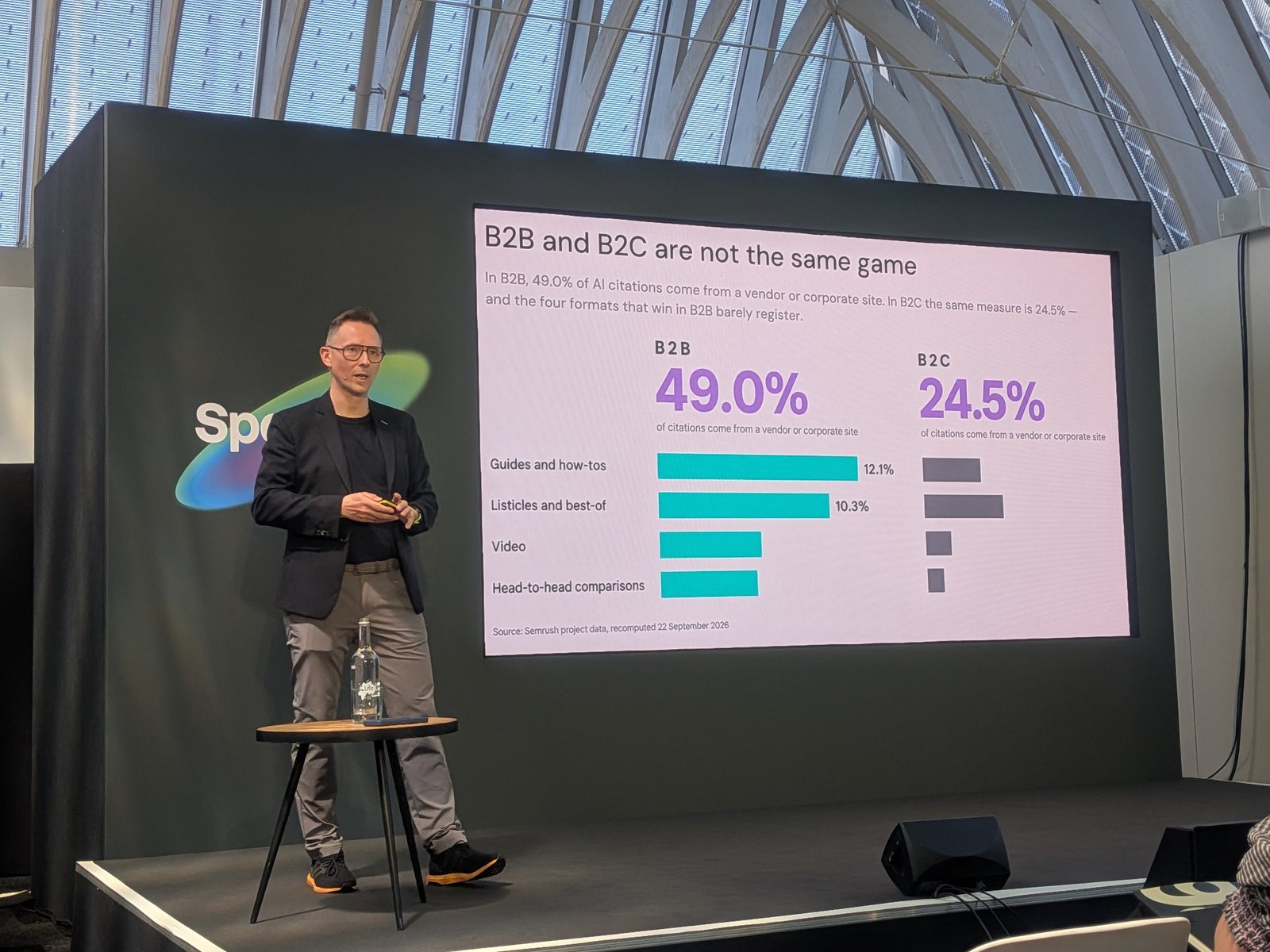
- In B2B, 49.0% of AI citations come from a vendor or corporate site. In B2C, it is 24.5%
- The formats that win in B2B are guides and how-tos (12.1%), listicles and best-of pages (10.3%), video, and head-to-head comparisons. In B2C, they barely register
His examples: a sneaker brand’s most cited page is about washing sneakers in a washing machine. On the B2B side, ServiceNow’s educational content explaining what its services are and how they work. Helpful, educational content teaches users and AI at the same time.
Every Part of the Funnel Gets a Different Job
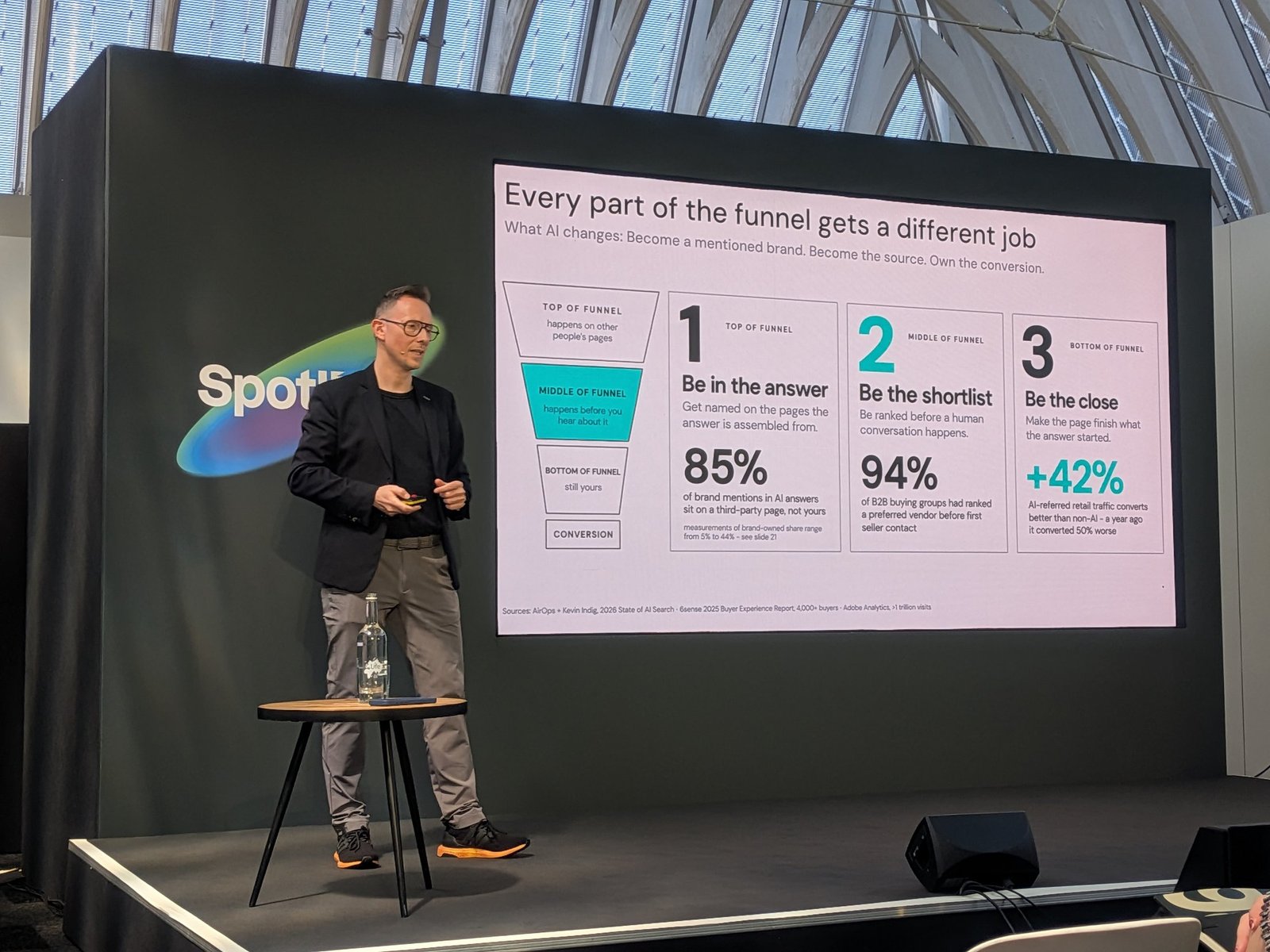
- Top of funnel, be in the answer: get named on the pages the answer is built from. 85% of brand mentions in AI answers sit on a third-party page, not yours
- Middle of funnel, be the shortlist: be ranked before any human conversation happens. 94% of B2B buying groups had ranked a preferred vendor before first contact with a seller
- Bottom of funnel, be the close: make the page finish what the answer started. This is still yours
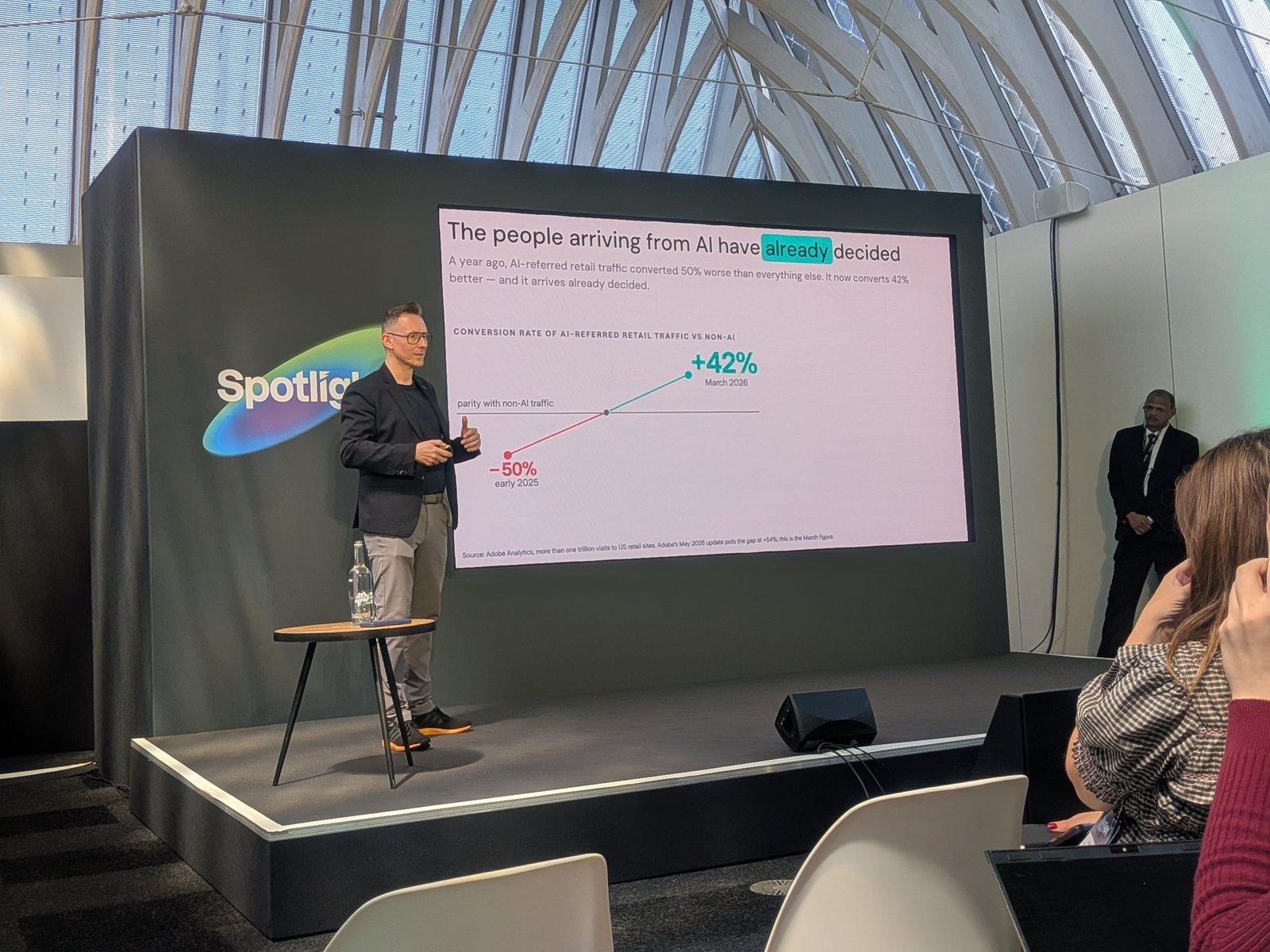
This is why AI visibility matters even with few clicks. According to Adobe Analytics, based on more than one trillion visits to US retail sites, AI-referred traffic converted 50% worse than other traffic in early 2025. By March 2026, it converted 42% better. People arriving from AI have already decided.
What Kind of Content Gets Cited
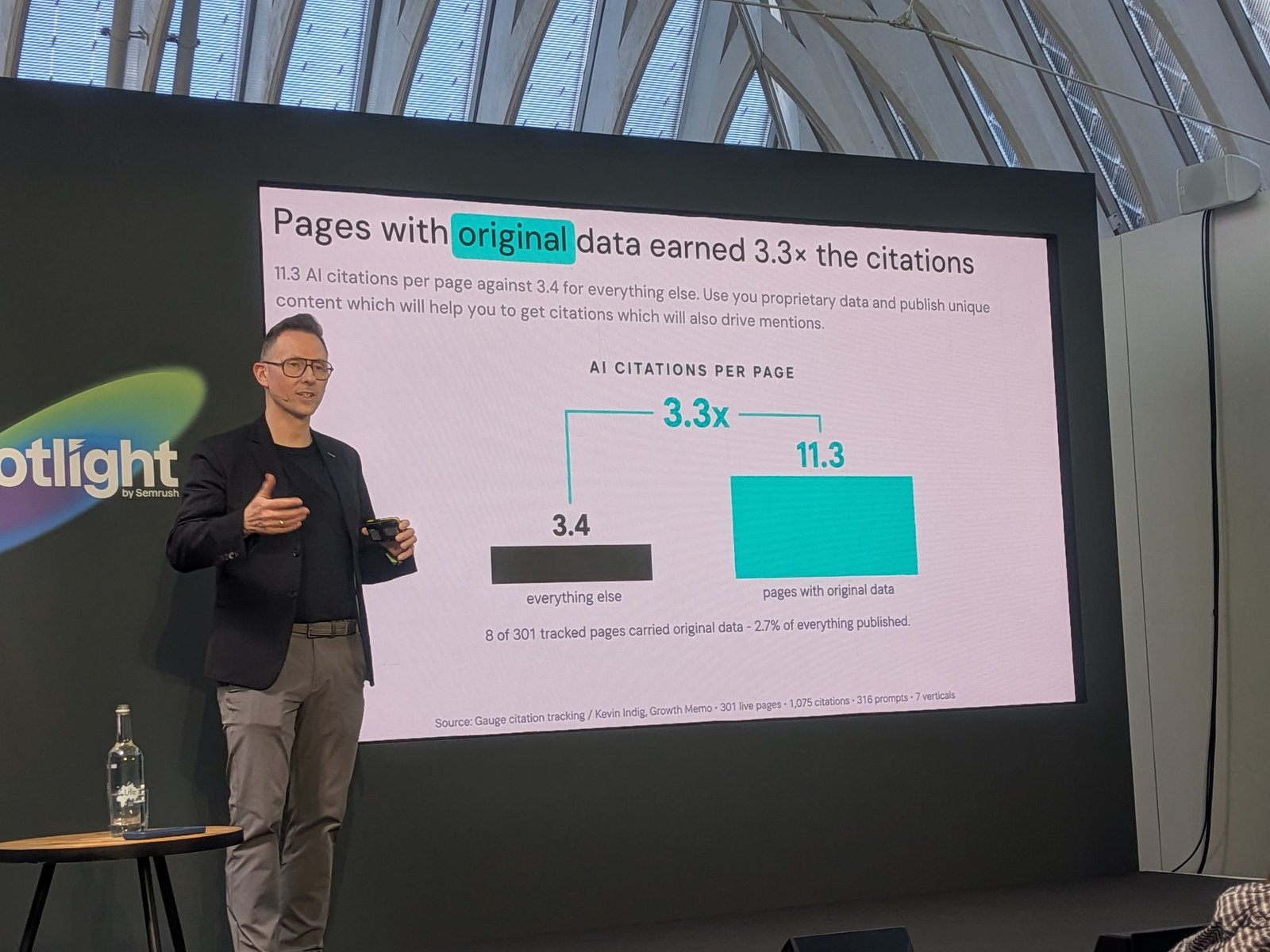
Original data. Pages with original data earned 11.3 AI citations each, against 3.4 for everything else, or 3.3x. Yet only 8 of 301 tracked pages carried original data, just 2.7% of everything published (Gauge citation tracking and Kevin Indig, Growth Memo).
Even if you sell the same product as thousands of other sites, adding something unique, like your own review or test, raises your chances.
Position in lists. Marcus also cited Kevin Indig’s finding that brands in the top three spots of a “best of” list are far more likely to be picked up by AI than those lower down. Being on the list is not enough.
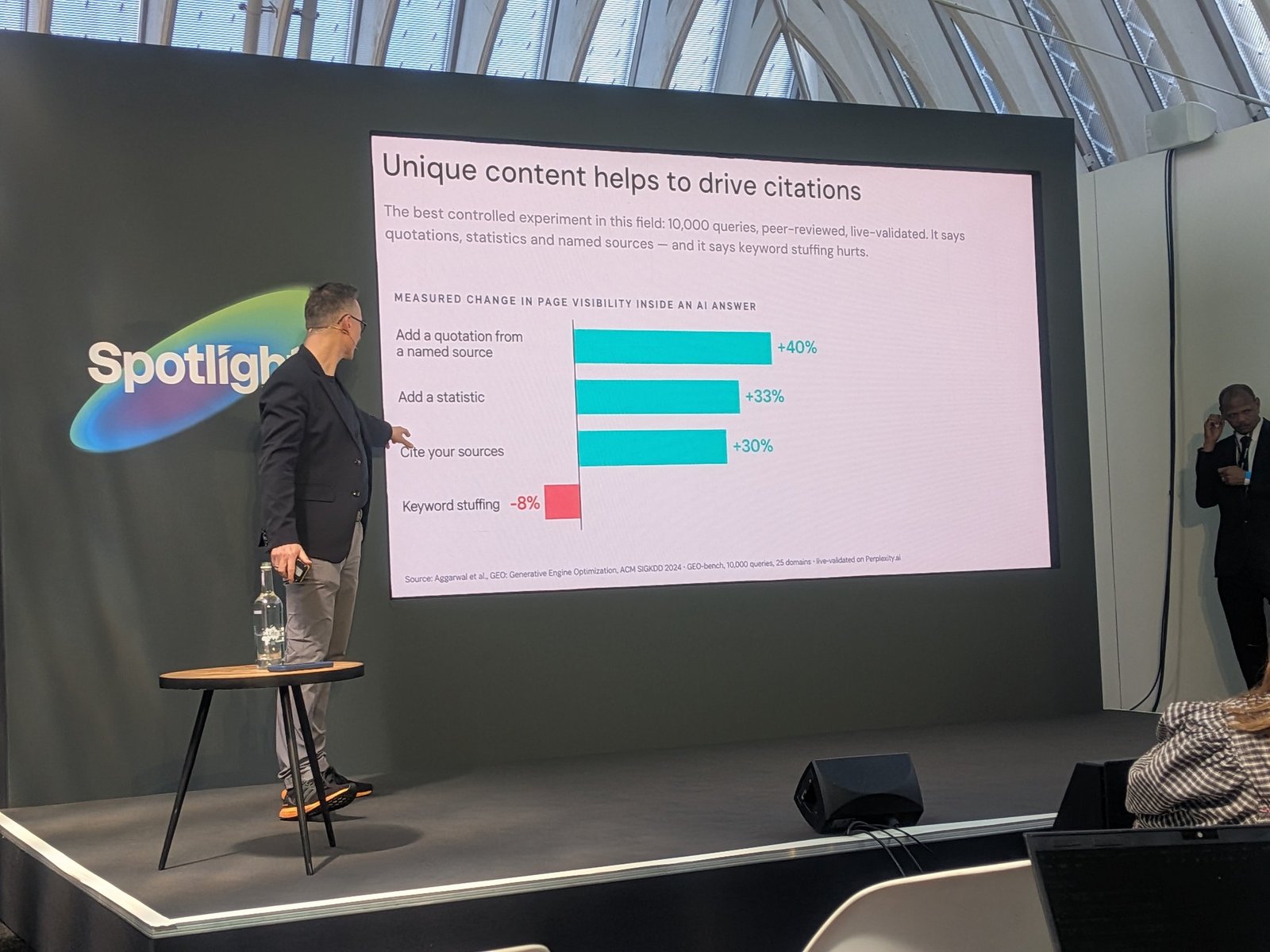
Quotes, statistics and sources. From the GEO study by Aggarwal et al. (ACM SIGKDD 2024, 10,000 queries), the measured change in a page’s visibility inside an AI answer:
- Add a quotation from a named source: +40%
- Add a statistic: +33%
- Cite your sources: +30%
- Keyword stuffing: minus 8%
What to Do Next
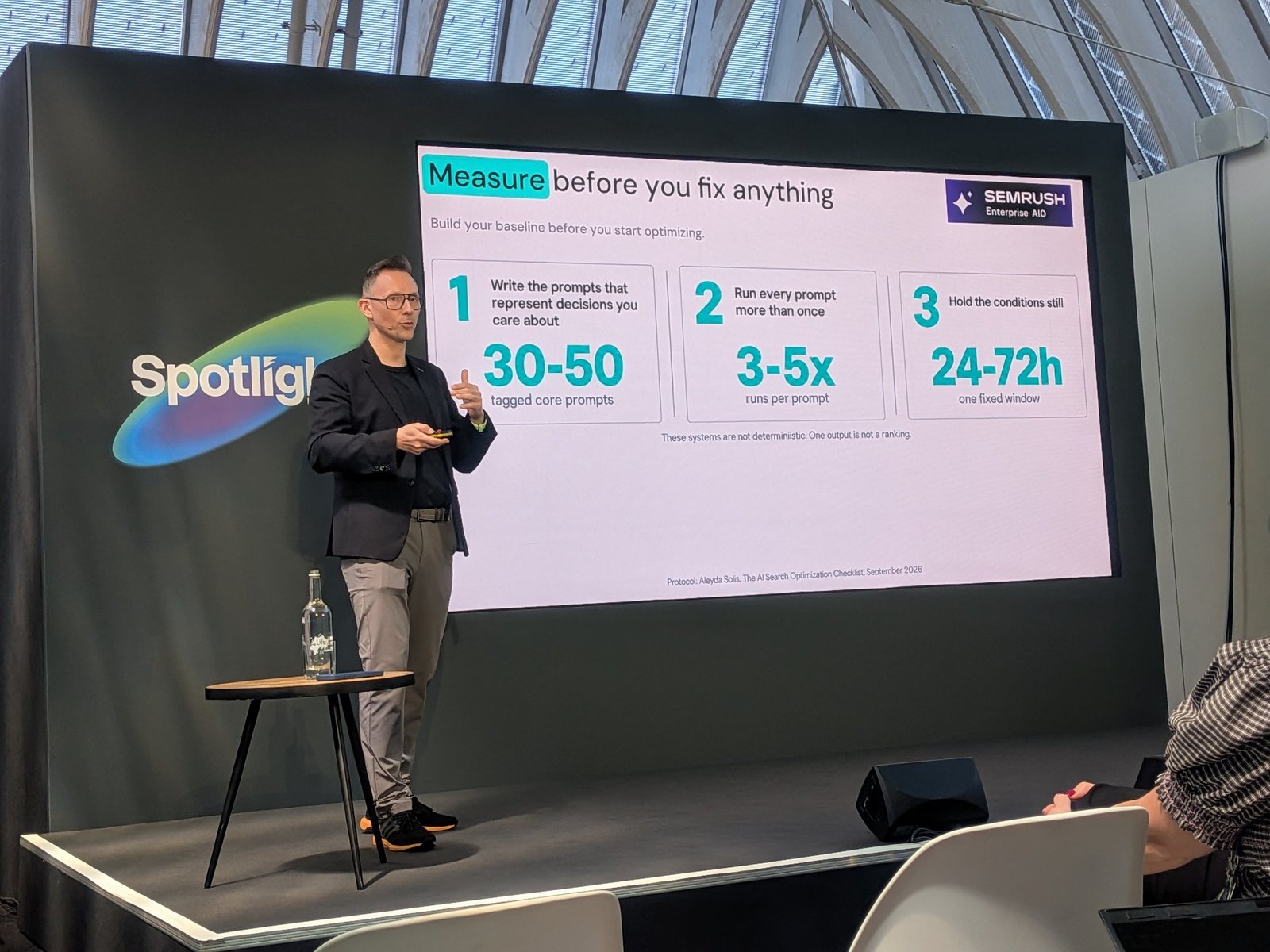
Measure before you fix anything. You can do this yourself or with software:
- Write the prompts that represent the decisions you care about: 30 to 50 tagged core prompts
- Run every prompt more than once: 3 to 5 times each, in fresh sessions
- Hold the conditions still: one fixed window of 24 to 72 hours
These systems are not deterministic, so one output is not a ranking. This becomes your baseline, and you repeat it later to track change. (Protocol from Aleyda Solis, The AI Search Optimization Checklist.)
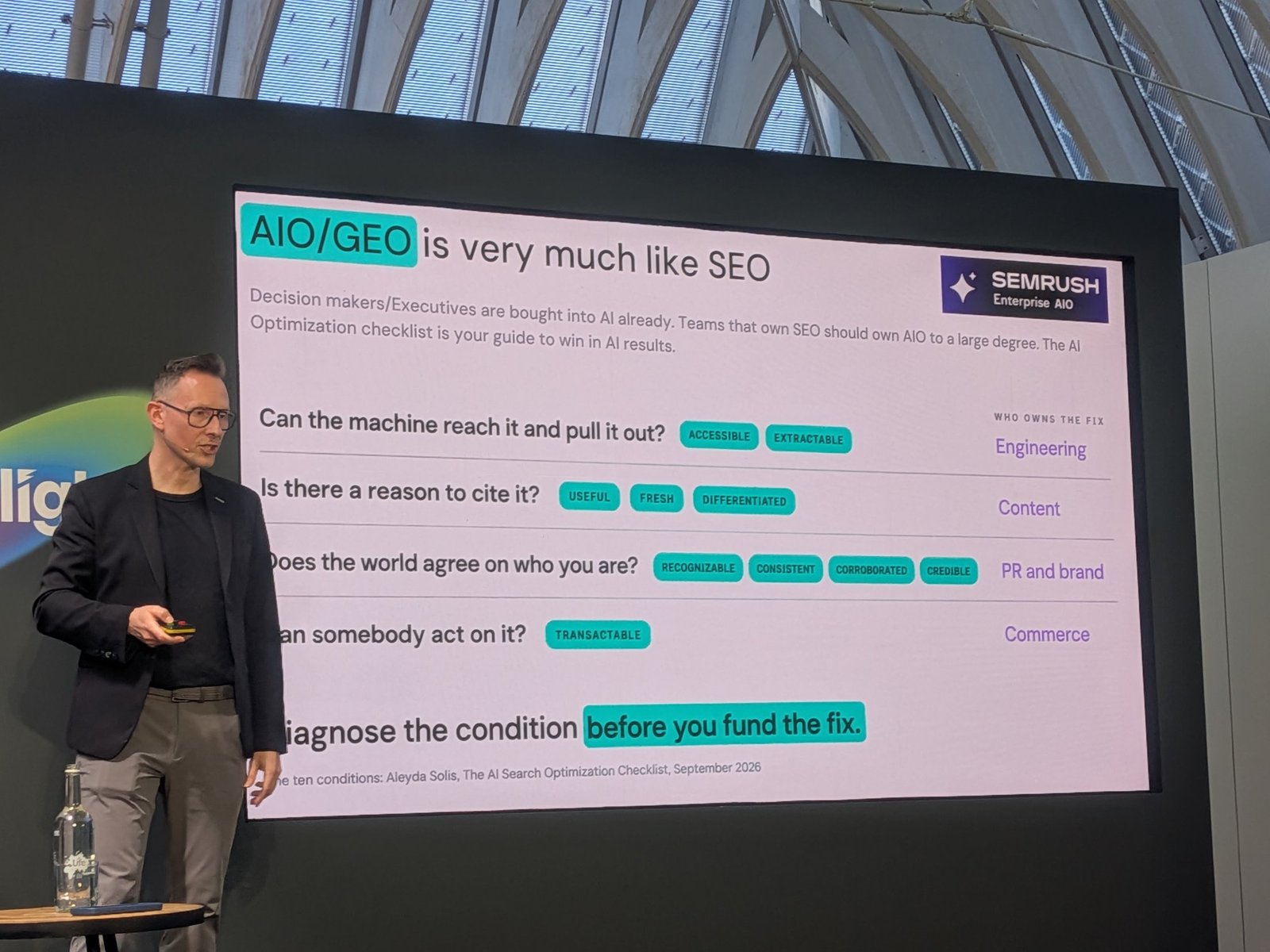
AI optimisation is very much like SEO. Teams that own SEO should own most of it. Four questions, and who owns each fix:
- Can the machine reach it and pull it out? Accessible, extractable. Owned by engineering
- Is there a reason to cite it? Useful, fresh, differentiated. Owned by content
- Does the world agree on who you are? Recognisable, consistent, corroborated, credible. Owned by PR and brand
- Can somebody act on it? Transactable. Owned by commerce
Diagnose the condition before you fund the fix.
A Publisher That Grew Anyway
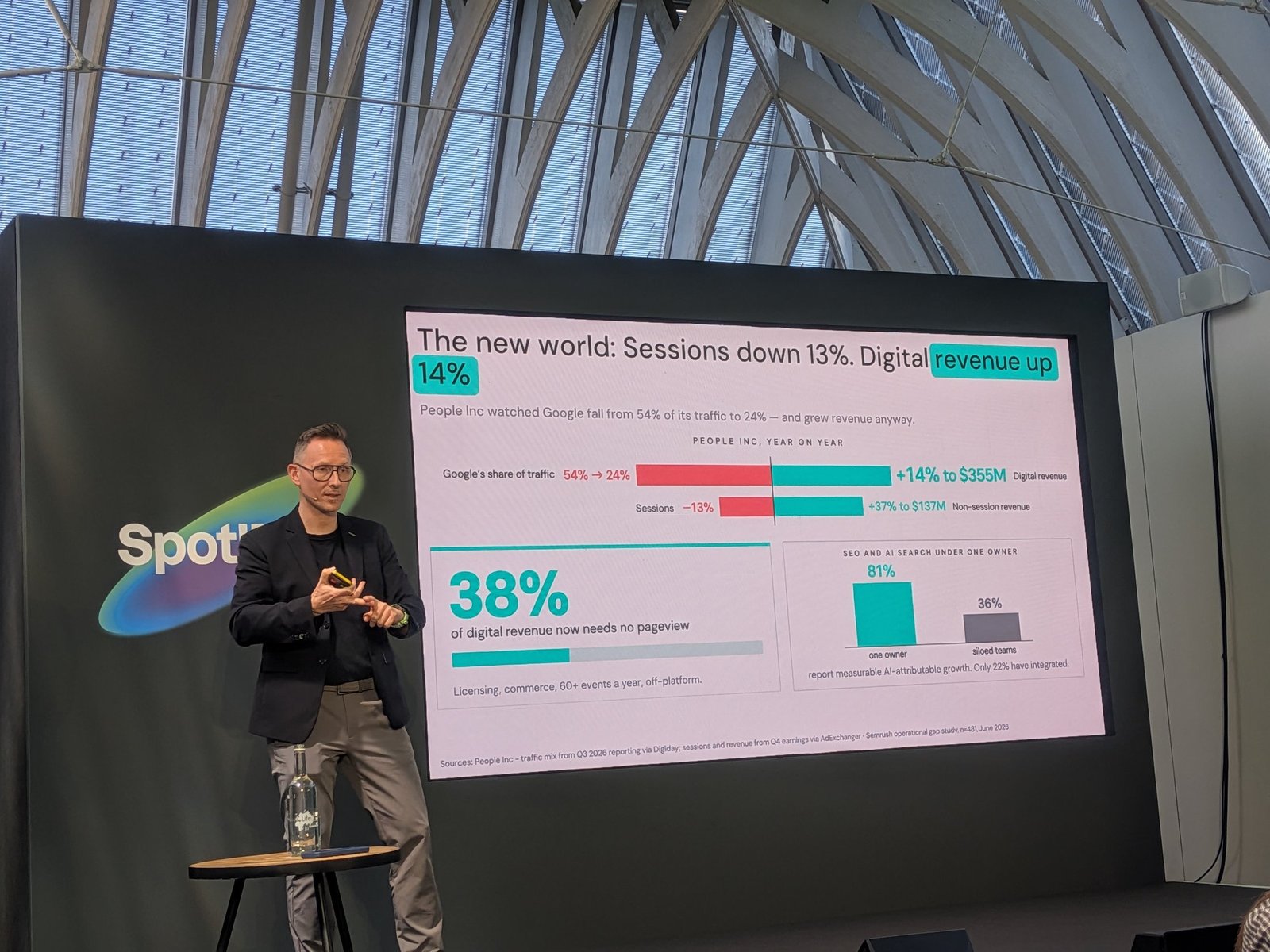
Publishers are hit hardest, so Marcus closed with People Inc, the publisher behind People magazine:
- Google’s share of its traffic fell from 54% to 24%
- Sessions fell 13%
- Digital revenue grew 14% to $355M, and non-session revenue grew 37% to $137M
- 38% of digital revenue now needs no pageview: licensing, commerce, 60+ events a year, off-platform
Semrush’s own research also found that companies with SEO and AI search under one owner are far more likely to report measurable AI-driven growth (81% vs 36% for siloed teams). Only 22% have merged them.
The Game Is Still On
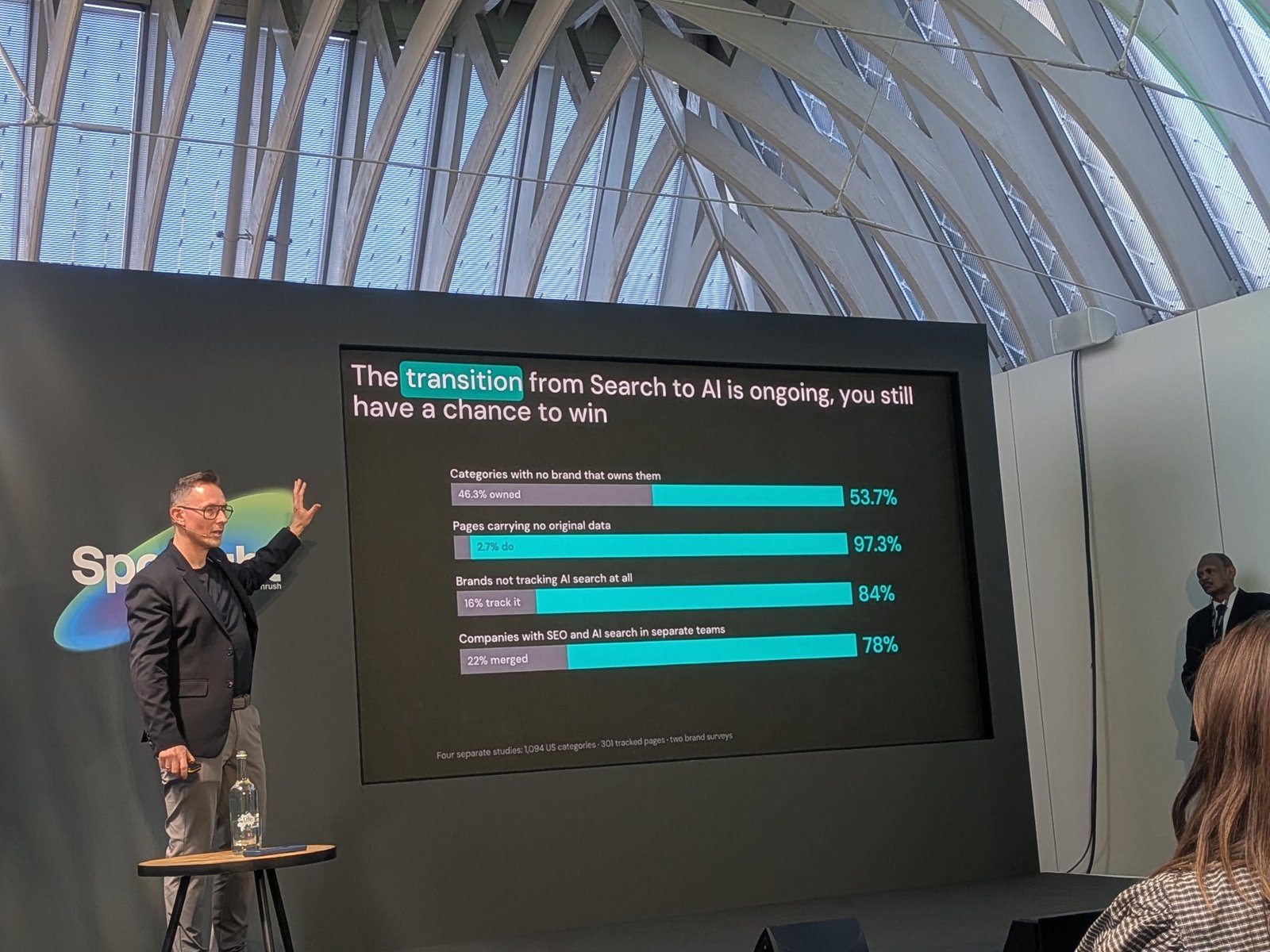
The transition from search to AI is ongoing, and nobody owns it yet:
- 53.7% of categories have no brand that owns them
- 97.3% of pages carry no original data
- 84% of brands don’t track AI search at all
- 78% of companies keep SEO and AI search in separate teams
Because AI favours recent content, you can still invest and win. Even a simple do-it-yourself tracking setup puts you ahead of most brands.
What Not to Do
- Don’t expect AI traffic to replace lost Google traffic, at least not yet
- Don’t judge AI visibility by clicks alone. Track mentions
- Don’t use the same playbook for B2B and B2C
- Don’t treat one AI answer as a ranking
- Don’t keep SEO and AI search in separate teams
- Don’t stuff keywords
Next Steps
- Write 30 to 50 core prompts. The questions your buyers ask before choosing you.
- Run each one 3 to 5 times in fresh sessions. Record mentions and cited sources as your baseline.
- Check who gets cited in your category. Competitors, third parties or you.
- Publish one piece of original data. Add quotes from named sources, statistics and clear citations.
- For B2C, plan digital PR. Get mentioned on the third-party sites AI relies on.
- Bring SEO and AI search under one owner.
Personal Takeaways
Another session packed with data. That’s Semrush for you. Some of these findings, especially the B2C data, feel directly useful for our Japanese language school in London.
Related Resources
- Spotlight 2026 agenda
- Nikhil Lai’s session report: Forrester on why off-site authority and corroboration drive AI visibility
- Carmen True’s session report: how HP grew AI share of voice 82% in one quarter with third-party content
- The Agentic Marketing Stack panel report: Weglot and G2 on why AI citations differ by country and language
Written by Ayaka Uchida
CEO, A-Digital Works
This report covers Marcus Tober’s session “When the Click Disappears: How Do You Create Demand Without Website Traffic?” at Spotlight by Semrush 2026, 13 October 2026.
