


TL;DR
- Answer engines behave more like billboards than search engines. They send people to search for brands, not categories, which makes them a new upper funnel channel.
- AI traffic is smaller but better. Click-through is only 1 to 5%, but visitors who arrive from answer engines spend 3x as long on site and are 2x likelier to convert.
- SEO still matters. Only a couple of points of share have moved away from Google. People add answer engines to their routine, they don’t replace search.
- Control your site, shape everything else. Technical and content basics are prerequisites, but what others say about you off your site matters more.
- Measure mentions, citations and the halo. Benchmark mention rate and citation rate, then watch branded and direct search for the knock-on effect.
About the Session
- Event: Spotlight by Semrush 2026
- Date: 13 October 2026
- Venue: Old Billingsgate, London
- Stage: Signals Stage
Nikhil opened with one idea: in a world where so much about search is changing, what isn’t changing is the importance of trust.
The rest of the talk was about how answer engines decide who to trust, and what brands can do about it.
About the Speaker
Nikhil Lai is a Principal Analyst, Performance Marketing, at Forrester. His research covers answer engine optimisation (AEO), and the session drew on Forrester’s own research and client work in the US and the UK.
Answer Engines Are the New Upper Funnel
Nikhil shared a story from his flight from New York to London. He used an answer engine to research headphones, and the first answer named specific brands.
His follow-up question wasn’t about headphones in general anymore. It was about one of those brands, and whether it was worth it.
That small change is the point. Answer engines work like TV, radio or sport sponsorships. They make people search for a brand when they would otherwise have searched for a category.
In his words, answer engines have become more like digital billboards than search engines.
SEO Still Matters

The traffic that comes from answer engines is significantly higher quality than traffic from classic search. Some Forrester clients say it is the highest quality traffic of any channel in their mix, second only to email.
But that doesn’t mean Google is over:
- At most a couple of percentage points of share have shifted from Google to OpenAI and Perplexity
- Consumers add answer engines to their toolkit, they don’t swap one for the other
- People toggle depending on intent. For a specific local search or bottom of funnel shopping, they still go to a search engine
- Google remains dominant, so optimising for it still comes first
The other big shift: AEO is much bigger and messier than SEO ever was. Social, media relations, brand marketing, legal and IT, teams that were never very involved in SEO, are now essential.
The Data: How Search Behaviour Has Shifted

Classic search user
- Queries average 3 to 4 words
- About 1.25 minutes per session, with about 1.2 queries
- 43% of users click through
- 42% of clicks result in a bounce
AI powered search user
- Prompts average 23 words
- 23 minutes per session, with 8 follow-up prompts
- 1 to 5% click through
- AI integrated visitors spend 3x as long on site and are 2x likelier to convert
Click-through is low because people get their questions answered in the follow-ups. But the people who do click arrive already influenced by the engine, and they engage far more.
Source: Forrester research interviews.
What You Can Control: Technical Foundations
Nikhil split the work into two parts: what you can control, and what you can only shape. Technical work sits in the first group. It can feel like it’s “in the weeds”, but it is a prerequisite for being cited or recommended at all.

- Update sitemaps regularly. You can push them directly to indexes through IndexNow. Every engine other than Google relies mainly on Bing’s index, so this matters more than it looks.
- Analyse log files. Logs show citation attempts, meaning how often a bot comes to your page trying to cite your content.
- Pre-render pages. AI bots crawl far more pages than Googlebot, but they are much less sophisticated at rendering. Pre-render JavaScript so they can read your content.
- Monitor indexation. These bots are very active, so check for indexation issues and fix them automatically.

- Structured data helps crawlers identify topical authority
- Internal links should show the relationships between your content
- Reduce click depth to cut bots’ time to value
- Clear, logical paths for crawlers
What You Can Control: Content

On the content side, the one thing you fully control is how closely you listen to the questions people ask answer engines.
- Answer the question in the first 40 to 60 words of every piece of content, on your site or off it
- Cover the first prompt and the five, six, seven follow-ups that come after it
- Expand your comfort zone. You may need to compare yourself with competitors, add a comparison table, or even address your own weaknesses
What You Can Shape: Authority Off Your Site
This is where Nikhil put the most weight. What happens off your site matters more than what happens on it.

- Listen in and take part in influential forums. Your brand’s voice there can’t sound like a sales pitch.
- Work with PR. Outreach should be guided by which publications are most visible in answer engines for your topics.
- Create corroboration. Claims on your own site aren’t enough. You want the same claims repeated by other voices across social and news, a surround sound effect that bots keep picking up.

The same goes for being recommended. Influential voices in your market, whether your own leaders, product experts or third parties, need to back up the claims you make. That is the signal engines use to recommend you.
Nikhil’s message to PR: it now has to be accountable to real brand growth, by turning reputation into machine readable signals.
The Hard Part: Seven Roles, One Goal
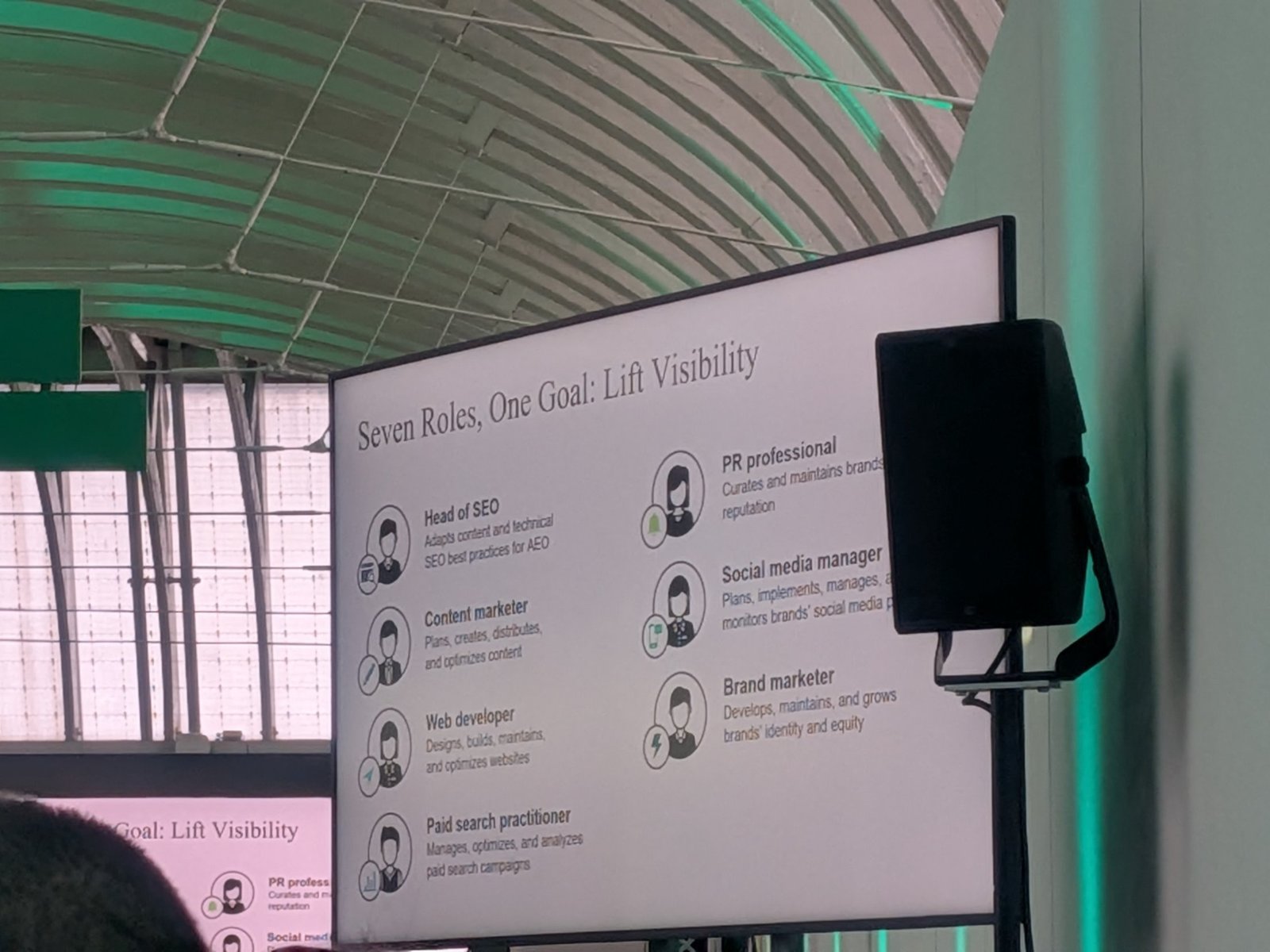
AEO needs seven functions working together:
- Head of SEO
- Content marketer
- Web developer
- Paid search practitioner
- PR professional
- Social media manager
- Brand marketer
What he has seen work best for clients is a centre of excellence. A small central team sets the rules, for example that content can’t be published, or a page can’t count as optimised, until it meets certain criteria. Then it makes sure everyone follows them.
How to Measure It
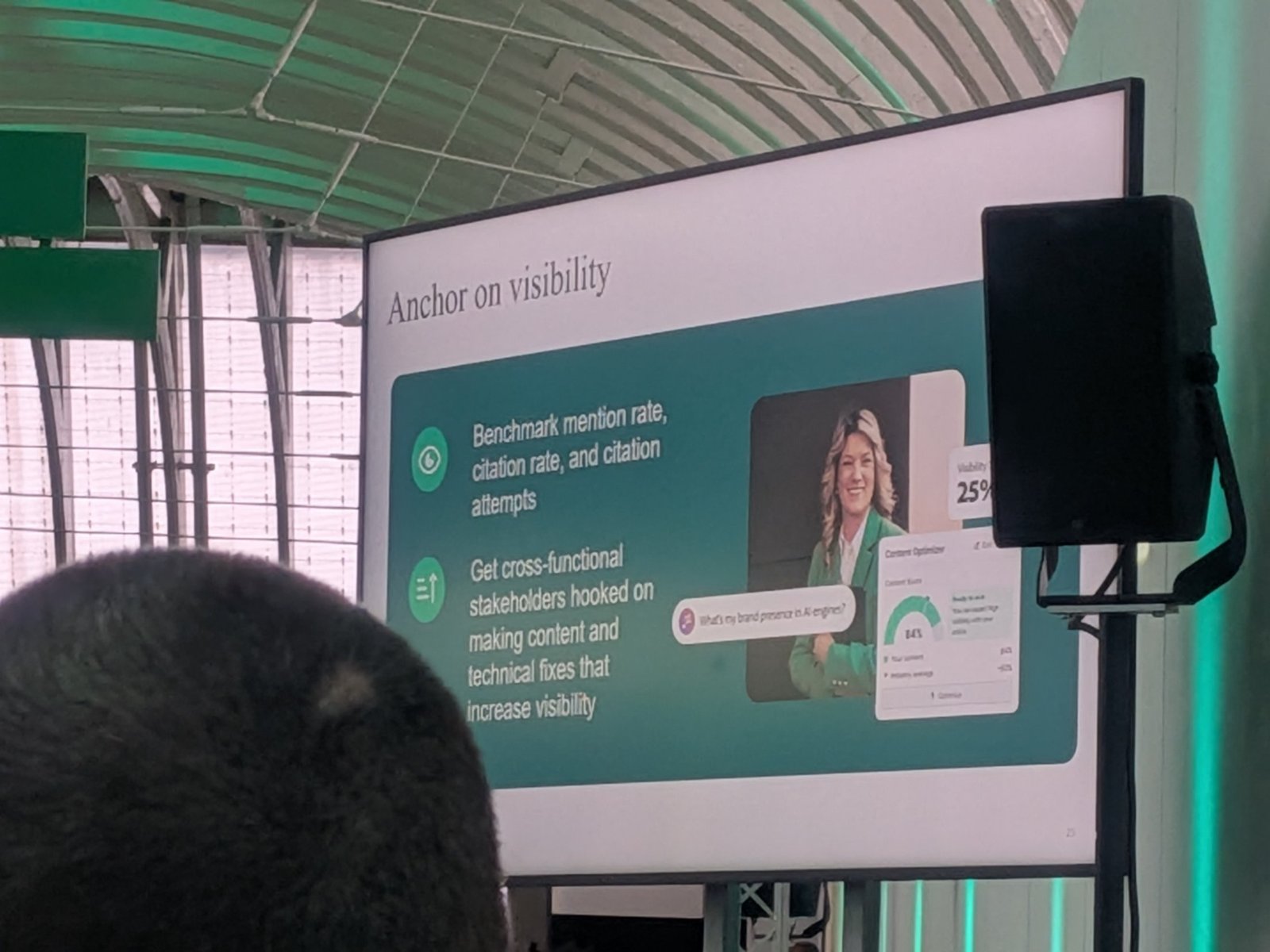
Think of it as measuring your share of voice across engines:
- Mention rate: how often your brand is mentioned
- Citation rate: how often your content is cited
- Citation attempts: a newer metric that needs log file access
Benchmark these against competitors and track them month by month or quarter by quarter. Showing the numbers improve is how you keep cross-functional teams hooked on making content and technical fixes.
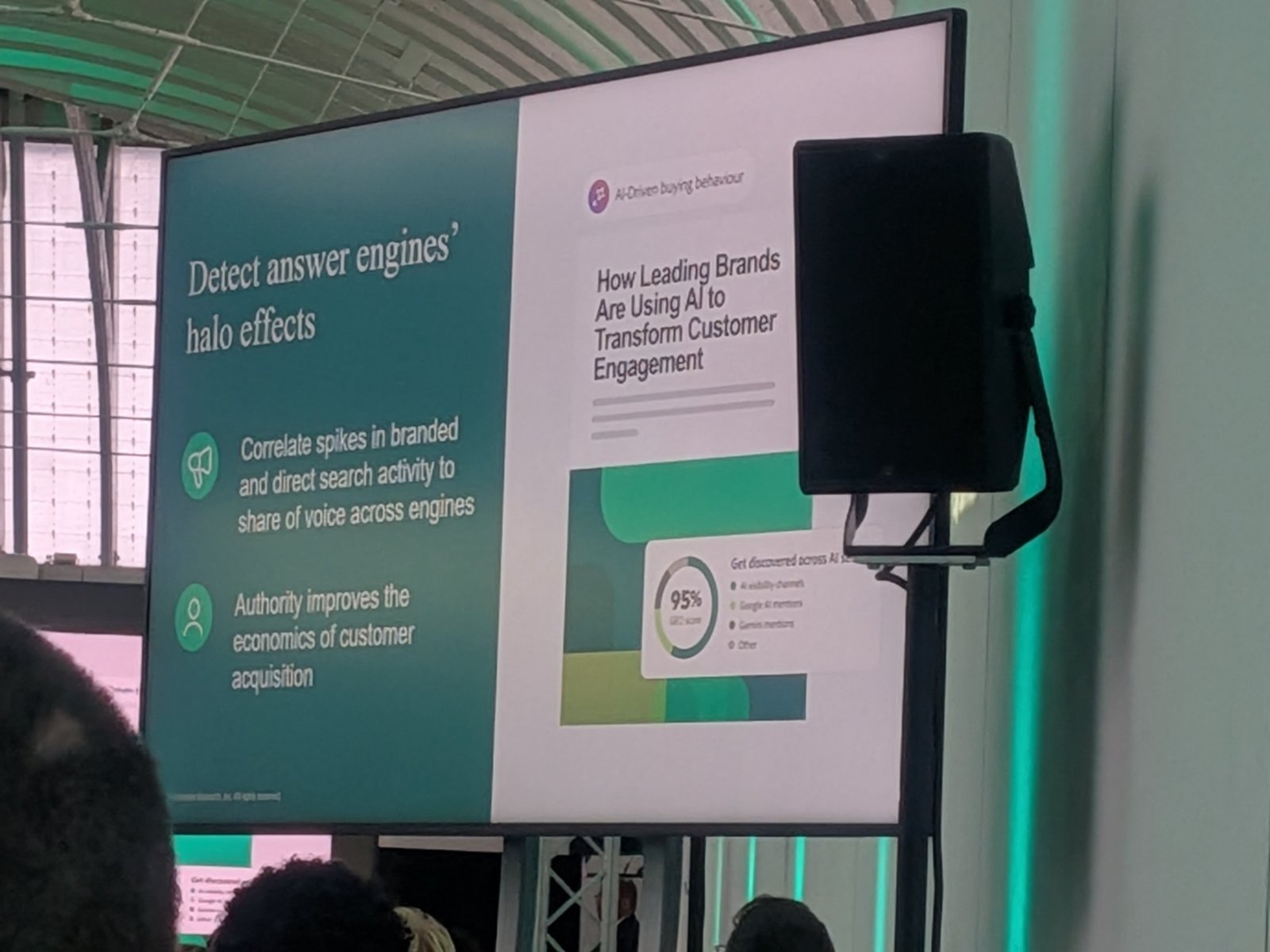
The hardest thing to measure, and one of the most important, is the halo effect. When your brand is mentioned or cited, people go on to search for it.
- Correlate spikes in branded and direct search with your share of voice across engines
- Branded search is one of the strongest leading indicators of market share growth. Forrester is researching this right now
- Authority improves the economics of customer acquisition. When people search for your brand instead of the category, your marketing expense ratio improves
What Not to Do
- Don’t treat AEO as a job for the SEO team alone
- Don’t give up on Google. It is still the dominant search engine
- Don’t judge answer engines by clicks alone. The clicks are few, but they convert
- Don’t rely only on claims made on your own site
- Don’t post in forums in a sales voice
- Don’t leave JavaScript heavy pages that bots can’t render
Next Steps
- Check your sitemaps and IndexNow setup. Make sure Bing can find new content quickly.
- Look at your log files for AI bots. See which pages they visit and how often.
- Rewrite the opening of your key pages. Answer the main question in the first 40 to 60 words.
- List the follow-up questions buyers ask. Cover comparisons and weaknesses honestly.
- Find the publications and forums answer engines cite for your topic. Share that list with PR.
- Start tracking mention rate, citation rate and branded search together. Report them to every team involved.
Personal Takeaways
The Signals Stage was completely packed for this session.
Related Resources
- Spotlight 2026 agenda
- The Agentic Marketing Stack panel report: the next session on the same stage, with Weglot and G2 on AI workflows and localisation in AI search
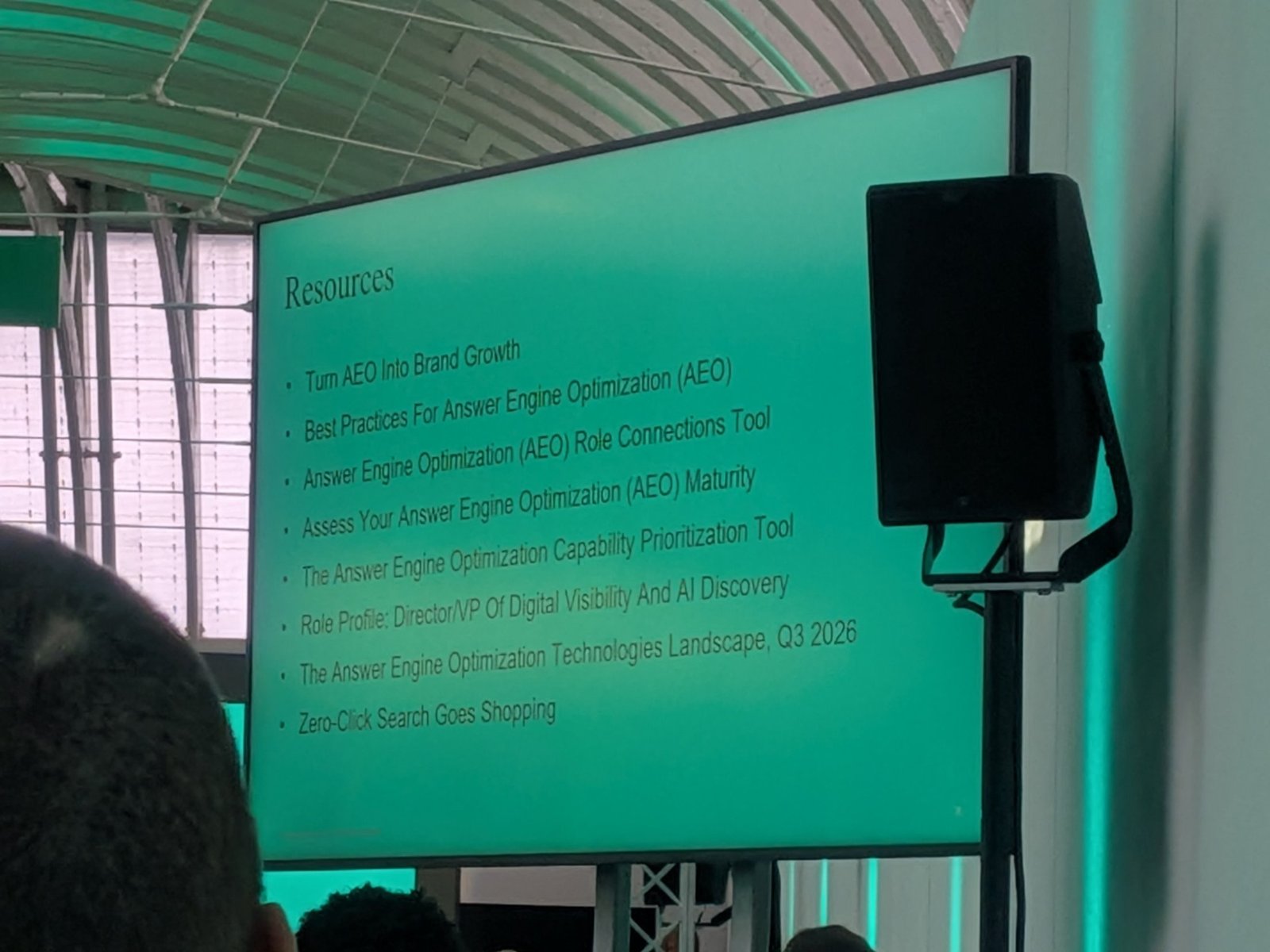
- Forrester research mentioned in the session: Turn AEO Into Brand Growth; Best Practices For Answer Engine Optimization (AEO); Answer Engine Optimization (AEO) Role Connections Tool; Assess Your Answer Engine Optimization (AEO) Maturity; The Answer Engine Optimization Capability Prioritization Tool; Role Profile: Director/VP Of Digital Visibility And AI Discovery; The Answer Engine Optimization Technologies Landscape, Q3 2026; Zero-Click Search Goes Shopping
Written by Ayaka Uchida
CEO, A-Digital Works
This report covers Nikhil Lai’s session “The Trust Mandate: Winning Visibility, AI Discovery, and Executive Buy-In in the Answer Engine Era” at Spotlight by Semrush 2026, 13 October 2026.
