

TL;DR
- AI hasn’t replaced search. It has been added to it. The vast majority of ChatGPT users are still Google users, and that overlap has barely moved in a year.
- AI-only shopping journeys are rare. Similarweb’s data shows AI involved in about 11% of US transactional sessions, but only around 1 in 100 sessions uses AI without search.
- AI influence hides in your branded search and direct traffic. A user gets a recommendation, closes the chat, and comes back days later through Google or by typing your URL. No click is ever recorded from the AI tool.
- Sessions using AI and search together convert best. 23.0% for AI plus search, compared with 17.3% for search only and 12.5% for AI only.
- Measure the lift, not the referral. Track branded search, direct traffic, and retailer visits, report AI and search as one journey, and keep an eye on AI ads.
About the Speaker
Baruch Toledano is VP and GM of Digital Marketing Solutions at Similarweb. Before Similarweb, he was Chief Product and Growth Officer at Conductor, the enterprise SEO and content intelligence platform, and led product management at Magento.
Having two clickstream data companies back to back turned out to be one of the most useful parts of the morning, which I come back to in my takeaways.
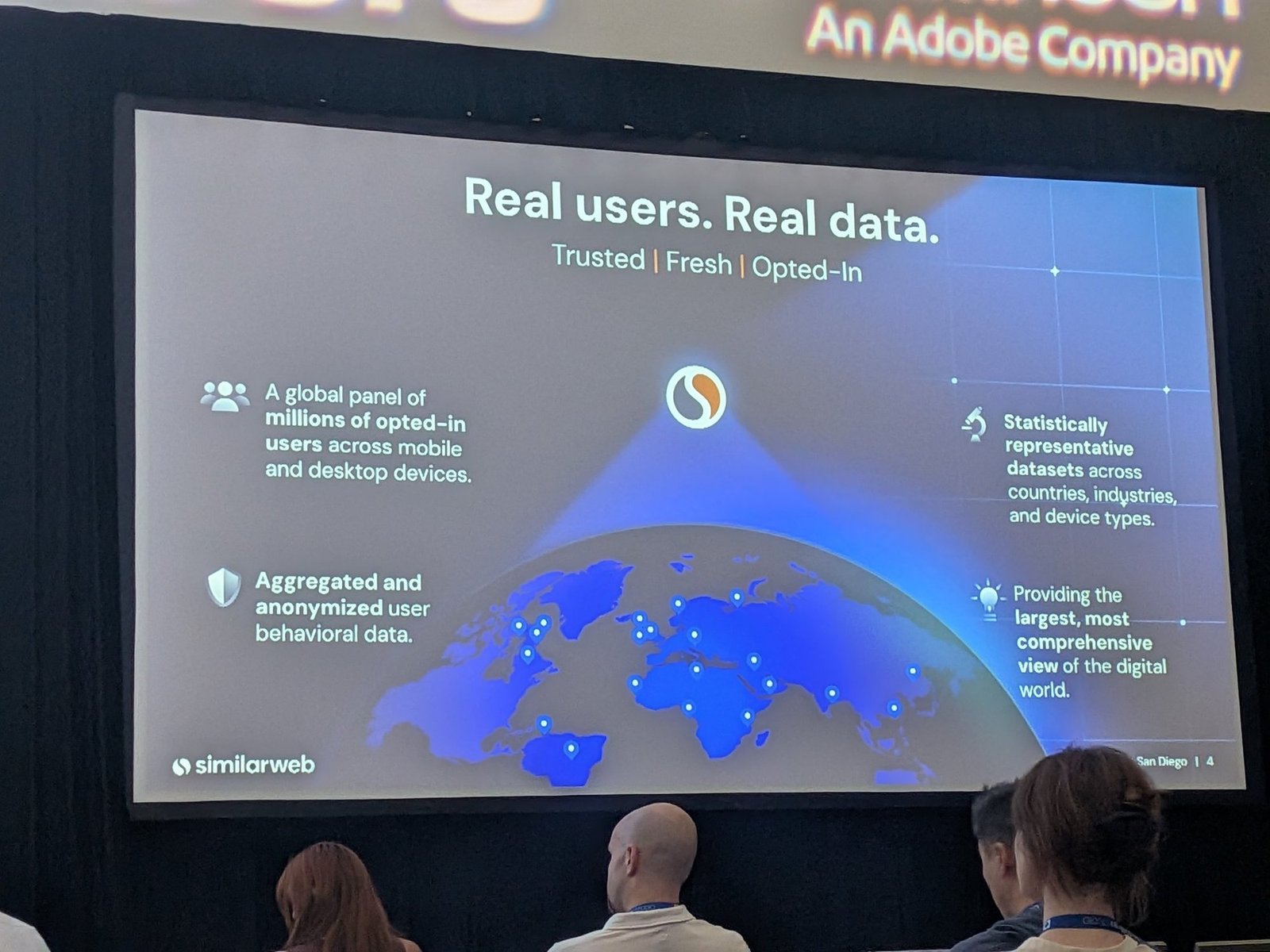
The data in this talk comes from Similarweb’s panel of millions of opted-in users across mobile and desktop, aggregated and anonymized.
The Problem: “How Do You Know It Worked?”
Baruch opened with two questions for the room. First: who spent the last 12 months trying to get their brand to appear in AI answers? Most hands went up. Second: how do you know whether it worked? The room went quiet.
That silence was the premise of the talk. Most sessions at this conference, he noted, are about how to get mentioned. His was about what happens after the mention.
Clearing the Ground: The Substitution Myth
Before getting to the downstream data, Baruch took apart the most common story in the industry. It goes like this: people stop using search and use AI instead, so AI traffic should replace search traffic, and if you show up in AI, your AI referrals should fill the gap.
The data doesn’t support it. Search is still growing in unique visitors. AI is growing fast, but from a much smaller base. And the overlap is striking: by Similarweb’s figures, more than nine in ten ChatGPT users were also Google users, and that share hasn’t changed meaningfully over the past year. That is not a migration. People are simply using more tools.
So why does the industry believe otherwise? Baruch pointed to two familiar biases:
- Availability bias. We judge how common something is by the examples that come to mind easily.
- False consensus. We assume everyone else behaves the way we do.
Everyone in a room at an SEO conference is testing AI tools all day. Extrapolating that to 300 million Americans produces a narrative that the numbers don’t show. His image for this was memorable: we are looking in a mirror and mistaking it for a window.
The Data: Where AI Actually Sits in the Journey
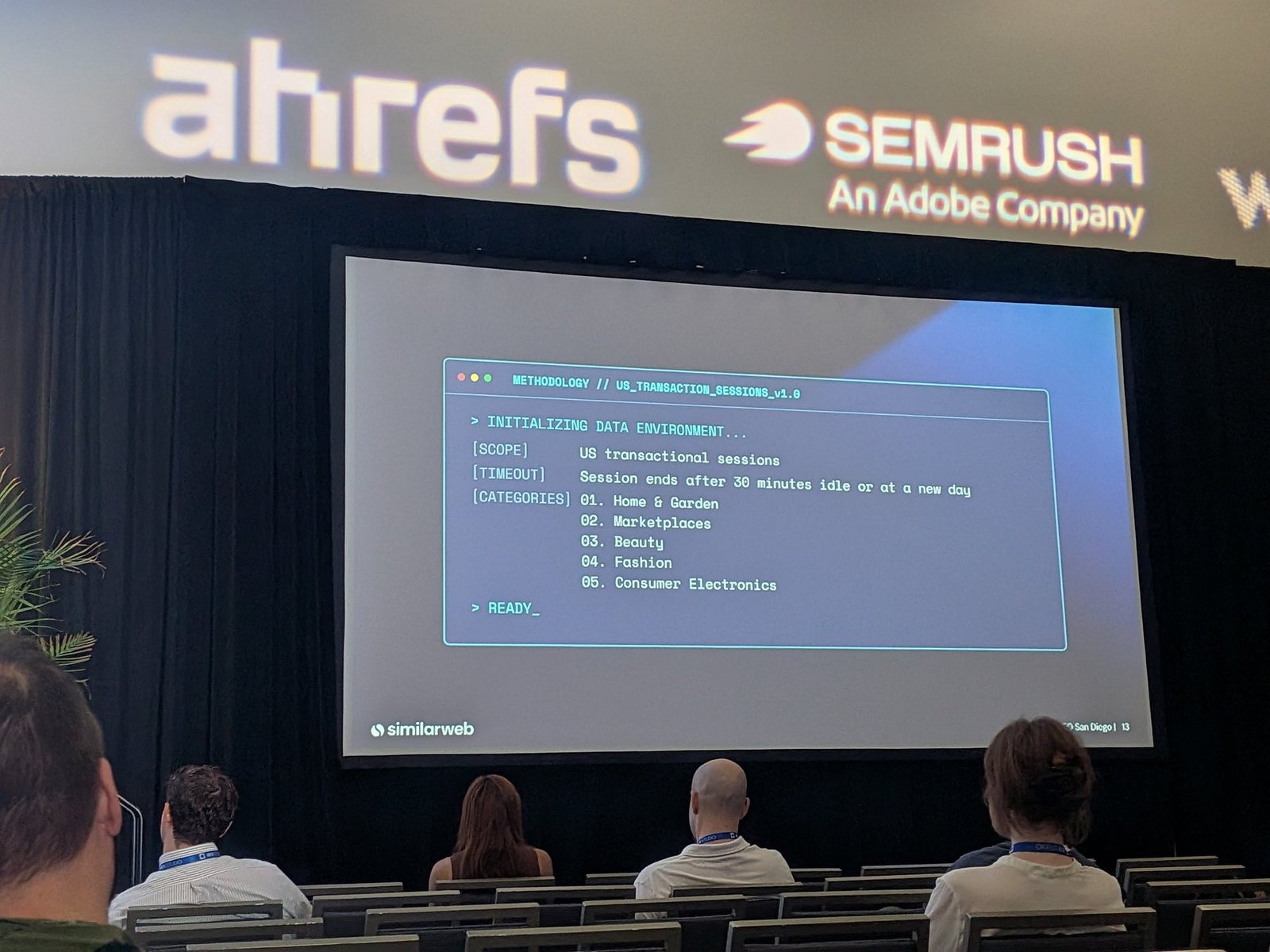
Similarweb analyzed US transactional sessions, meaning sessions that included at least one visit to a shopping website. A session ends after 30 minutes of inactivity or at the start of a new day. The study covered five categories: home and garden, marketplaces, beauty, fashion, and consumer electronics.
The headline findings:
- Two years ago, about 5% of these shopping sessions involved AI. By June this year, that had risen to about 11%.
- Of those AI-involved sessions, only about 11% used AI alone. The other 89% used AI and search together.
- That puts AI-only shopping sessions at roughly 1 in 100.
The implication for measurement is direct. If you try to calculate the ROI of AI visibility by looking only at AI referrals, you are looking at one session and ignoring the other nine.
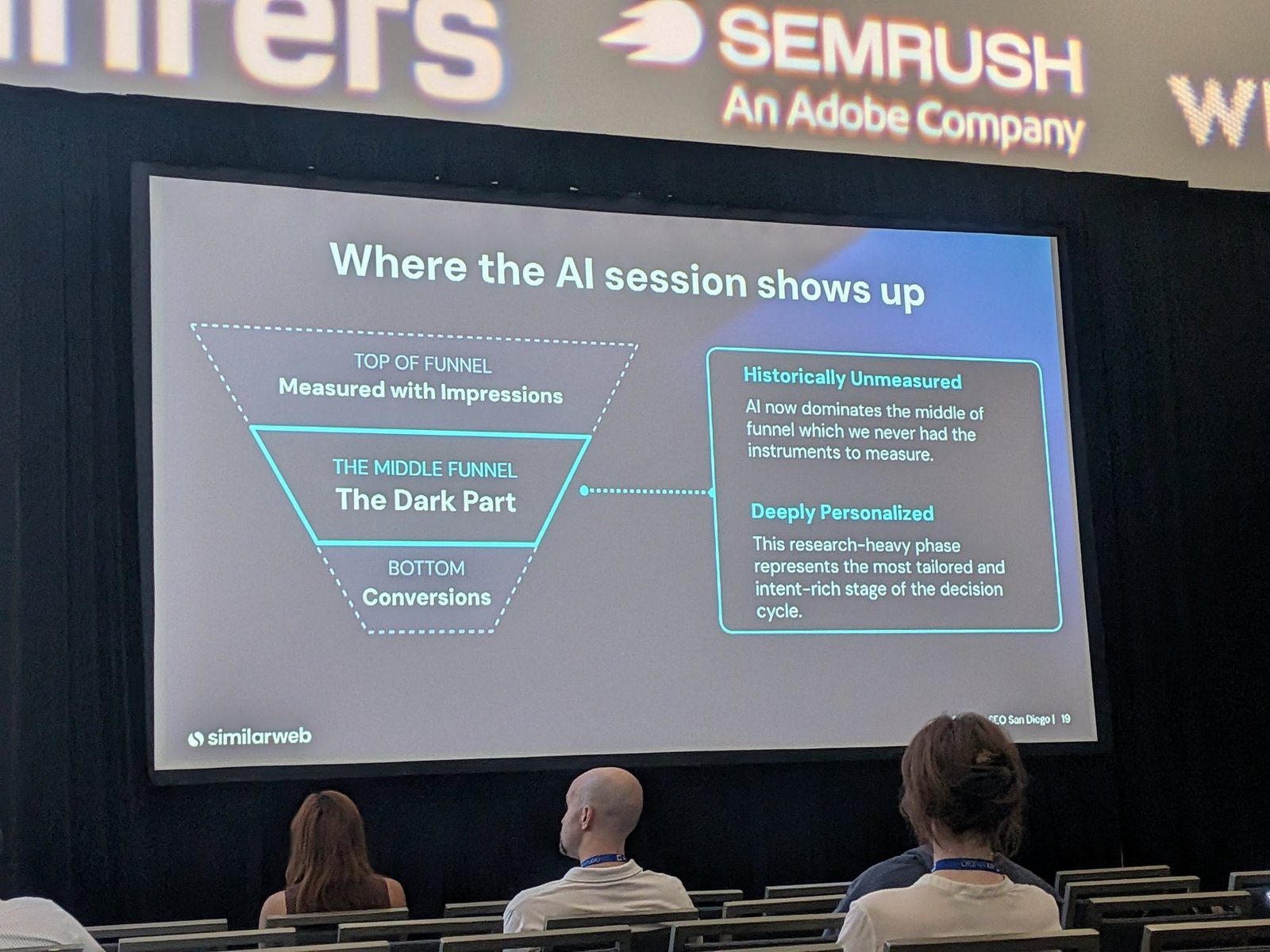
Search sits everywhere in the journey: at the start, in the middle, and right before checkout. AI, by contrast, currently sits in the middle. It isn’t replacing the first step or the final step. It is taking over the messy research phase where people compare options and form opinions.
Baruch called this the dark part of the funnel. Top of funnel has always been measured with impressions, and the bottom with conversions. The middle, where AI now dominates, is the part marketers never had the instruments to measure. It is also the most personalized and intent-rich stage of the decision.
Does an AI Mention Change Anything?
To test whether being mentioned actually changes behavior, Similarweb measured what people did after exposure to AI answers.
In credit cards and travel, the pattern was consistent: whichever brand the AI put in front of users received noticeably more visits afterward, in some cases several times more than brands that weren’t recommended. What the AI showed people changed where they went next.
A second study followed people researching laptops for seven days after AI exposure, tracking Google searches, brand websites, retailers, Amazon, on-site search, and community pages. Around 60% went on to visit a brand’s own website. For purchase-oriented prompts, people moved to retailers, and the retailer depended on what they were looking for.
Where the Value Shows Up
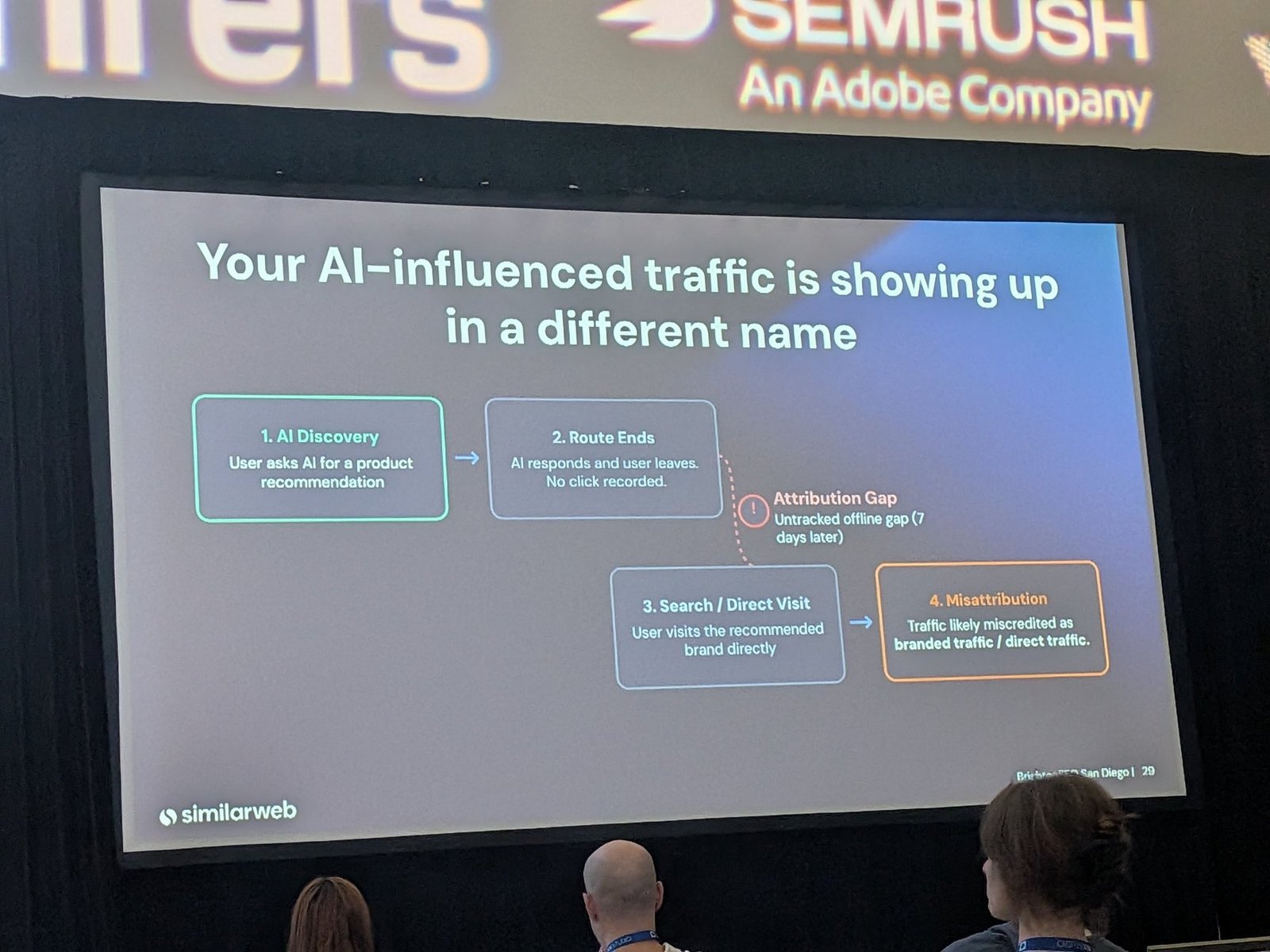
This slide is the core of the session. The sequence:
- AI discovery. A user asks AI for a product recommendation.
- Route ends. The AI responds and the user leaves. No click is recorded.
- Attribution gap. An untracked offline gap follows, for example seven days.
- Search or direct visit. The user comes back and visits the recommended brand directly.
- Misattribution. The visit is credited to branded search or direct traffic.
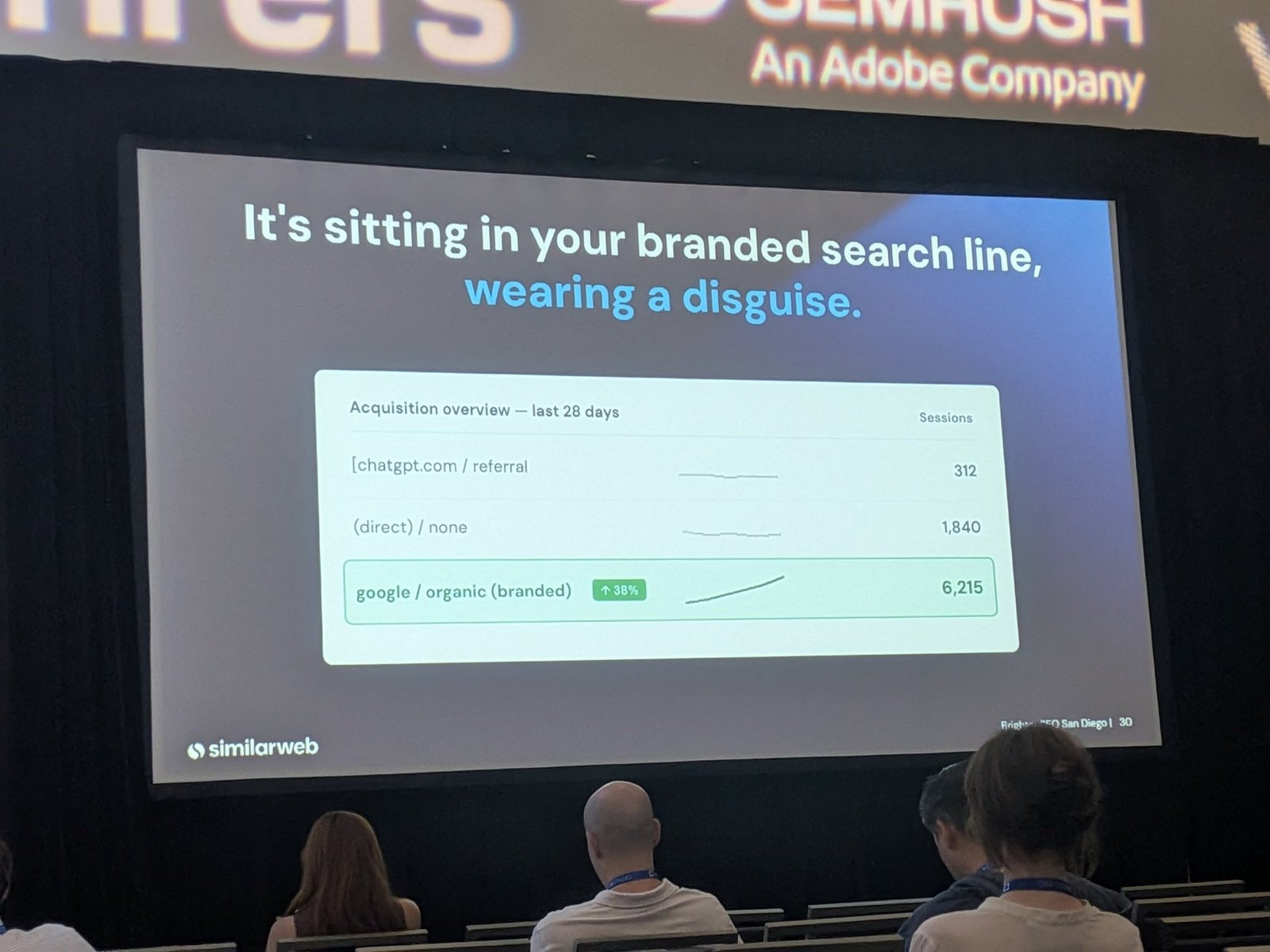
Baruch illustrated it with an analytics view of the last 28 days: 312 sessions from ChatGPT referrals, 1,840 direct sessions, and 6,215 sessions from branded Google organic search, up 38%. The AI line looks flat. The branded search line is where the AI influence is actually sitting.
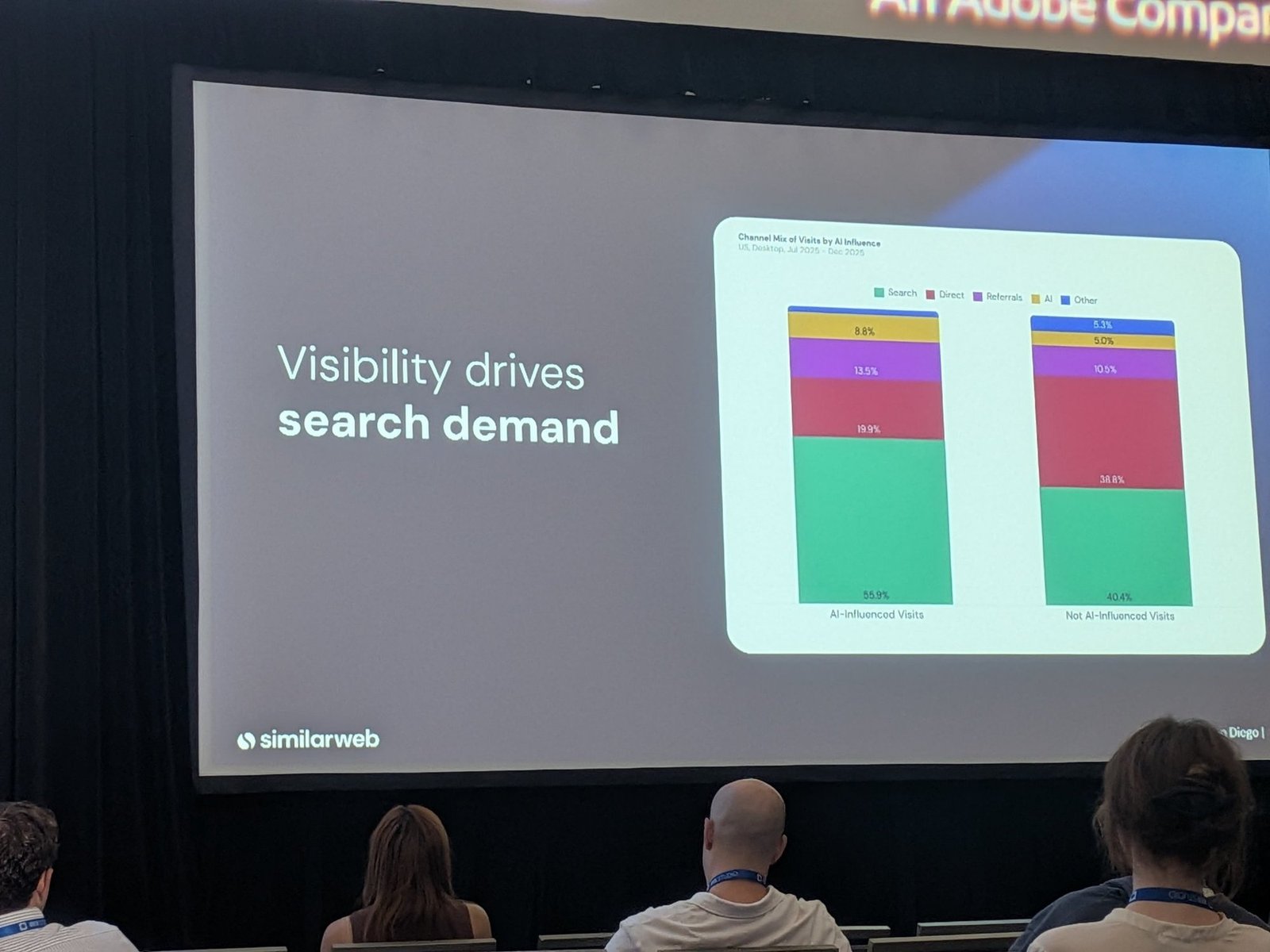
The channel data supports this. Across US desktop visits from July to December 2025:
| Channel | AI-influenced visits | Not AI-influenced visits |
|---|---|---|
| Search | 55.9% | 40.4% |
| Direct | 19.9% | 38.8% |
| Referrals | 13.5% | 10.5% |
| AI | 8.8% | 5.0% |
Visits influenced by AI are far more likely to arrive through search. AI visibility creates search demand.
Baruch compared this to mid-20th-century marketing. When a brand put up a billboard, nobody expected to track clicks from it. They measured lift: did something change elsewhere after the exposure? AI visibility needs to be measured the same way.
AI Plus Search Converts Best
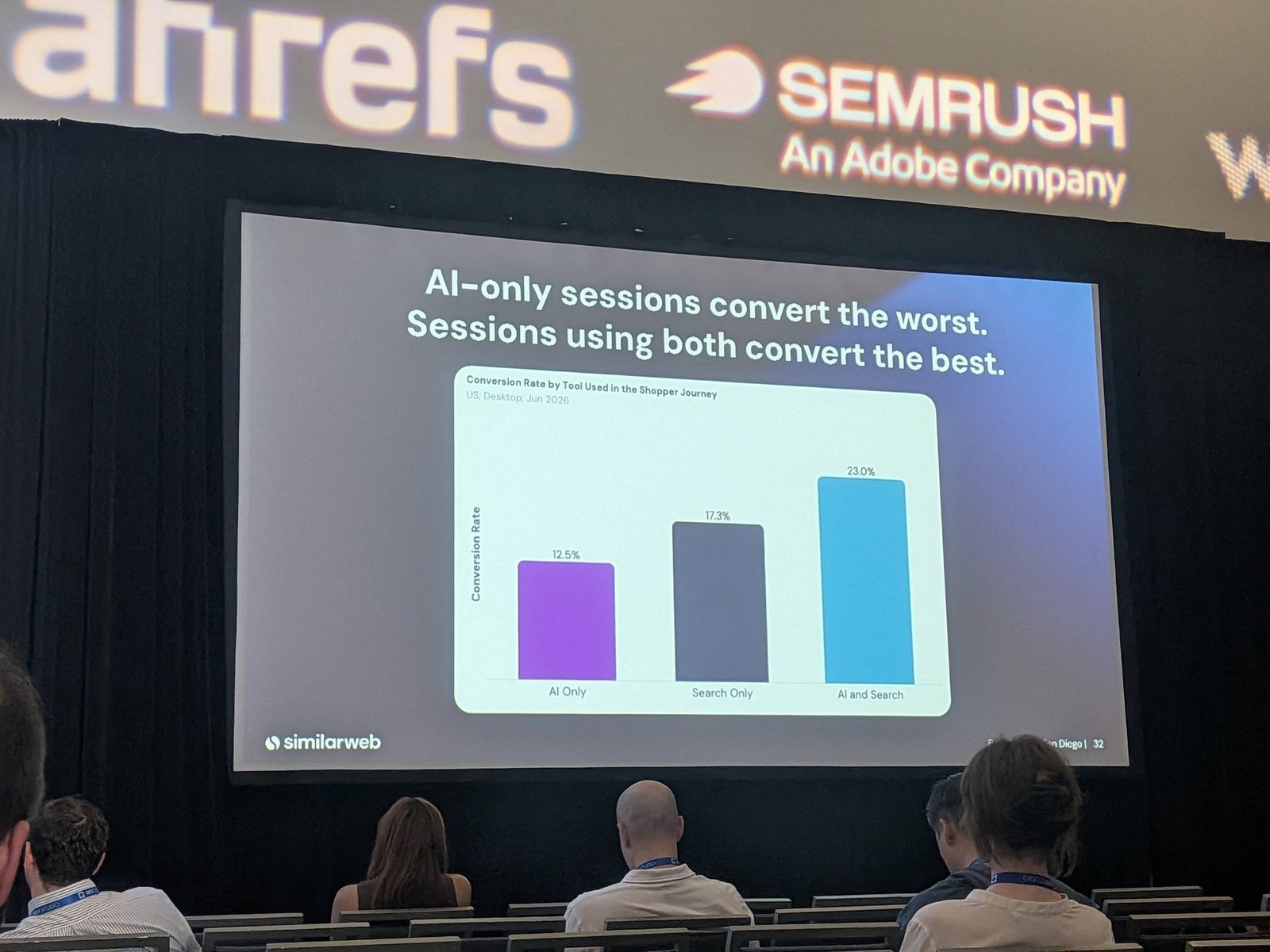
The same cohort data showed how sessions perform once people arrive. In June 2026, on US desktop:
- AI only: 12.5% conversion rate
- Search only: 17.3%
- AI and search: 23.0%
Engagement followed the same pattern, with AI-plus-search sessions viewing more pages and staying longer.
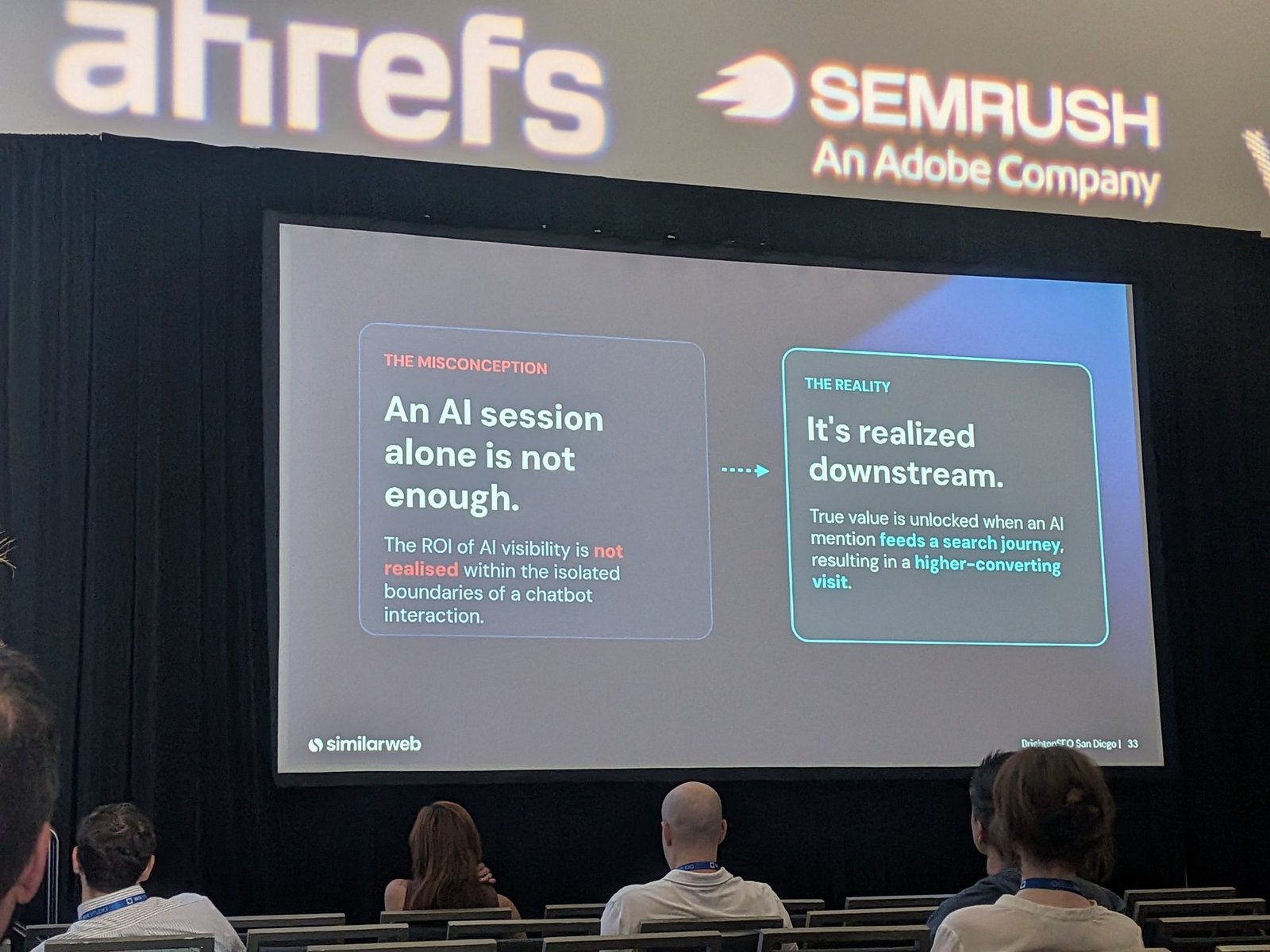
This challenges a story that spread widely over the past year: that AI traffic is premium traffic that converts better than anything else. Looked at in isolation, AI referrals can seem impressive. Looked at across the journey, AI-only sessions convert the worst. The value comes when an AI mention feeds a search journey.
Don’t Ignore AI Ads
Baruch closed with a point he acknowledged might be inconvenient for an SEO audience. You can optimize for mentions and citations, but the model will choose what it chooses. It may favor a competitor, or it may not show you in the way you want.
Paid placements inside AI answers are growing quickly, and they are one way to make sure you are present in the conversations that matter. At minimum, you should know who is buying them in your category.
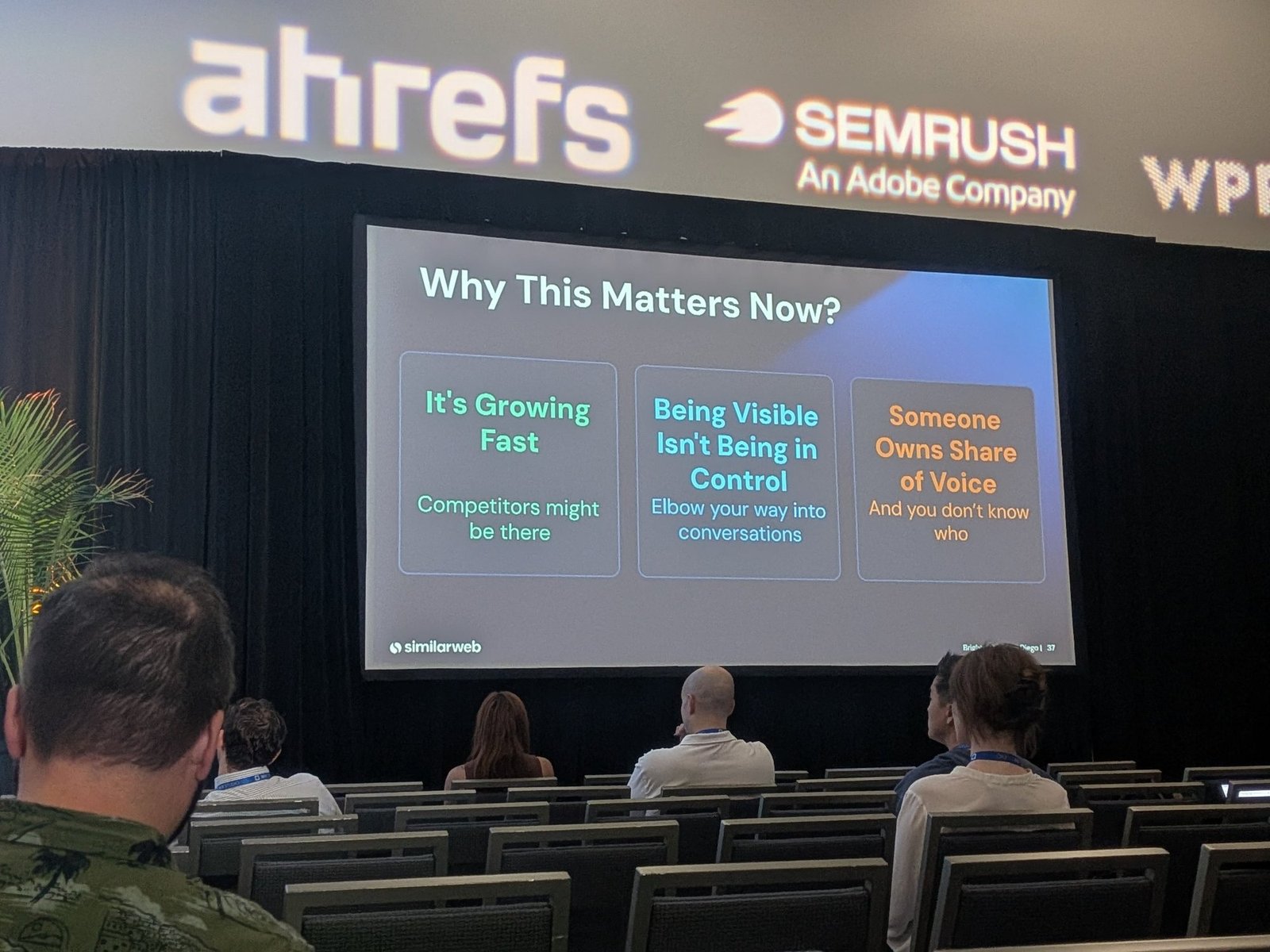
His three reasons for acting now:
- It’s growing fast. Your competitors might already be there.
- Being visible isn’t being in control. You may need to elbow your way into conversations.
- Someone owns share of voice. And you may not know who.
The Blueprint: Your ROI Stack
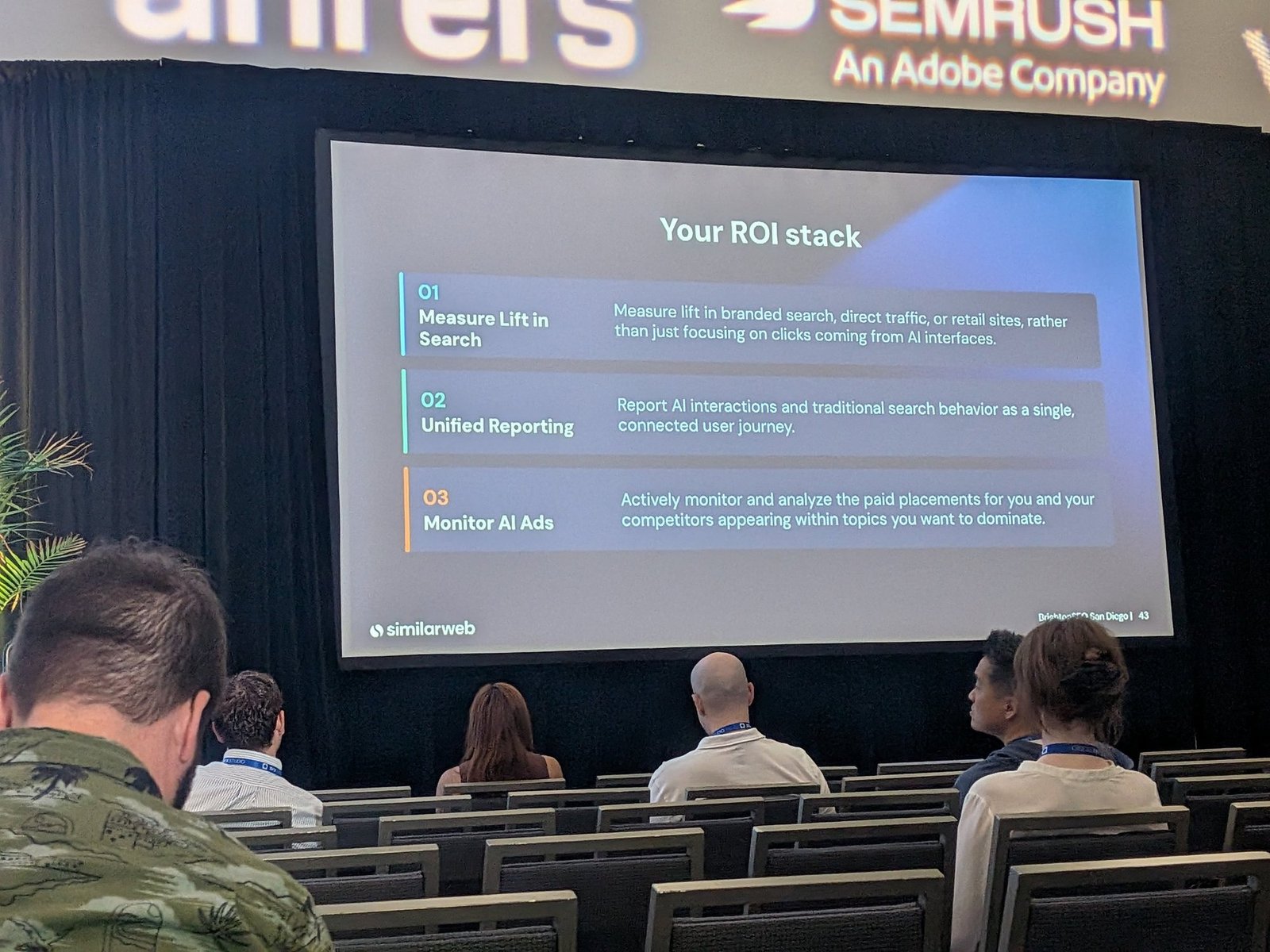
- Measure lift in search. Track branded search, direct traffic, and retail site visits rather than only clicks from AI interfaces.
- Unified reporting. Report AI interactions and traditional search behavior as one connected user journey.
- Monitor AI ads. Watch the paid placements for you and your competitors in the topics you want to own.
What Not to Do
- Don’t judge AI visibility by AI referrals alone. They represent a tiny fraction of the influence.
- Don’t report AI traffic as a separate, premium channel. In isolation it converts worse, and it gives a partial and misleading picture.
- Don’t let teams claim credit separately. Baruch warned against PR or brand teams claiming AI wins independently of search. Neither view is complete without the other.
- Don’t assume what’s true for this room is true for consumers. Heavy AI use among marketers is not representative of the market.
- Don’t dismiss paid AI placements. Organic optimization doesn’t guarantee inclusion.
Next Steps
- Pull your branded search trend. Compare branded organic sessions and direct traffic before and after any AI visibility work.
- Show AI and search side by side. Build one report that places AI referrals next to branded search, direct, and retailer traffic.
- Look for lift, not clicks. When AI visibility improves, check whether branded demand rises in the following weeks.
- Check the competitive ad landscape. Find out which competitors are buying AI placements in your key topics.
- Reset internal expectations. Explain to stakeholders that AI influence mostly shows up under other channel names.
Personal Takeaways
This session, together with Skyler Rudolfsky’s just before it, was the strongest data argument of the morning. Semrush and Similarweb are competitors with different panels and different methodologies, and both arrived at the same conclusion: AI and search are used together, and most AI influence never appears as an AI referral. That independent agreement matters more than either dataset alone.
What I’m taking into client work:
- Branded search is now an AI metric. It’s the most practical proxy I have. For my own content sites and for clients, branded query trends in Search Console are something I can check today without new tools.
- The 23% vs. 12.5% comparison is the slide for skeptical stakeholders. It reframes AI visibility from a separate channel to something that makes search perform better.
- “A mirror, not a window” is a useful warning for our industry. Those of us working in SEO and AI are the least representative users there are. I need to keep that in mind when advising clients in Japan-UK market entry, where AI adoption patterns can differ again.
- The seven-day gap explains a lot of confusing analytics. When clients ask why AI referrals stay flat while branded traffic rises, this is the explanation.
One caveat worth noting: much of the data is US desktop, and the AI-influence methodology depends on Similarweb’s panel. I’d like to see equivalent figures for mobile and for markets outside the US.
Related Resources
- Session: AI & Search Behavior, brightonSEO San Diego 2026
- Speaker: Baruch Toledano
- Similarweb
- Skyler Rudolfsky’s session report: Semrush’s journey data, with the same conclusion from a different panel
- Ethan Smith’s session report: the next session, a practical guide to ChatGPT ads using Similarweb data
Written by Ayaka Uchida
CEO, A-Digital Works
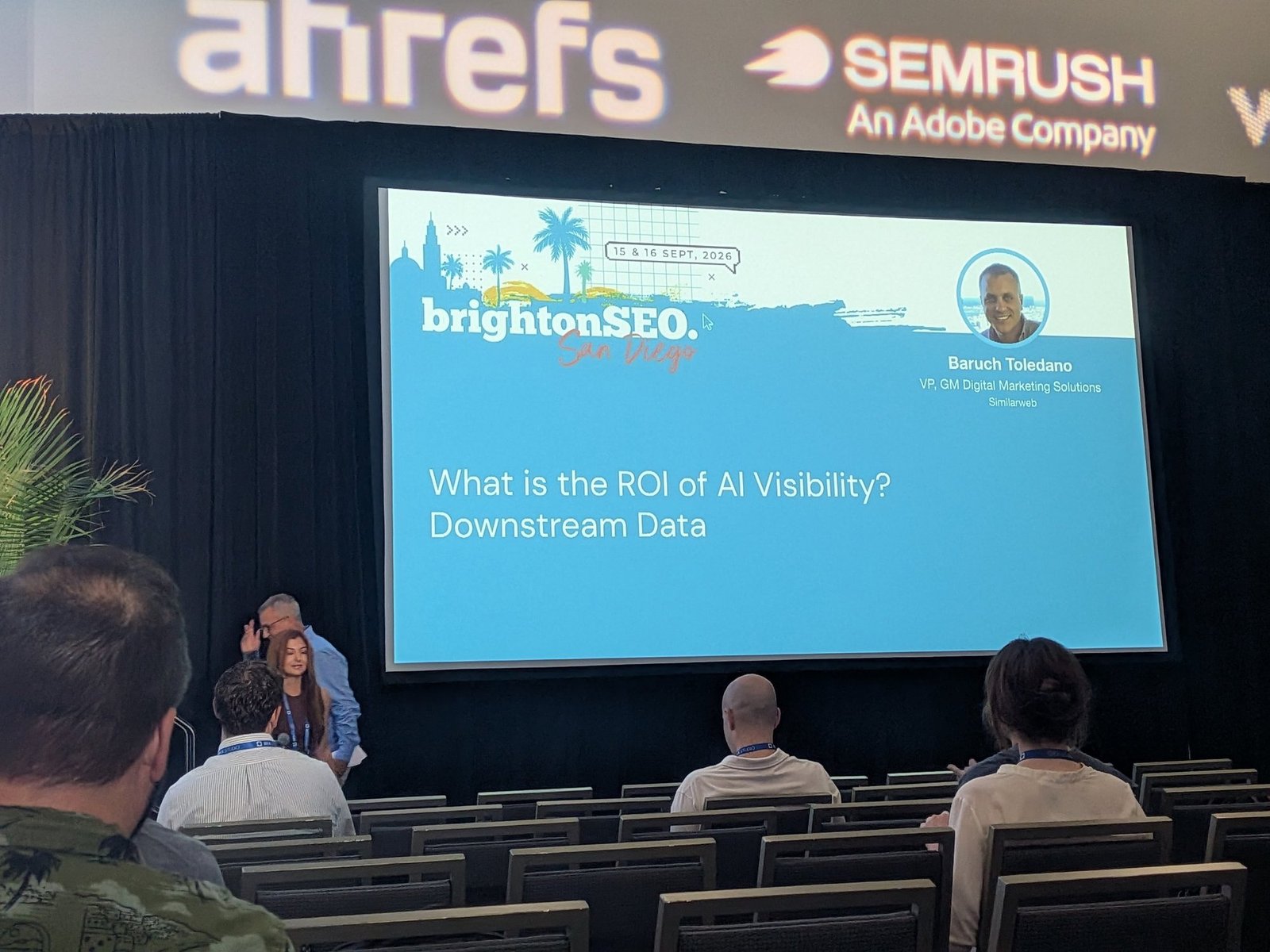
This report covers Baruch Toledano’s session “What Is the ROI of AI Visibility? Downstream Impact” at brightonSEO San Diego, September 16, 2026.
