

TL;DR
- ChatGPT holds ~70% of AI search market share and creates stickier user behaviour
- ChatGPT traffic converts 1.7x better than Google but reduces overall website clicks by 26%
- All industries are seeing AI search traffic growth, creating new competitive dynamics
- Brand visibility, sentiment, and AI citations need to become core KPIs
About the Speaker
Maria Pashi – Principal Solution Architect, Similarweb
Maria specialises in helping enterprises harness digital intelligence to drive growth. With over a decade of e-commerce experience, she advises global brands on strengthening online visibility and optimising marketing investments using Similarweb’s comprehensive digital analytics platform.
The Market Reality: Slowdown Meets Disruption
Maria opened with a sobering industry-wide trend: organic search traffic growth has slowed across most industries in 2025. This isn’t isolated to individual companies—it’s a systemic shift driven by two key factors.
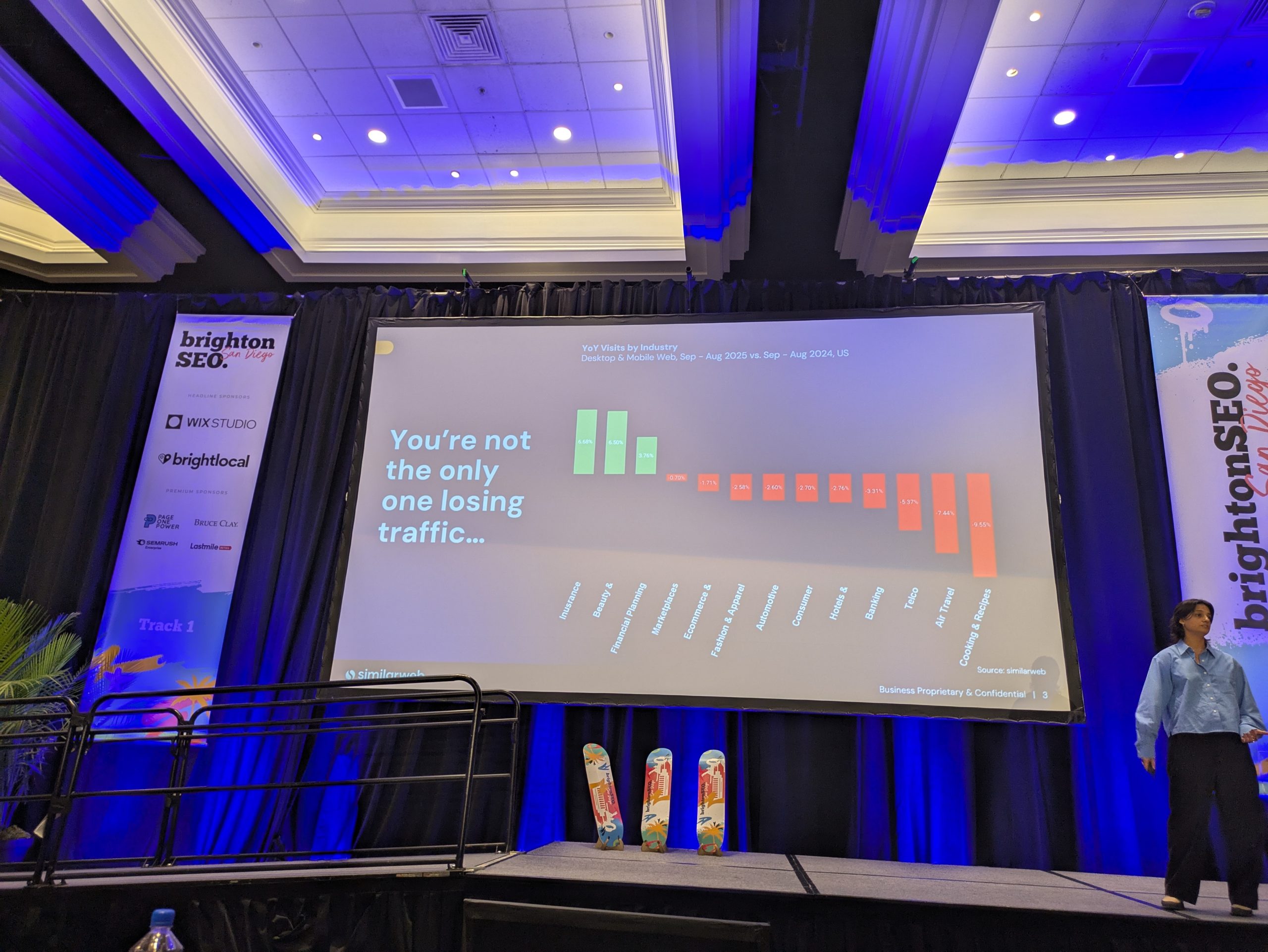
First, users are actively engaging with AI platforms like ChatGPT. Second, they’re passively consuming AI through features like Google’s AI Overviews. With ChatGPT commanding approximately 70% of the AI search market, Maria focused her analysis primarily on this platform.
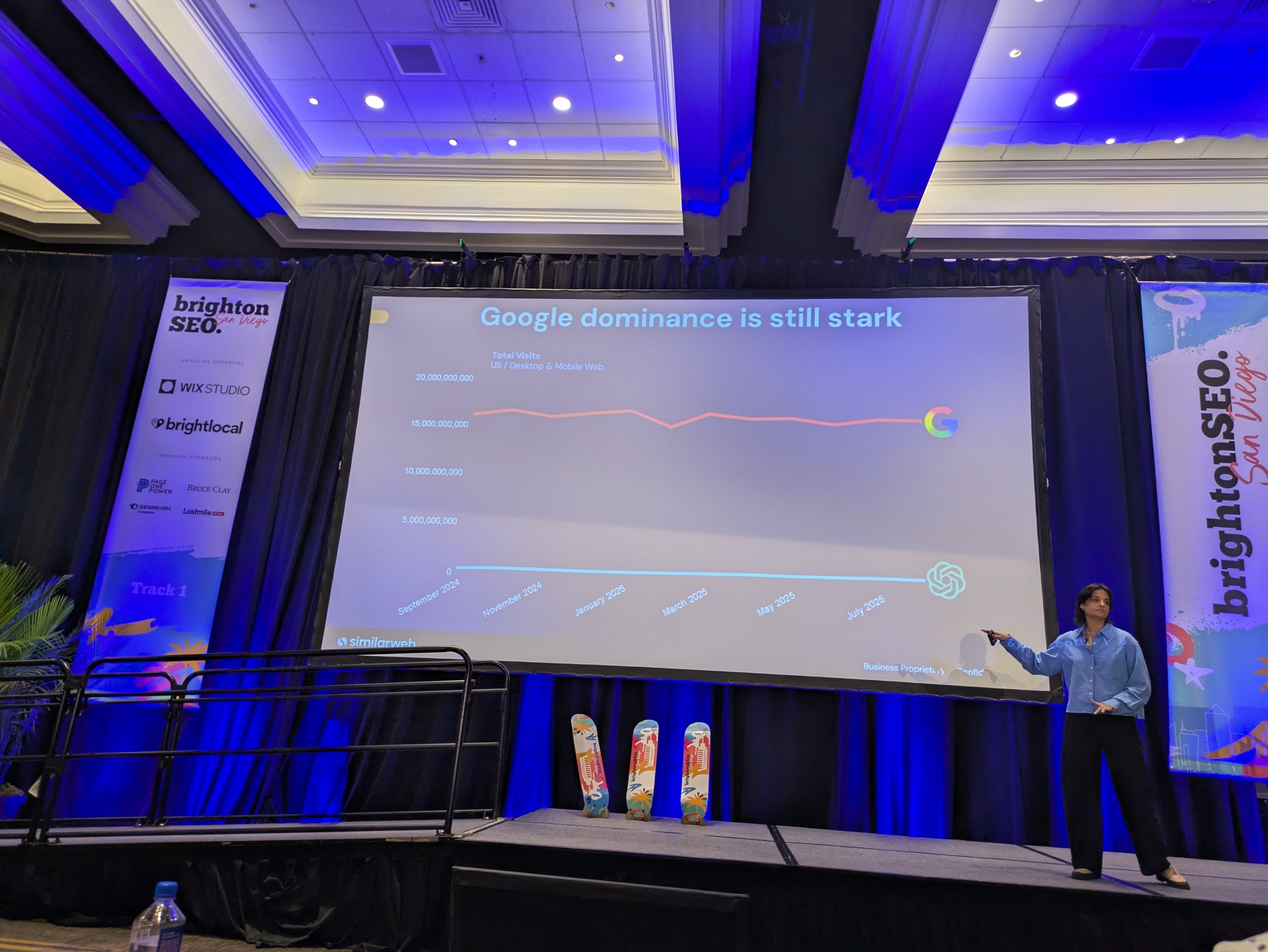
The data reveals two simultaneous effects: new traffic channels are emerging whilst traditional click-through rates to websites are declining due to increased confidence in AI-generated results.
User Behaviour Shift: The Stickiness Factor
The most striking insight from Similarweb’s data concerns user behaviour patterns. ChatGPT users demonstrate remarkable stickiness—those who start using the platform show a 26% reduction in website clicks by their fourth month of usage.
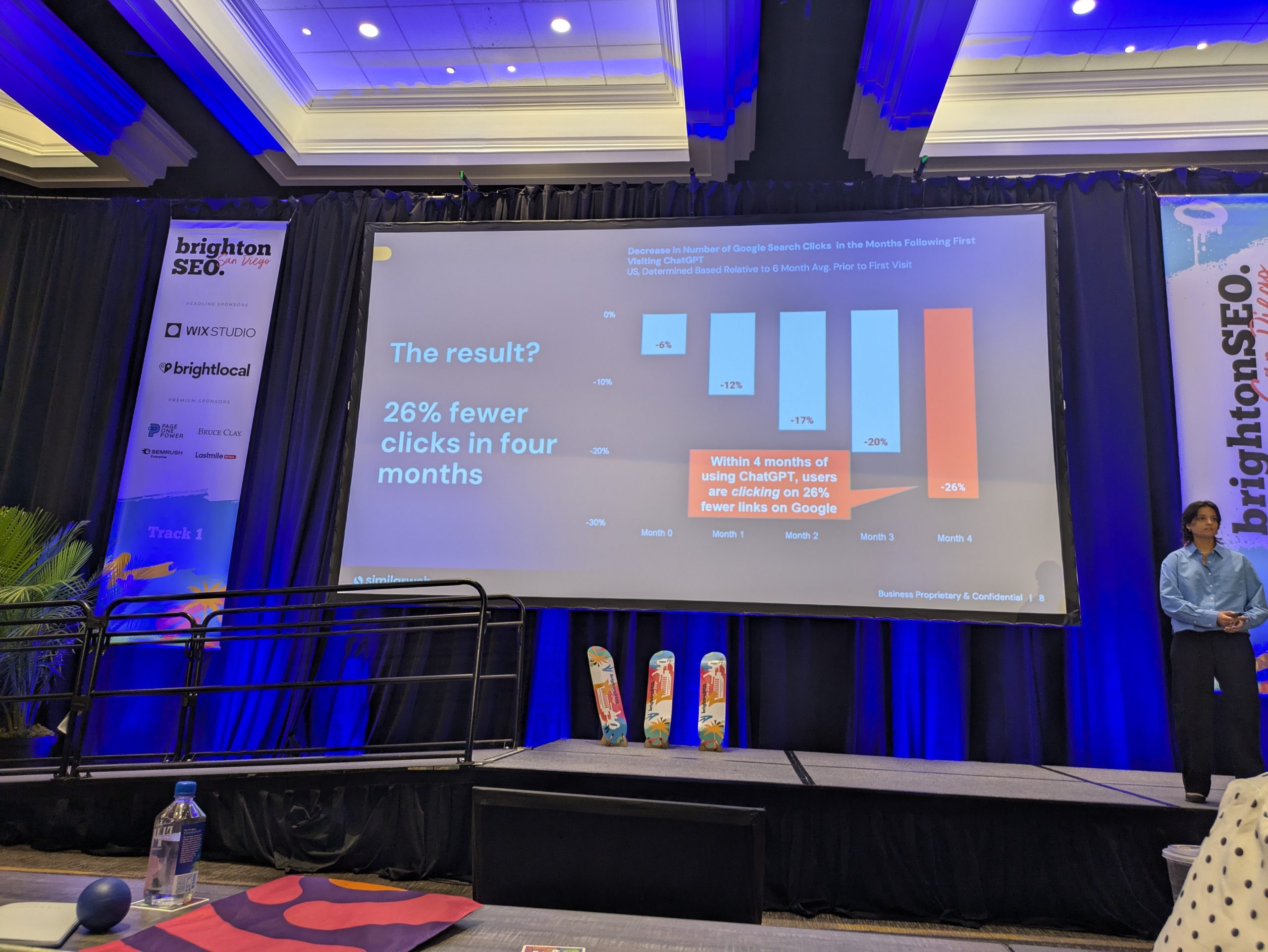
This stickiness creates a compounding effect. As users become more comfortable with AI responses, they rely less on clicking through to source websites, fundamentally changing the search-to-website journey that has defined digital marketing for decades.
Despite this trend, Google remains the dominant search engine with a significant lead. However, ChatGPT’s rapid growth rate suggests the competitive landscape is shifting, even if the distance to close remains substantial.
Quality Over Quantity: AI Traffic Performance
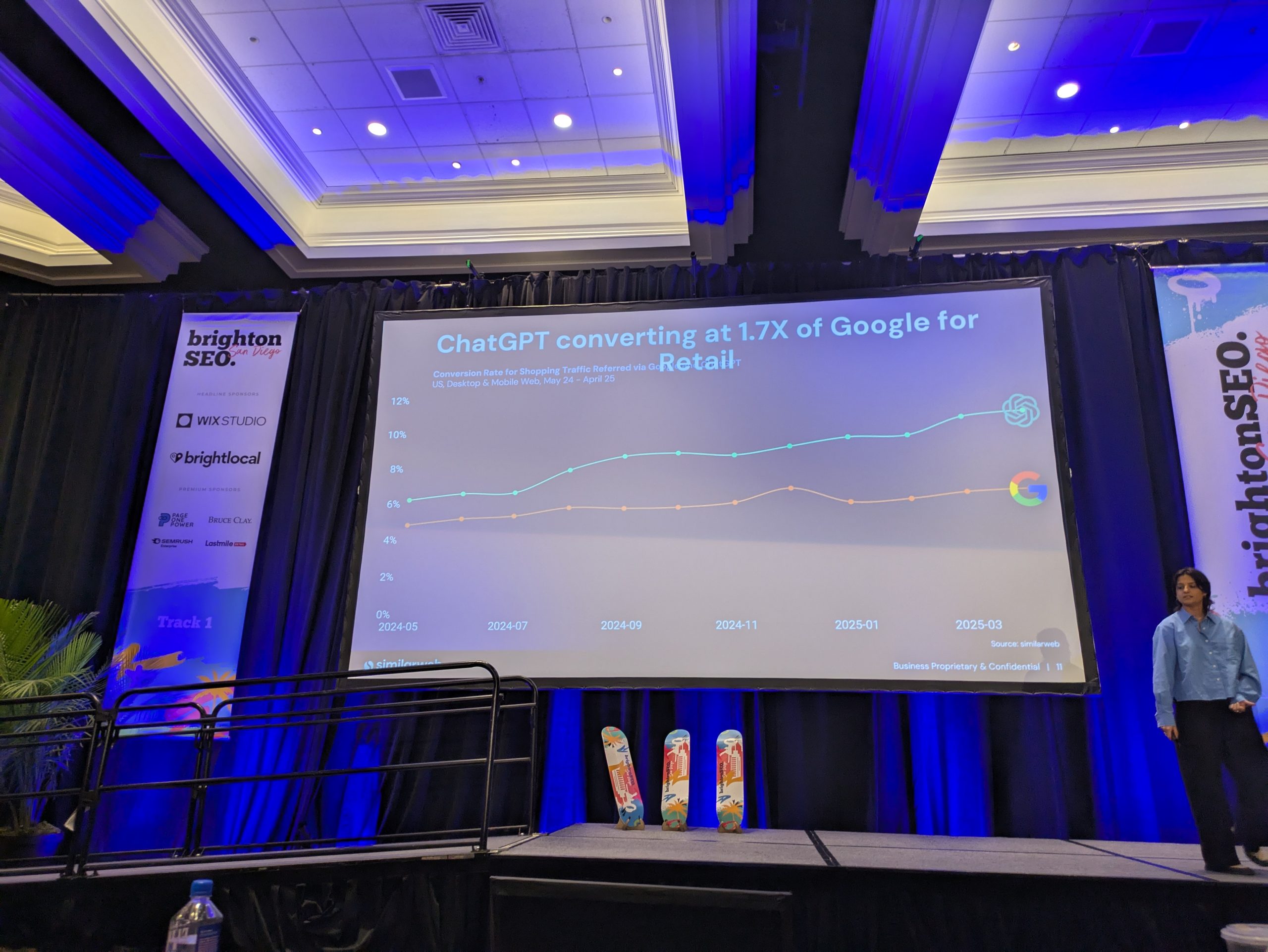
Whilst AI search reduces overall click volume, the quality metrics tell a different story. Maria’s data shows ChatGPT traffic converts 1.7 times better than Google search traffic.
Users arriving from ChatGPT exhibit superior engagement metrics: lower bounce rates, longer session duration, and higher page-per-session counts. This occurs because ChatGPT users arrive with more focused intent, often seeking specific information or company details rather than general browsing.
Industry-Wide Impact
The AI search phenomenon spans all sectors. Similarweb’s data shows traffic growth from ChatGPT across marketplaces, publishers, software, education, finance, government, real estate, and beyond. Some industries see more dramatic growth than others, but none remain untouched.
This universal impact creates both challenges and opportunities. Whilst traditional search traffic may decline, organisations that successfully capture AI search traffic can gain competitive advantages as the landscape reshuffles.
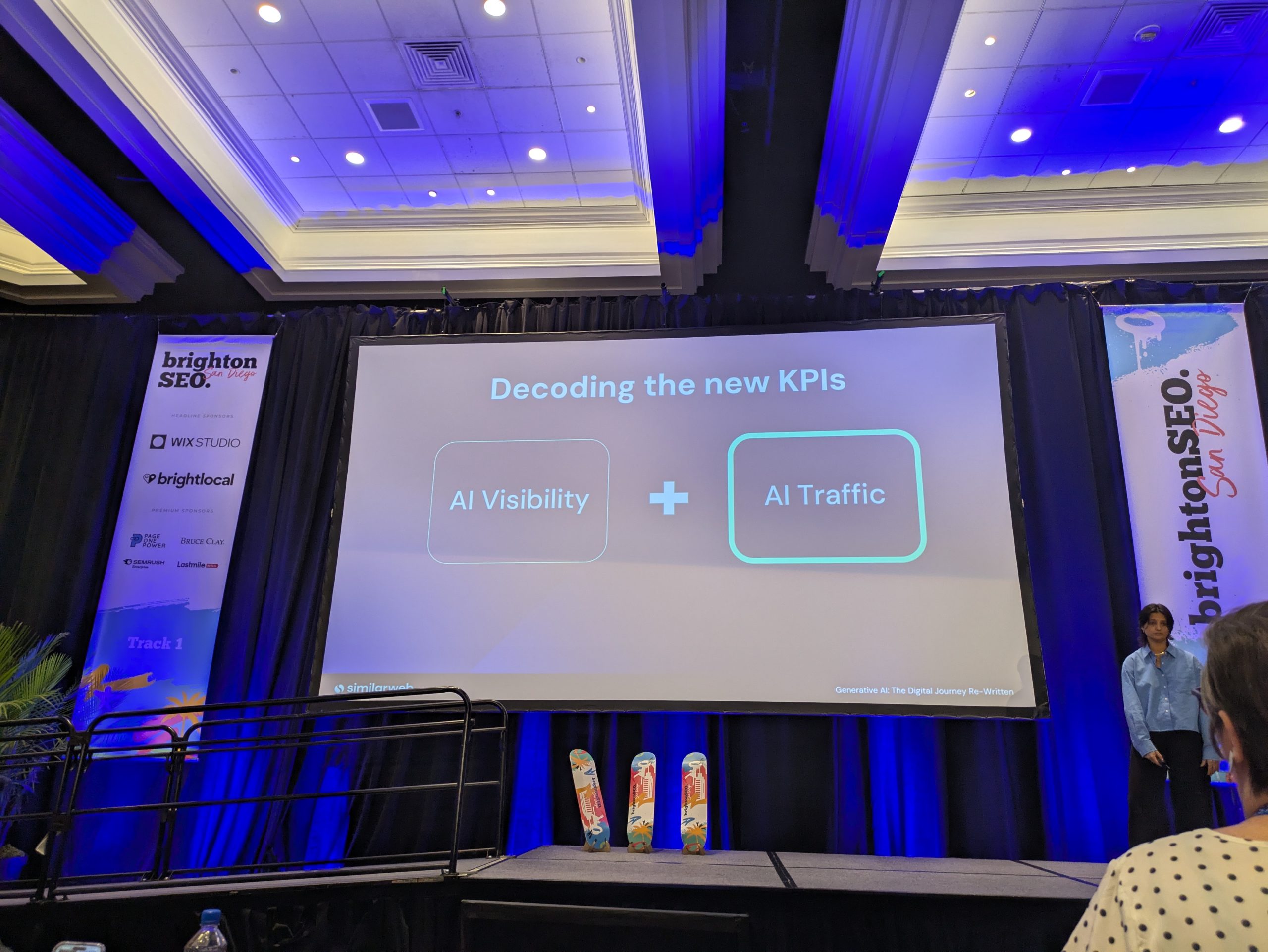
New Framework: Visibility, Sentiment, and Citations
Maria introduced a three-pillar framework for AI search optimisation:
Prompts: Understanding what users actually ask AI systems provides market research insights and content creation direction.
Responses: Monitoring brand mentions and sentiment in AI responses becomes crucial for brand visibility and reputation management.
Citations: Tracking which websites influence AI responses about your industry or brand reveals partnership and content opportunities.
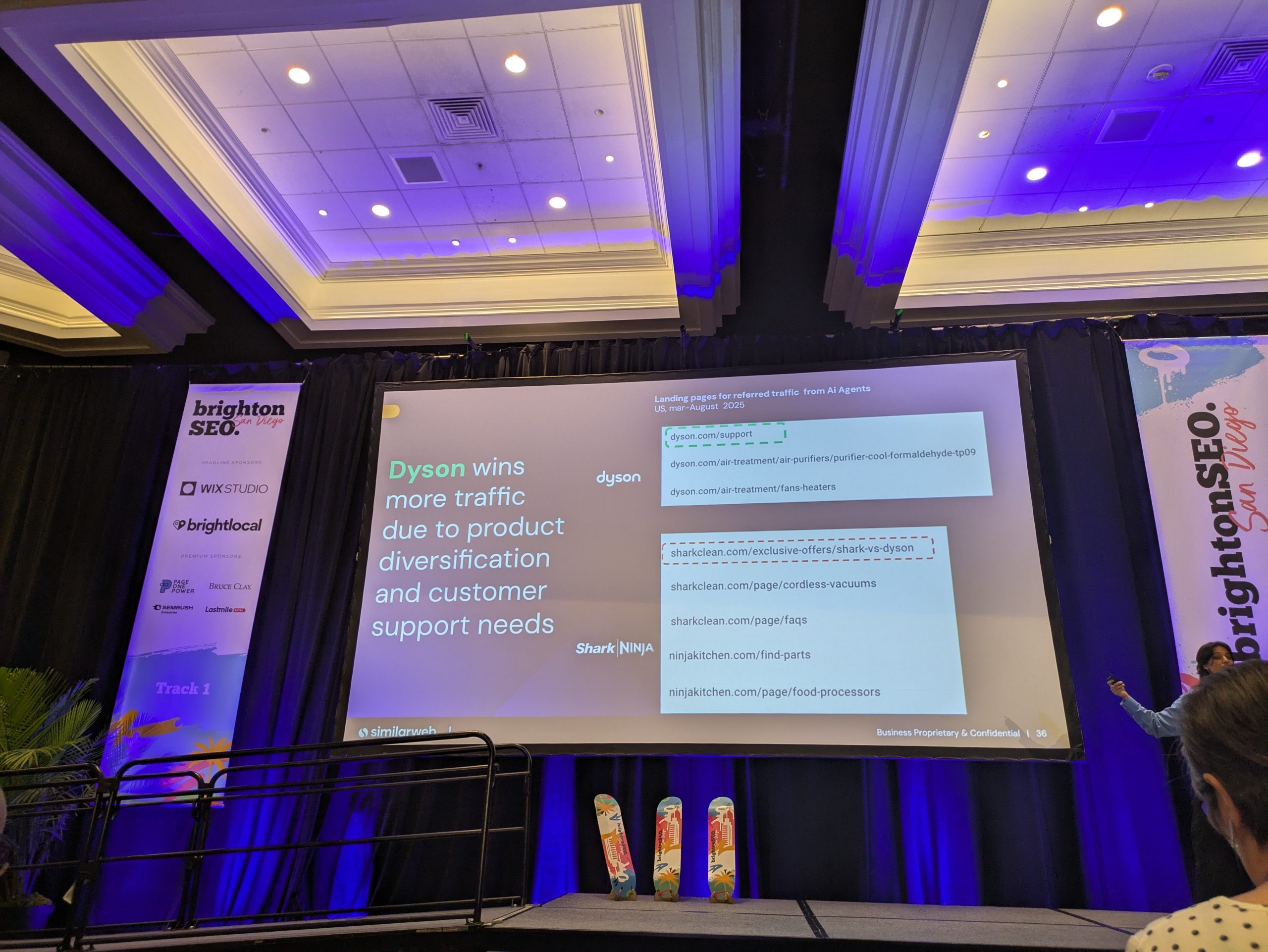
Using vacuum cleaner brands as an example, Maria demonstrated how Dyson might appear to perform well in isolation (45% visibility) until compared with Shark (43% visibility), revealing intense competition. More concerning, sentiment analysis might show Dyson receiving 14.4% negative sentiment compared to Shark’s 10%, often due to perceptions about price and weight.
Strategic Implications
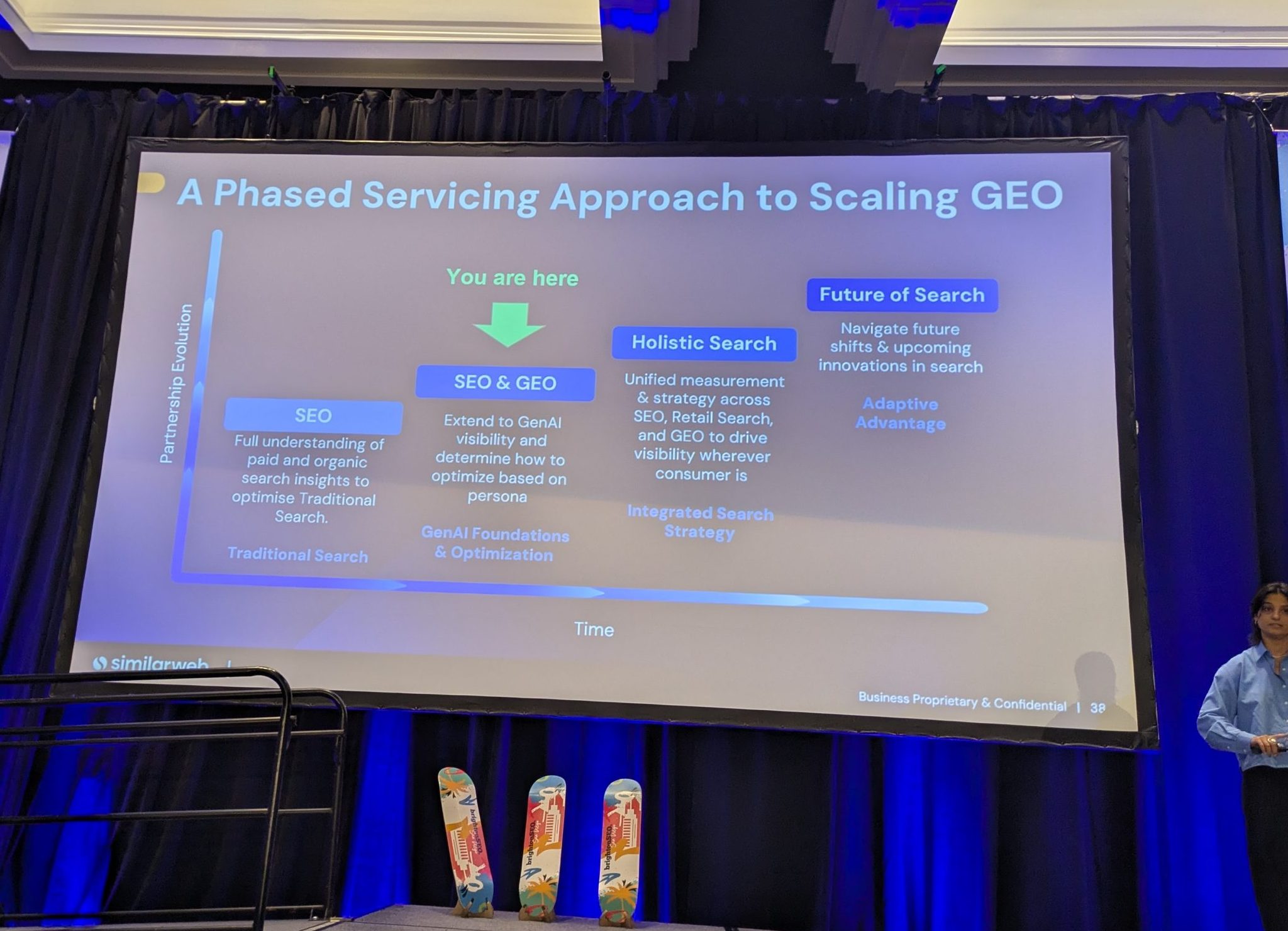
Maria’s analysis suggests treating SEO and GEO (Generative Engine Optimisation) as separate pillars is temporary. Future search strategy requires holistic thinking and integrated approaches.
The competitive dynamics are shifting dramatically. Publishers, previously less concerned with AI search, are now actively optimising for visibility within AI responses. Reddit consistently appears across industries, whilst specific industry publications gain outsized influence on AI citations.
New KPIs for the AI Era
Maria advocated for expanding measurement frameworks to include:
- Brand visibility in AI responses
- Brand mention frequency and context
- Brand sentiment in AI-generated content
- Incoming AI search traffic volume and quality
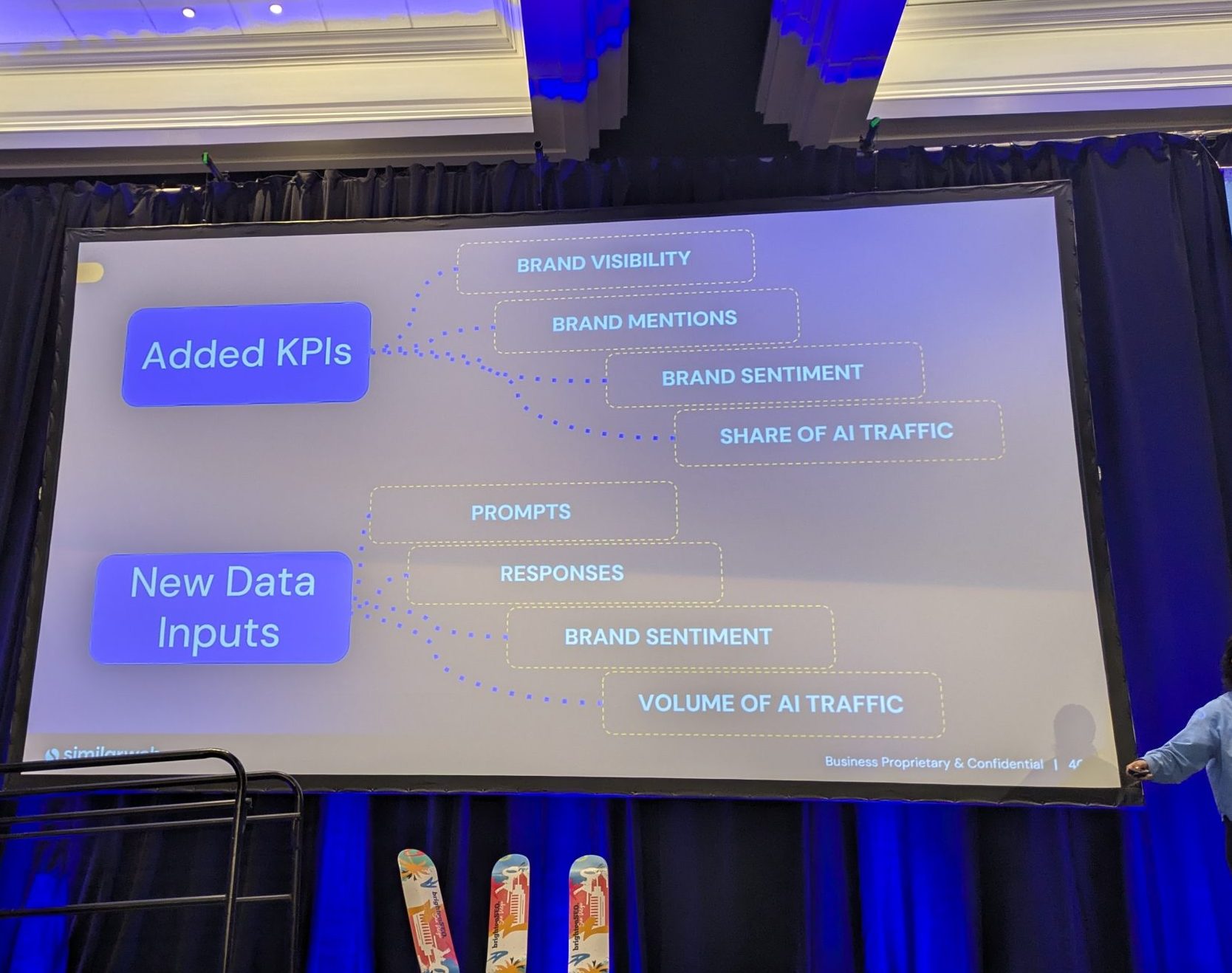
These metrics require contextual data rather than isolated analysis. Understanding your performance relative to competitors and industry trends becomes essential for strategic decision-making.
Personal Takeaways
What made Maria’s presentation particularly valuable was seeing concrete data on how much ChatGPT is actually taking market share from Google search. Rather than speculation about AI’s potential impact, we got real numbers showing the shift happening right now.
The 26% reduction in website clicks among long-term ChatGPT users represents a fundamental behavioural change that many organisations haven’t fully grasped. Combined with ChatGPT’s 70% market share in AI search, these metrics reveal the scale of disruption occurring across all industries.
The conversion quality insight was equally important. Whilst AI search reduces traffic volume, the 1.7x higher conversion rate suggests organisations need to optimise for quality over quantity. This shift requires rethinking traditional traffic-focused metrics in favour of engagement and outcome-based measurement.
Maria’s framework for monitoring prompts, responses, and citations provides a practical starting point for organisations struggling to measure AI search impact, moving beyond theoretical discussions to actionable measurement strategies.
Related Resources
Written by Ayaka Uchida
CEO, A-Digital Works
This report covers Maria Pashi’s session “The evolving world of search” at brightonSEO San Diego, September 24, 2025.
