

TL;DR
- Consumer behaviour has shifted—users search across multiple platforms, not just Google
- Off-site content strategy can drive massive results: Fuku Lights saw 5,000% category growth
- Revolution Beauty achieved 73% share of voice in LLMs through creator collaborations
- Organic media planning integrates SEO, social, and PR for cross-platform visibility
I attended Ray Saddiq’s session at both April’s BrightonSEO in the UK and this San Diego event. Comparing the two presentations was interesting—whilst the core framework around organic media planning remained consistent, the case studies and specific examples were updated with more recent results.
About the Speaker
Ray Saddiq – Global Head of Marketing, Rise At Seven
Ray is a leading voice in marketing, social media and search, known for connecting the dots between how people search and how they scroll. He pioneered approaches that treat platforms like TikTok, Pinterest, and Instagram as search engines rather than just content channels.
The Core Argument: Consumer Behaviour Shift
Ray’s central thesis challenges the narrative that AI alone is killing traffic. Instead, he argues consumer behaviour is fundamentally changing—people now search across multiple platforms (TikTok, Pinterest, YouTube, Google) rather than starting and ending with Google.
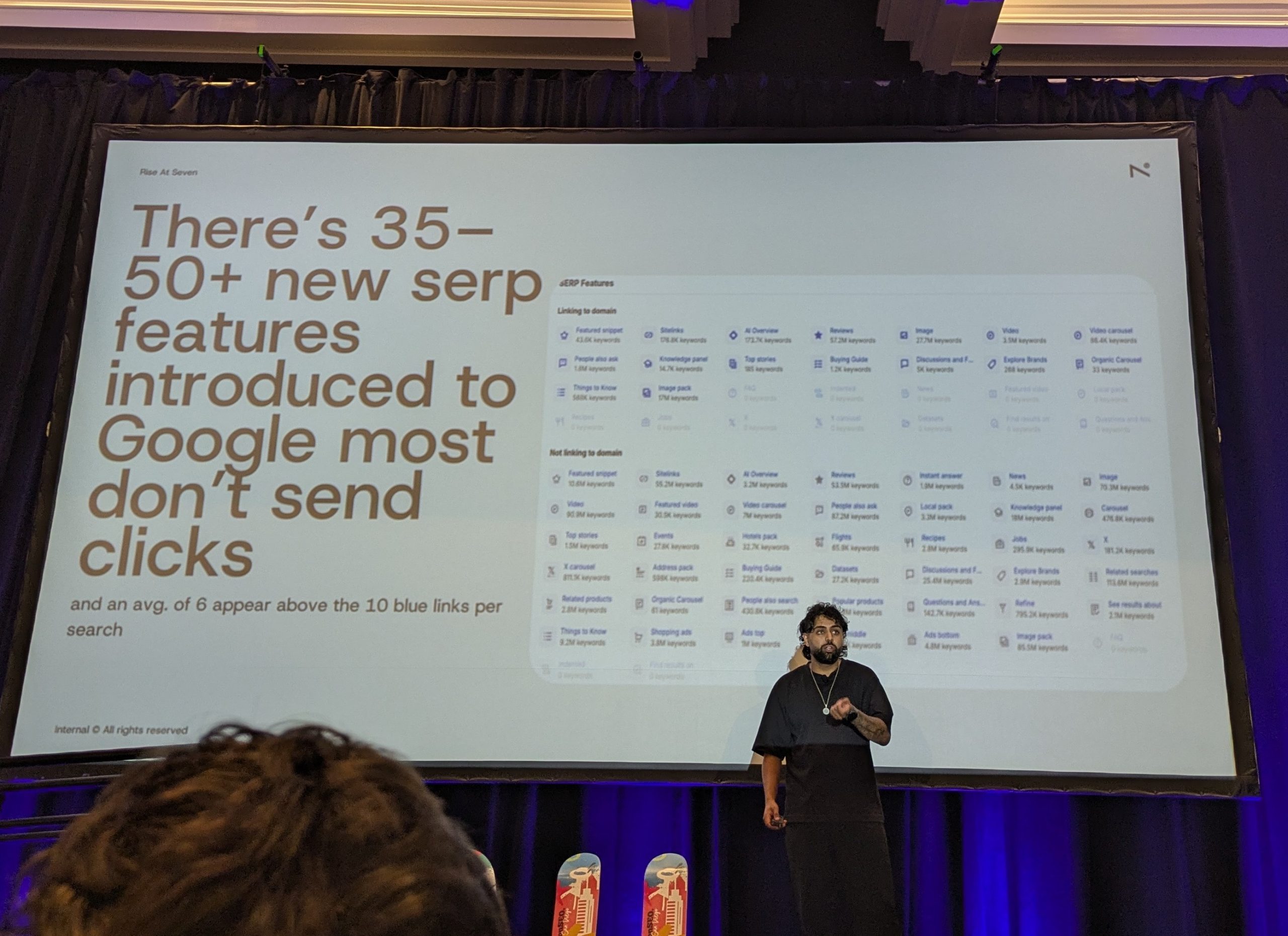
Google itself has responded to this shift by introducing 35-50 new search features that don’t push traffic to websites: short-form video, forums, discussions, and AI overviews. This isn’t just about AI disruption—it’s about matching consumer intent across different discovery platforms.
Case Study: Fuku Lights
Fuku Lights wanted to dominate the rechargeable lights category but faced Amazon’s page one dominance. Unable to modify their own website, Rise At Seven focused entirely on off-site content strategy.
They worked with search-first content creators and targeted media placements where consumers were actually searching. Results over four weeks:
- 5,000% increase in branded category searches
- 37,000 clicks to category pages
- Ranked above Amazon for highly competitive terms
The strategy created both demand and discoverability simultaneously.
Case Study: Revolution Beauty
Revolution Beauty competed against established brands in beauty tools with products similar to more famous alternatives. Again, on-site SEO optimisation wasn’t possible due to product naming constraints.
Rise At Seven identified relevant publications and social platforms, then coordinated content creators to optimise for search whilst building demand. They launched 66 products competing with brands like Charlotte Tilbury.
Results:
- 73% share of voice in LLMs
- Ranked above competitors in organic Google search
- Brand associations built entirely through video placements and social search
Case Study: Park E Resorts
Park E Resorts wanted to own the “Easter breaks” category in UK/Europe. Rise At Seven mapped the complete consumer journey, starting with an unexpected insight: when people plan trips, the first content shared in WhatsApp group chats is GIFs and memes.
Park E had 400-500 videos sitting unused. They repurposed this content into GIFs and memes, optimising for discoverability on platforms like Giphy (one of the world’s largest “search engines”).
They then created localised content with local experts—surfing club owners for beach recommendations—rather than just influencers. This content worked across TikTok videos, blog posts, and itineraries that could be screenshot and shared.
Results:
- £47 million revenue from GIF strategy alone
- 152% revenue growth from organic social search in one year
- 601% increase from Pinterest
- Dominated “things to do” searches, ranking #1 with video content
The Organic Media Planning Framework
Ray outlined a systematic approach:
Step 1: Understand your customer and identify demand vs discovery problems using 14 metrics
Step 2: Use search data to identify trending topics across platforms (TikTok, Pinterest, YouTube, not just Google)
Step 3: Map pain points and passions for customer segments
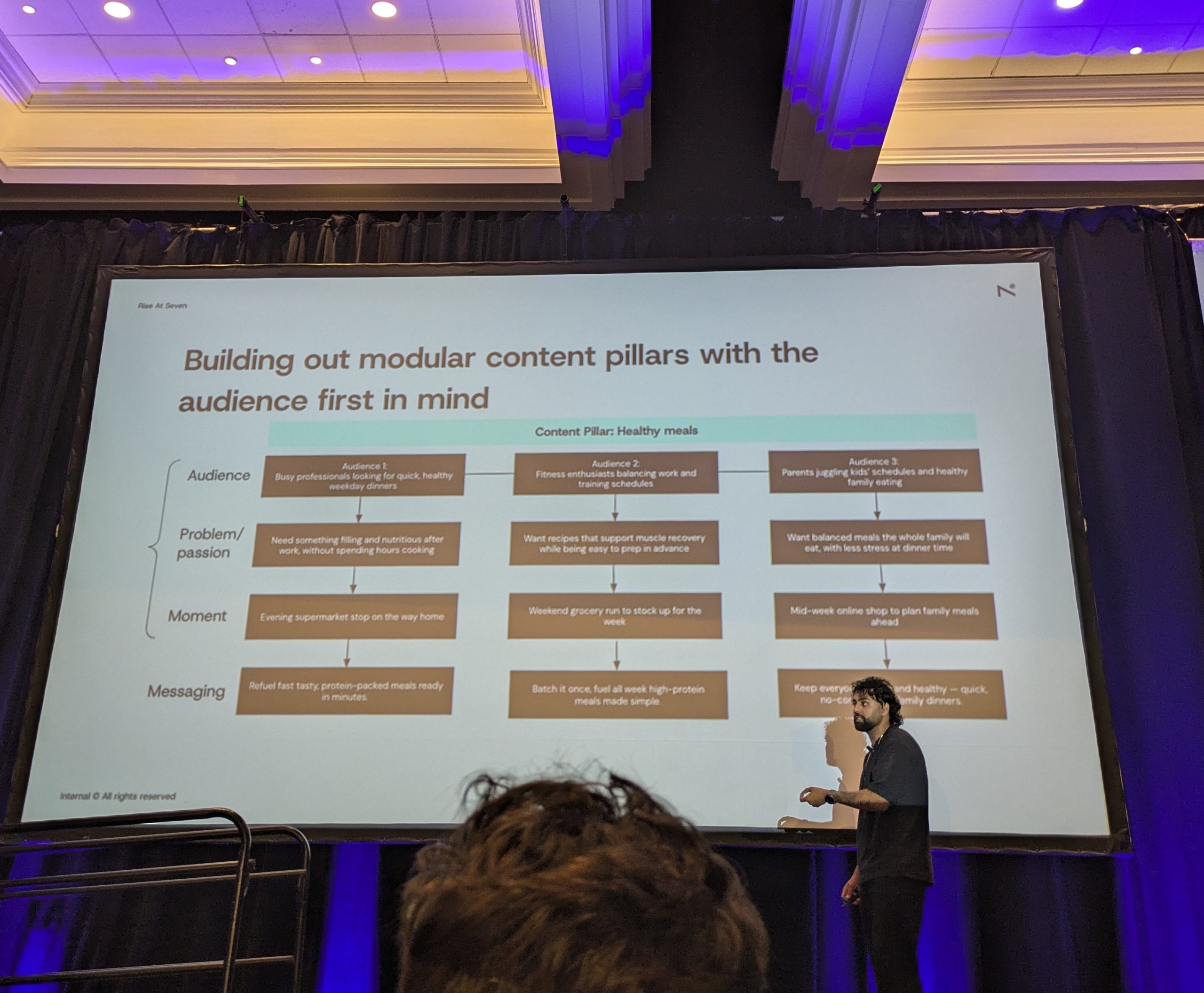
Step 4: Create modular content that fits different platforms whilst maintaining consistent messaging
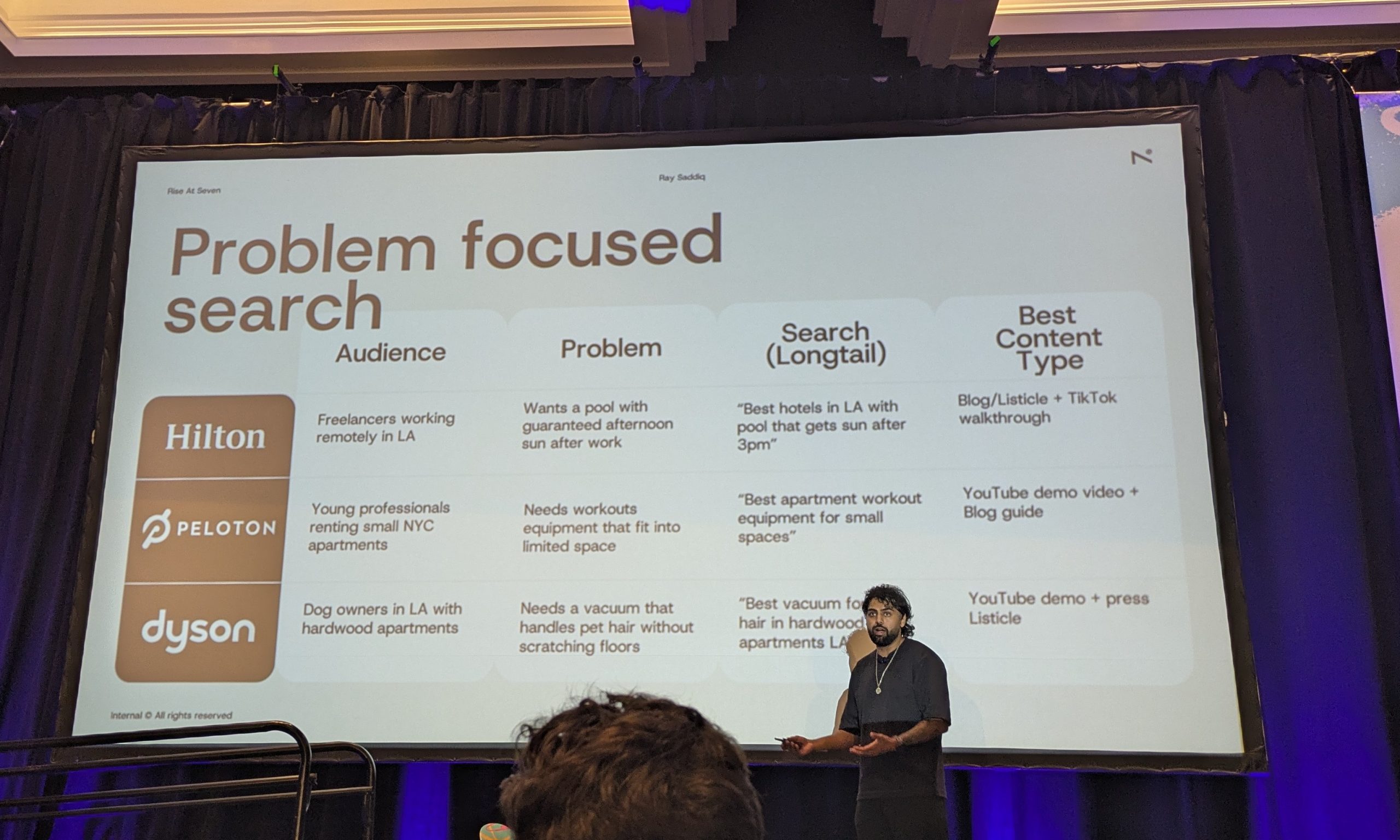
Step 5: Distribute strategically across the complete customer journey
The Messy Middle Applied to Organic
Ray adapted Google’s “messy middle” framework (traditionally used for paid) to organic discovery. Consumer journeys now look like:
- Trigger search on TikTok (e.g., “skiing trips”)
- Research on traditional search (e.g., “energy for skiing”)
- Compare on Google (e.g., “Red Bull vs competitor”)
- Transaction search (e.g., “where to buy”)
Content must exist at each stage, across different platforms, optimised for how users actually search on those specific platforms.
Personal Takeaways
Comparing Ray’s April and September presentations highlighted how his framework has remained stable whilst the supporting evidence and case studies have evolved. The core message—that SEO must integrate with social and PR to capture cross-platform search behaviour—hasn’t changed, but the proof points have become more compelling with additional months of results data.
The case studies demonstrated practical application at scale, moving beyond theory to show how organic media planning delivers measurable business outcomes across different industries and markets.
Related Resources
Written by Ayaka Uchida
CEO, A-Digital Works
This report covers Ray Saddiq’s session “Stop being so hard to find” at brightonSEO San Diego, September 24, 2025.
