

TL;DR
- Traditional vs AI search is a false dichotomy—everything is AI search now
- Query fan-out has exploded: 8-12 retrieval queries happen per source query (vs single queries in April)
- Google and Bing remain the backbone of AI search, powering most LLM responses
- Share of voice metrics need rethinking for multi-platform AI visibility
Ray’s presentation was actually one of my favourites from April’s BrightonSEO in the UK, where he discussed the relationship between AI answer engines and organic SERPs. Since it was such a standout session, I was particularly excited to see what developments and updates he’d share after five months.
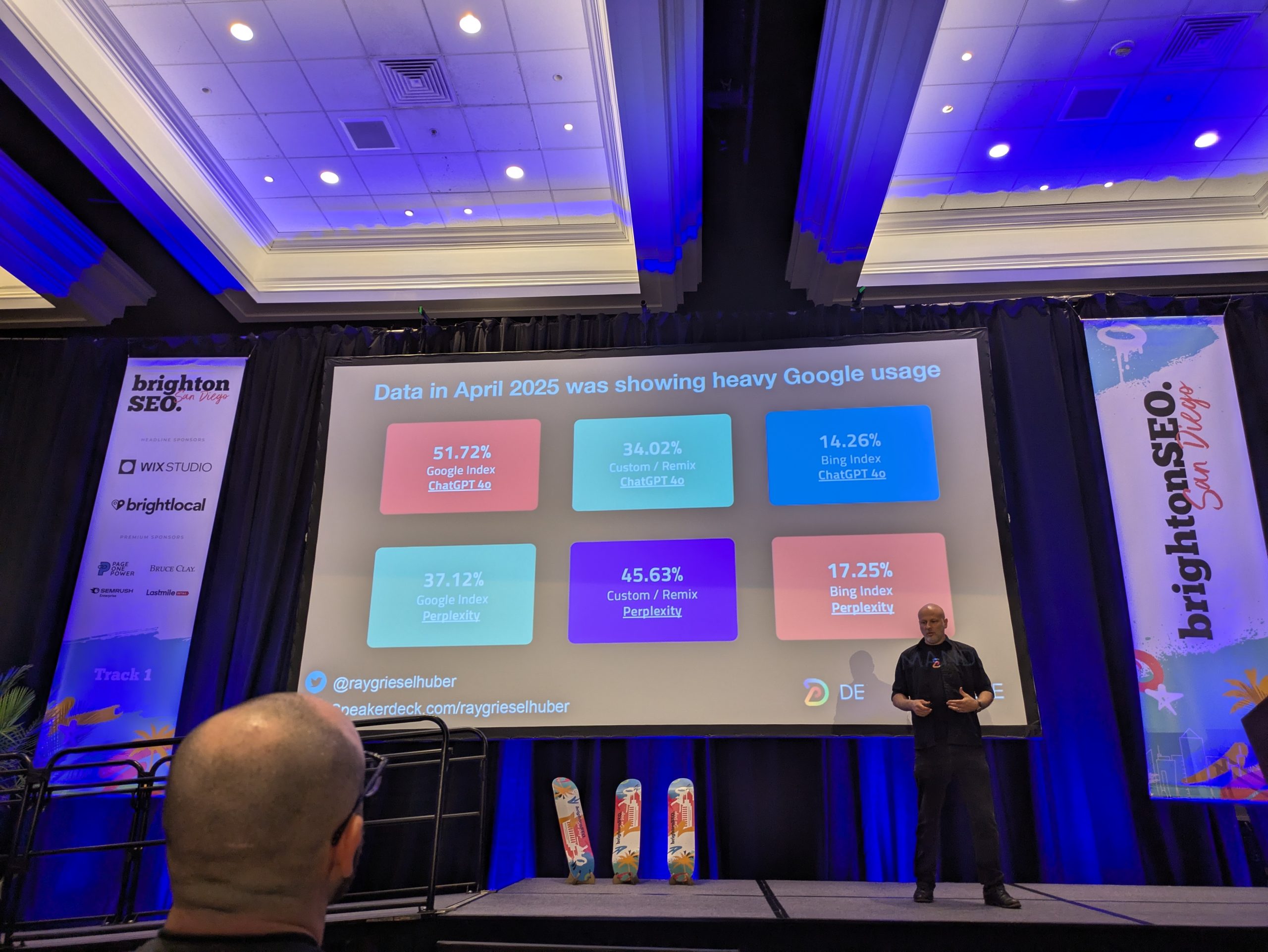
His April session focused heavily on explaining RAG (Retrieval-Augmented Generation) mechanics and provided concrete data points: approximately 80% of AI responses relied on Google and Bing indexes, with Perplexity drawing about 55% from Google sources. The technical foundation was thoroughly established.
This September session took that technical understanding as a given and pivoted toward practical implementation. Rather than “what is RAG,” Ray addressed “how do we measure and optimise in a RAG-dominated world.”
About the Speaker
Ray Grieselhuber – CEO, DemandSphere
Ray leads DemandSphere, which helps marketers understand relationships between AI answer engines and organic search results, with particular expertise in Retrieval-Augmented Generation (RAG) and multi-platform search visibility.
The Central Thesis: False Dichotomy
Ray’s core argument challenged the prevalent narrative in our industry. The common distinction between “traditional Google search” and “AI search” (everything else) creates what he called a false dichotomy.
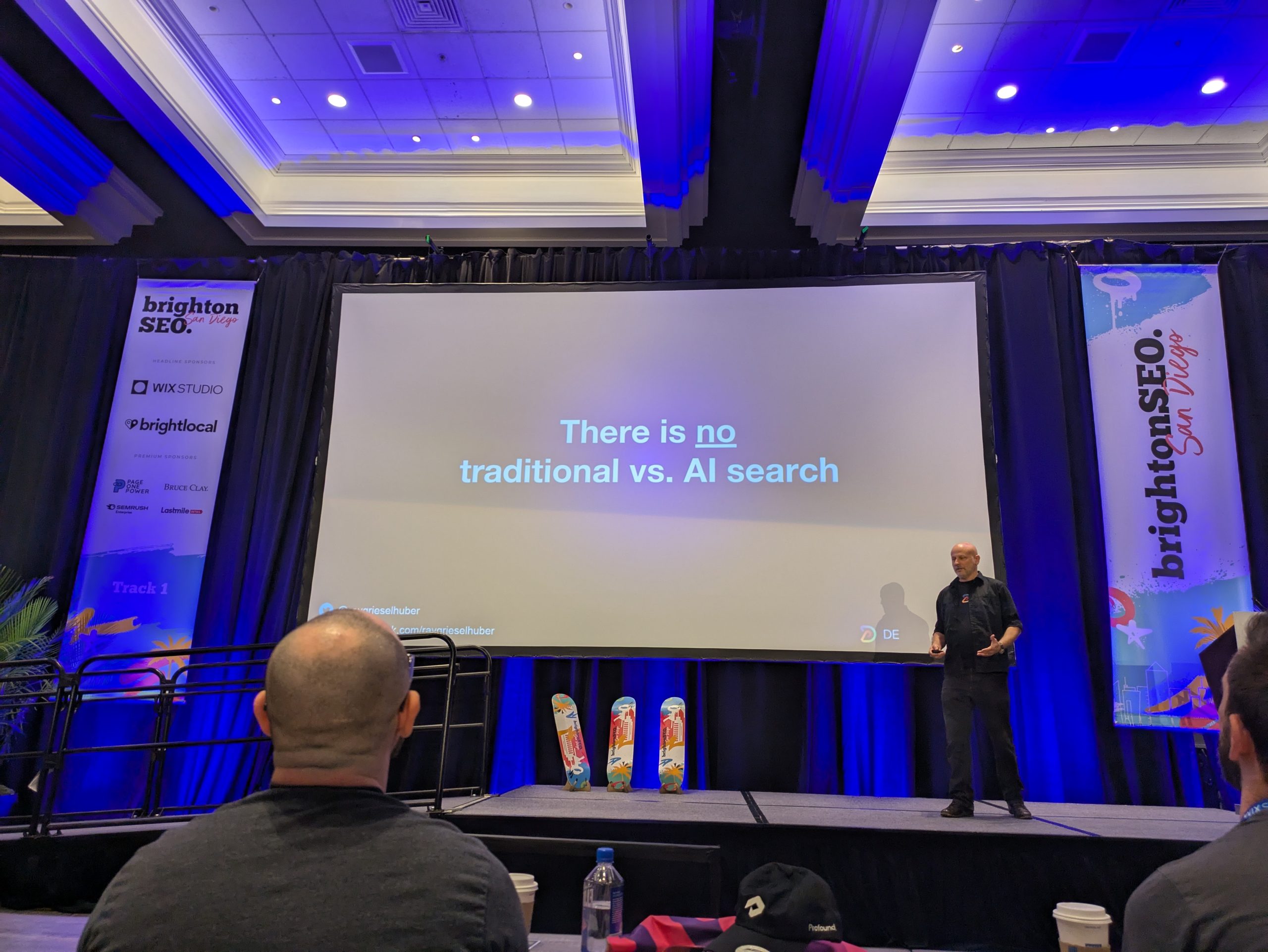
His perspective: Google has pioneered most innovations we associate with AI search today. Rather than traditional vs AI search, the real distinction lies in user experience and interface differences.
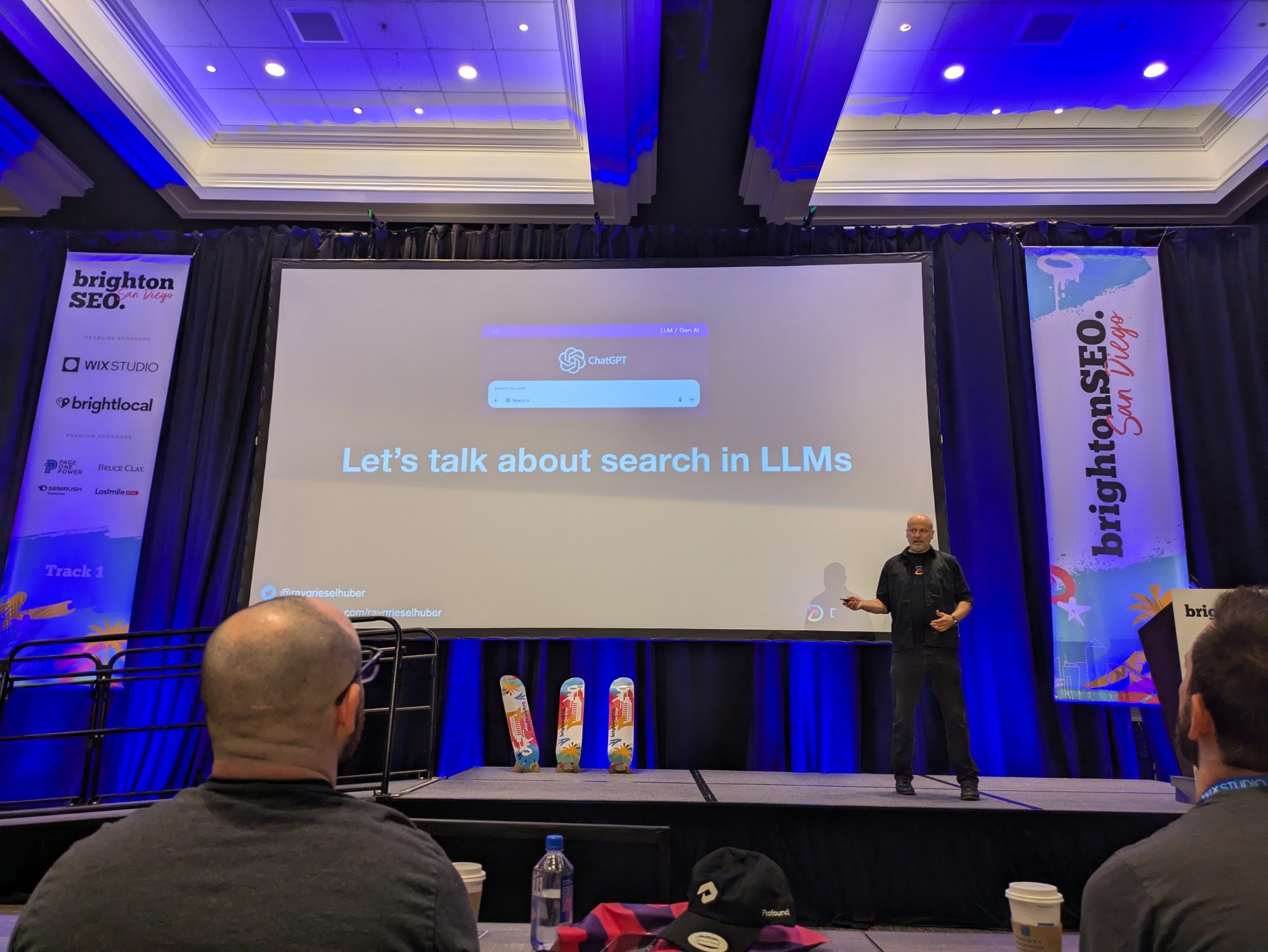
Major Technical Evolution: Query Fan-Out Explosion
The most significant change since April has been the dramatic increase in query complexity. Where AI systems previously made single queries to search engines, Ray’s data shows 8-12 retrieval layer queries happening per source query.
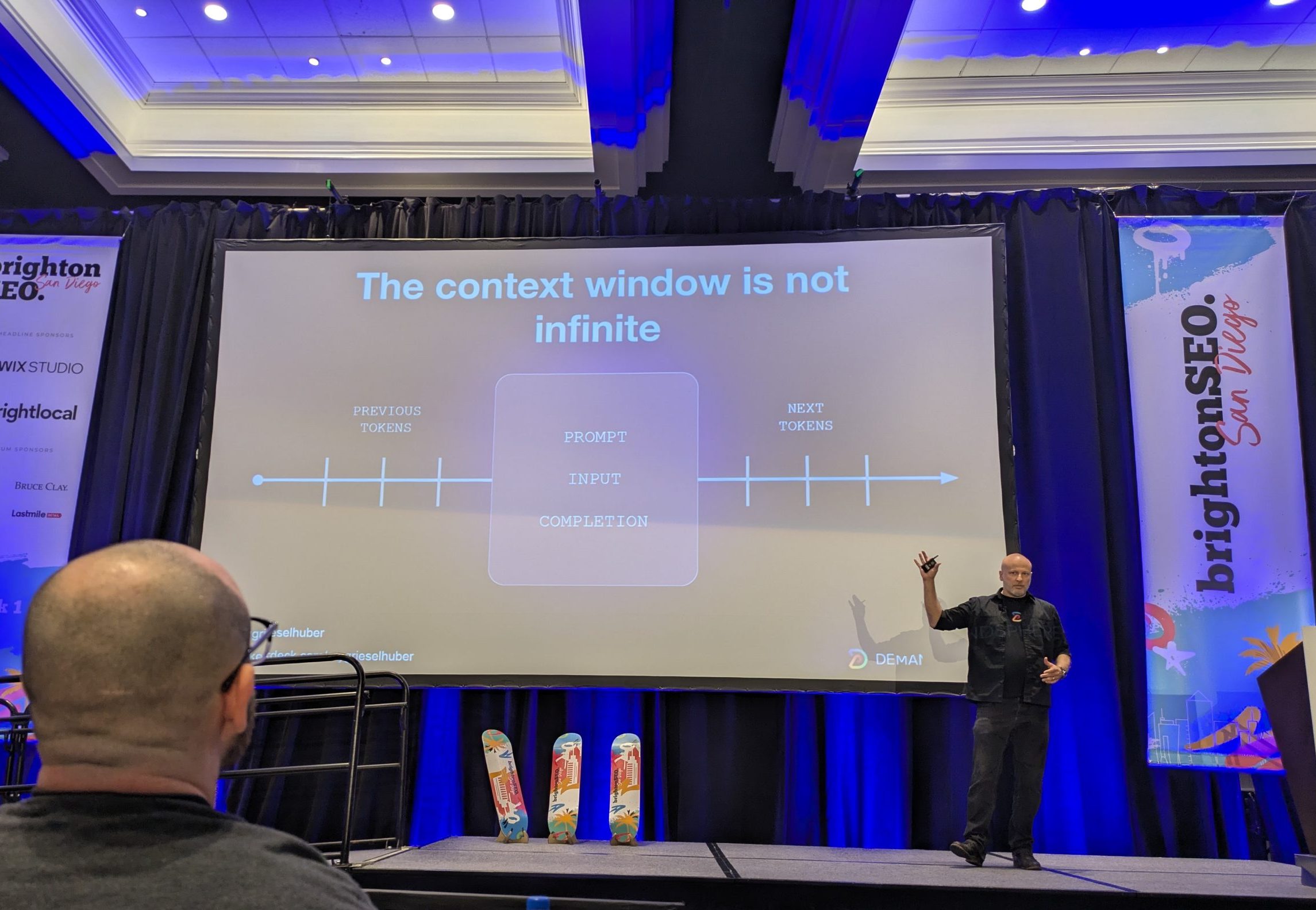
This “query fan-out” creates a multiplication effect that fundamentally changes the economics of search. Each user prompt now triggers multiple backend searches, creating massive load increases for search engines.
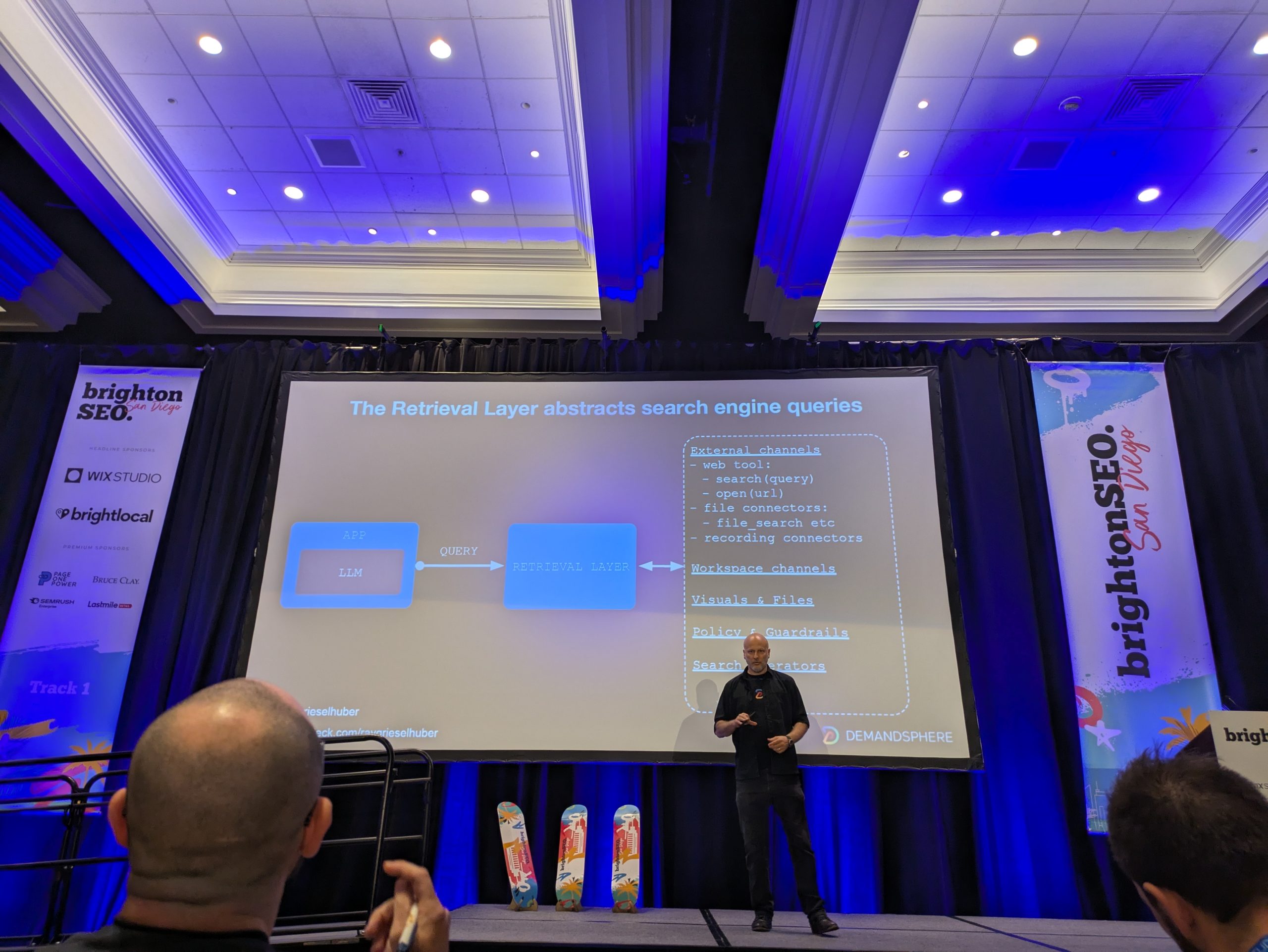
Ray suggested this explains why Google removed the ability to get 100 results by default—the computational costs became unsustainable with AI query multiplication.
The Unified View Framework
Ray’s main focus shifted to building what he calls a “unified view” across disparate data sources. His framework centres on three principles:
Human Attention as the Core Metric: “We’re all chasing human attention. We call it traffic, we call it impressions—it’s human attention.” This perspective helps unify measurement across platforms.
Understanding Model vs Retrieval Responses: Teams need to distinguish between direct model responses (from training data), live retrieval responses (from real-time search), and hybrid responses (combining both).
Connected Data Stack Architecture: Building data stacks that connect Search Console data, GA4 analytics, log data (when available), AI citation tracking, and share of voice metrics across platforms.
Personal Takeaways
Ray’s evolution from technical explanation to strategic implementation was the most striking aspect of this session. Where April focused on helping people understand RAG mechanics, September assumed that foundation and moved directly to practical business application.
His emphasis on “human attention” as a unifying metric provides much-needed clarity in our fragmented measurement landscape. Having a north star that works across Google, ChatGPT, Perplexity, and emerging platforms cuts through the complexity of managing multiple AI visibility strategies.
The query fan-out revelation wasn’t covered in April but represents a fundamental shift that explains many industry-wide challenges we’re seeing with indexing costs and search infrastructure. Ray’s perspective on the false dichotomy between traditional and AI search also reframed how I think about optimisation—less about separate strategies, more about user experience patterns across AI-enhanced interfaces.
Related Resources
- April 2025 Report: AI Answer Engines and Organic SERPs
- Ray’s Presentation Slides
- Speaker: Ray Grieselhuber
Written by Ayaka Uchida
CEO, A-Digital Works
This report covers Ray Grieselhuber’s session “It’s ALL AI search now: building a unified view for growth” at brightonSEO San Diego, September 24, 2025.

