

TL;DR
- Start with verifiable first-party data before investing in AI visibility tools
- Customer research reveals mixed adoption: 41% stick with traditional search, 51% try ChatGPT
- Build comprehensive playbooks to educate different teams on their role in GenAI strategy
- Create executive-level frameworks that translate technical insights into business outcomes
About the Speaker
Melissa Jensen – Director, SEO, Cisco
Melissa leads organic search strategies and GenAI Experience Optimisation (GEO) integration at Cisco. With over 20 years in search marketing, she drives innovation through scalable frameworks and cross-functional collaboration across Cisco’s 90,000-person organisation.
The Enterprise Challenge: Scale and Stakeholder Management
Melissa’s presentation tackled a challenge unique to large organisations: how do you build AI search strategy when you have 90,000 people, each with opinions about what to do and how to do it?
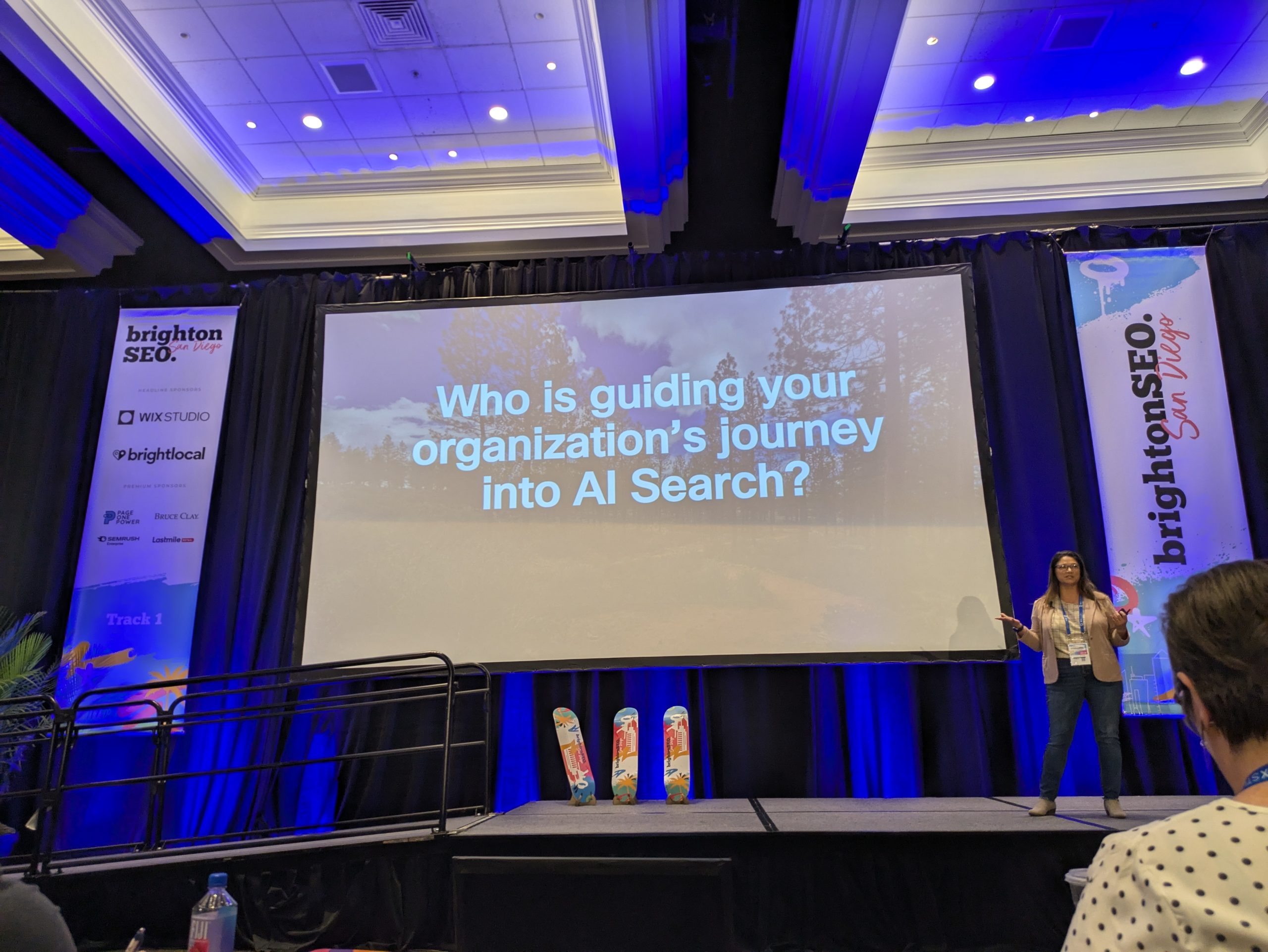
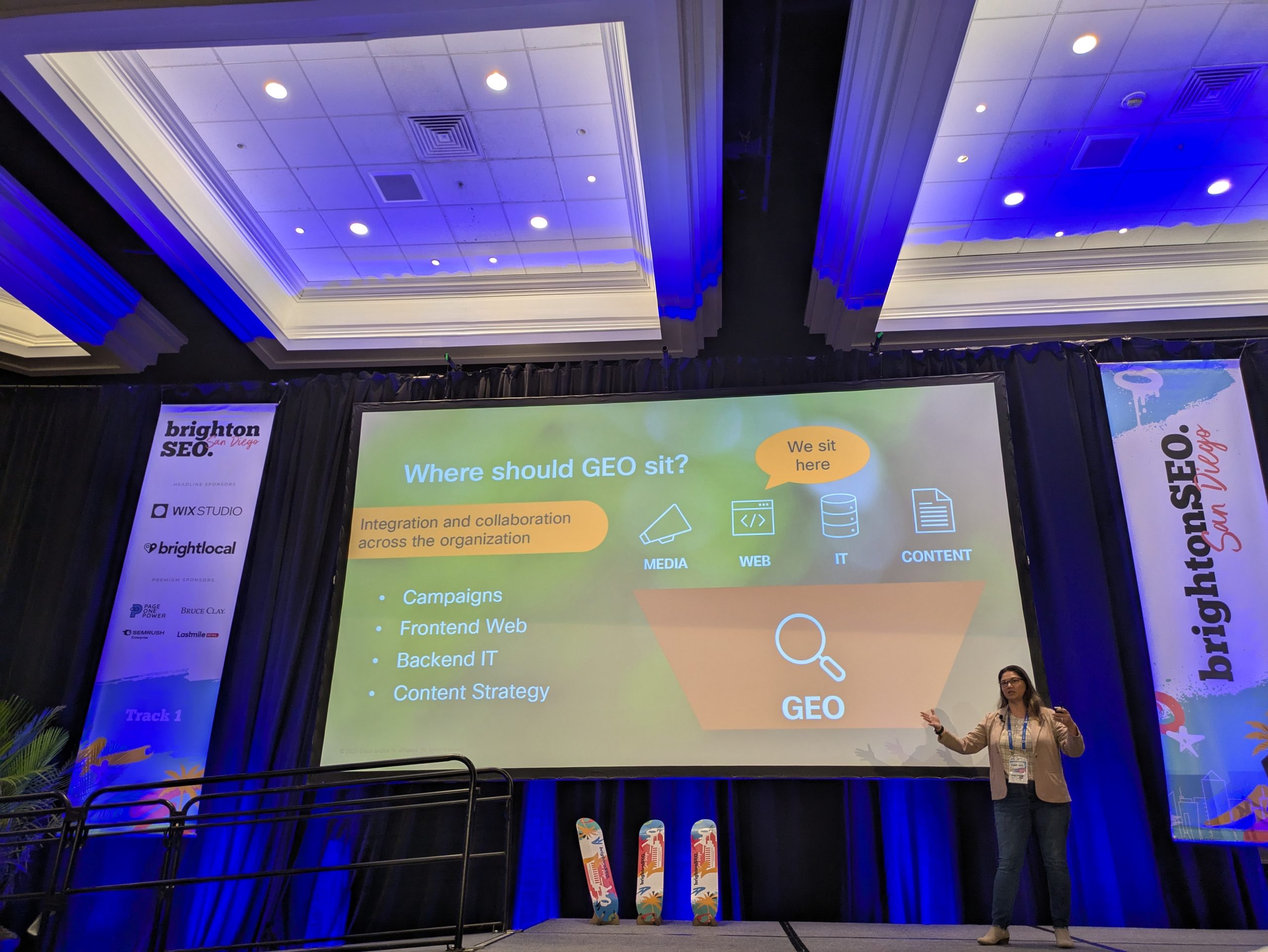
Her approach centred on creating structured frameworks that could educate different teams about their specific roles whilst maintaining organisational alignment. This wasn’t just about SEO tactics—it was about change management at enterprise scale.
Data-First Approach: Building Credibility
Rather than rushing into AI optimisation, Melissa started with measurement. When ChatGPT launched, she implemented three parallel tracking systems:
LLM Bot Traffic: First-party data showing when content appears in AI responses, regardless of clicks. This serves as a proxy for impressions and relevance.
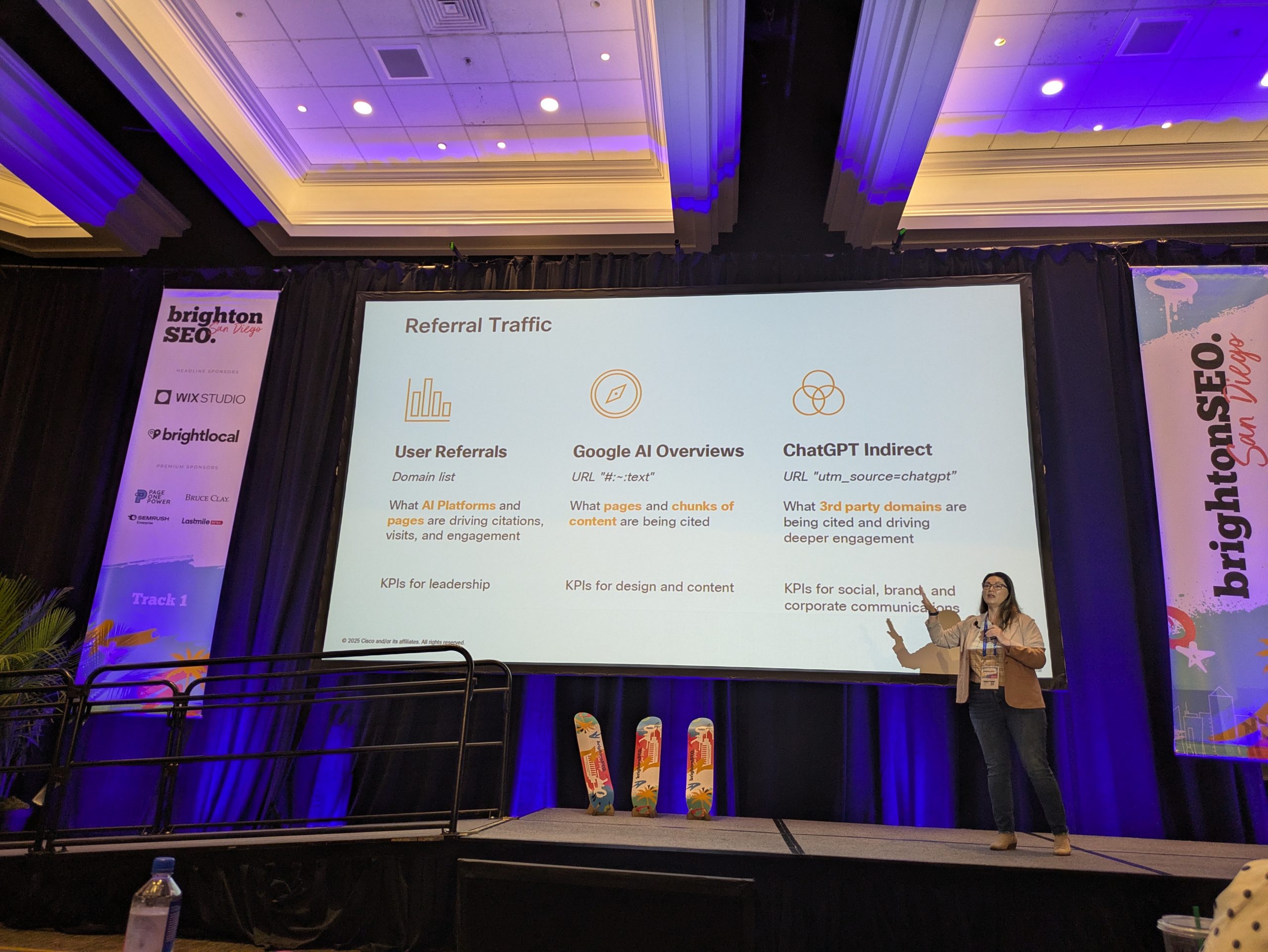
Referral Traffic: Traditional analytics segmented by AI platform sources to understand which platforms drive traffic and conversions.
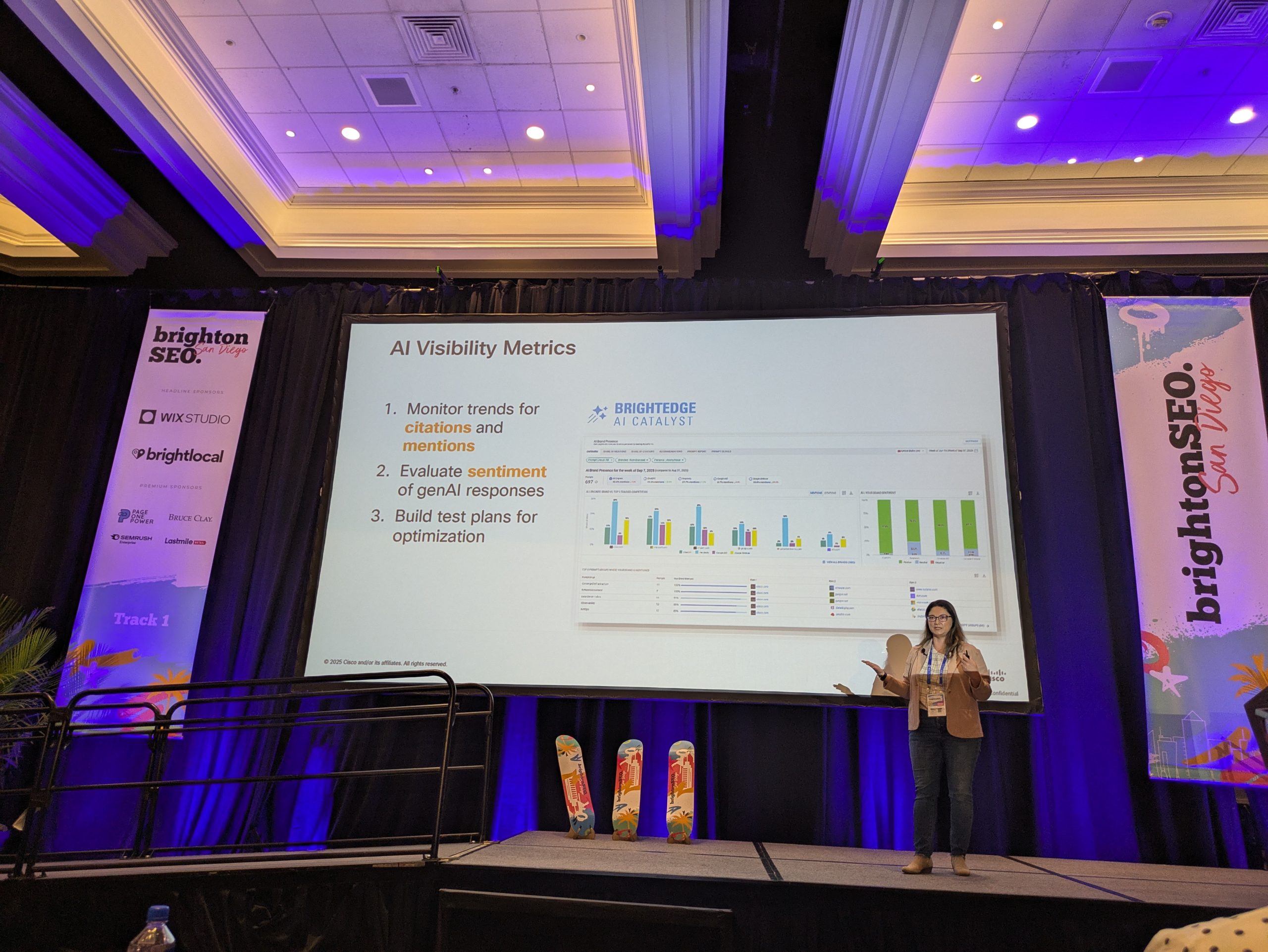
AI Visibility: Third-party tool data, but only after building consensus around prompt selection using first-party insights.
The progression was telling: hundreds of visits initially, growing to thousands, then tens of thousands as AI platforms improved their citation mechanisms. More importantly, once they started seeing actual bookings from AI sources, executive attention shifted dramatically.
Customer Research: Avoiding Assumptions
Before investing heavily in AI optimisation, Melissa surveyed Cisco’s actual customers about their AI usage patterns. The results challenged common assumptions:
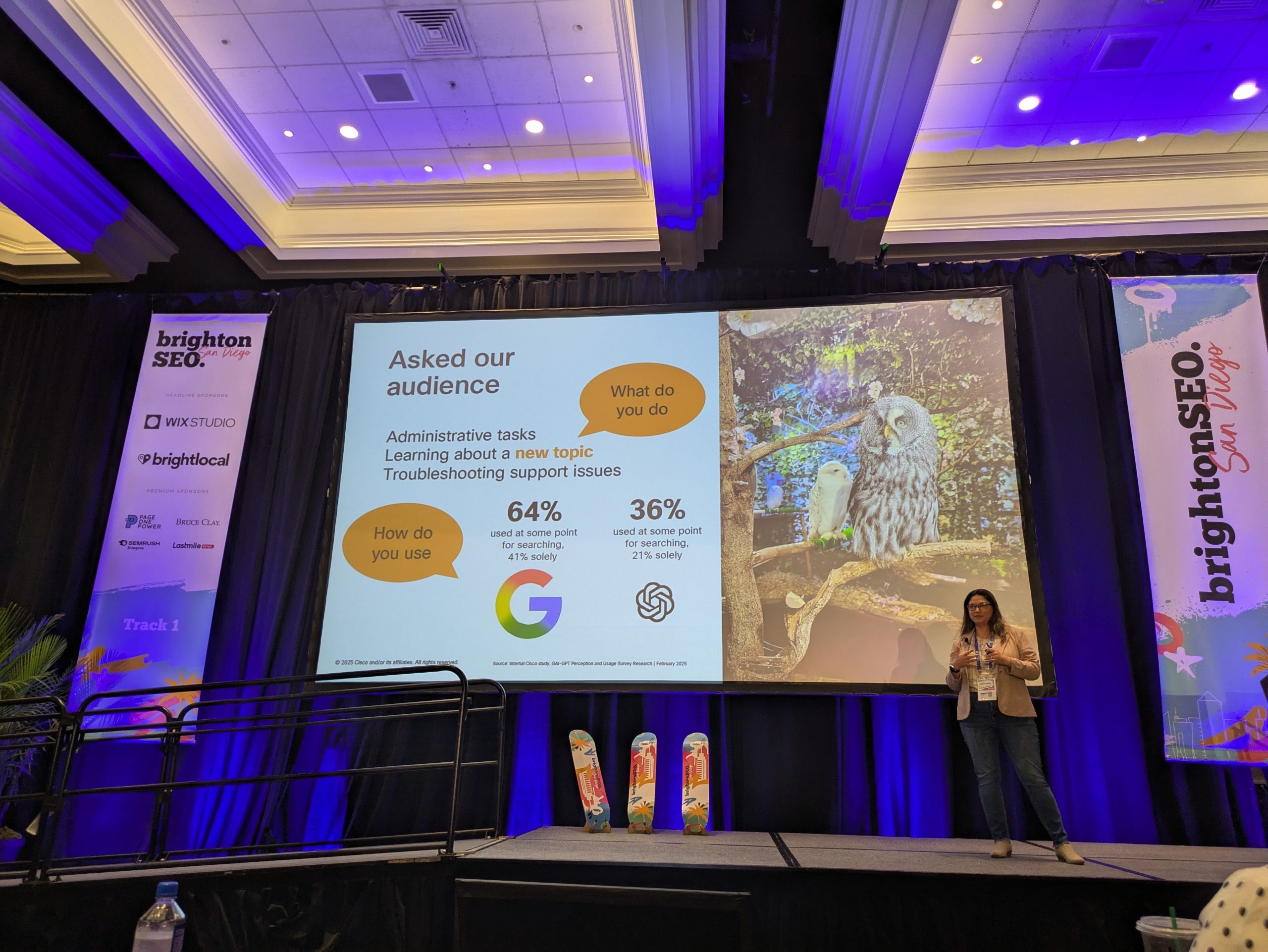
- 64% used Google at some point for searching, 41% solely
- 36% used ChatGPT at some point for searching, 21% solely
- Primary use cases: administrative tasks, learning new topics, troubleshooting support issues
This customer-centric approach provided defendable data when presenting to executives, avoiding speculation about user behaviour.
The 125-Slide Playbook Strategy
Melissa created comprehensive playbooks for different organisational functions—IT, design, content, analytics—totalling 125 slides. Each section explained how search changes impact that specific domain and what actions they needed to take.
The playbook serves multiple purposes:
- Educates teams on their specific responsibilities
- Provides authority for cross-functional conversations
- Gives executives confidence in the strategic approach
- Creates alignment across a massive organisation
Executive Translation Framework
Understanding that executives won’t review detailed playbooks, Melissa distilled everything into three phases:
Crawl: Ensure technical foundation is AI-ready Walk: Optimise content and page templates for AI consumption Run: Prepare for potential direct AI platform integrations
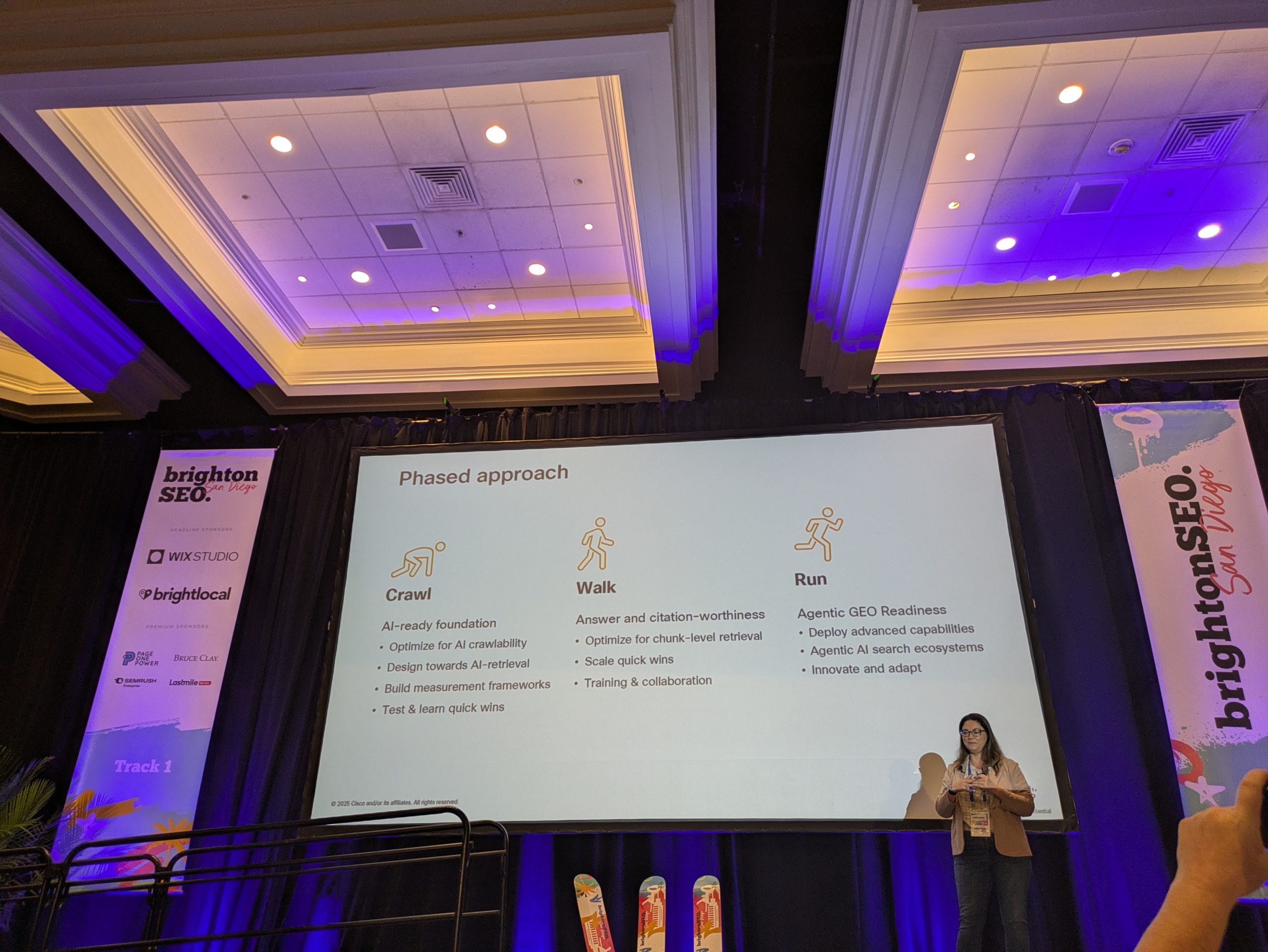
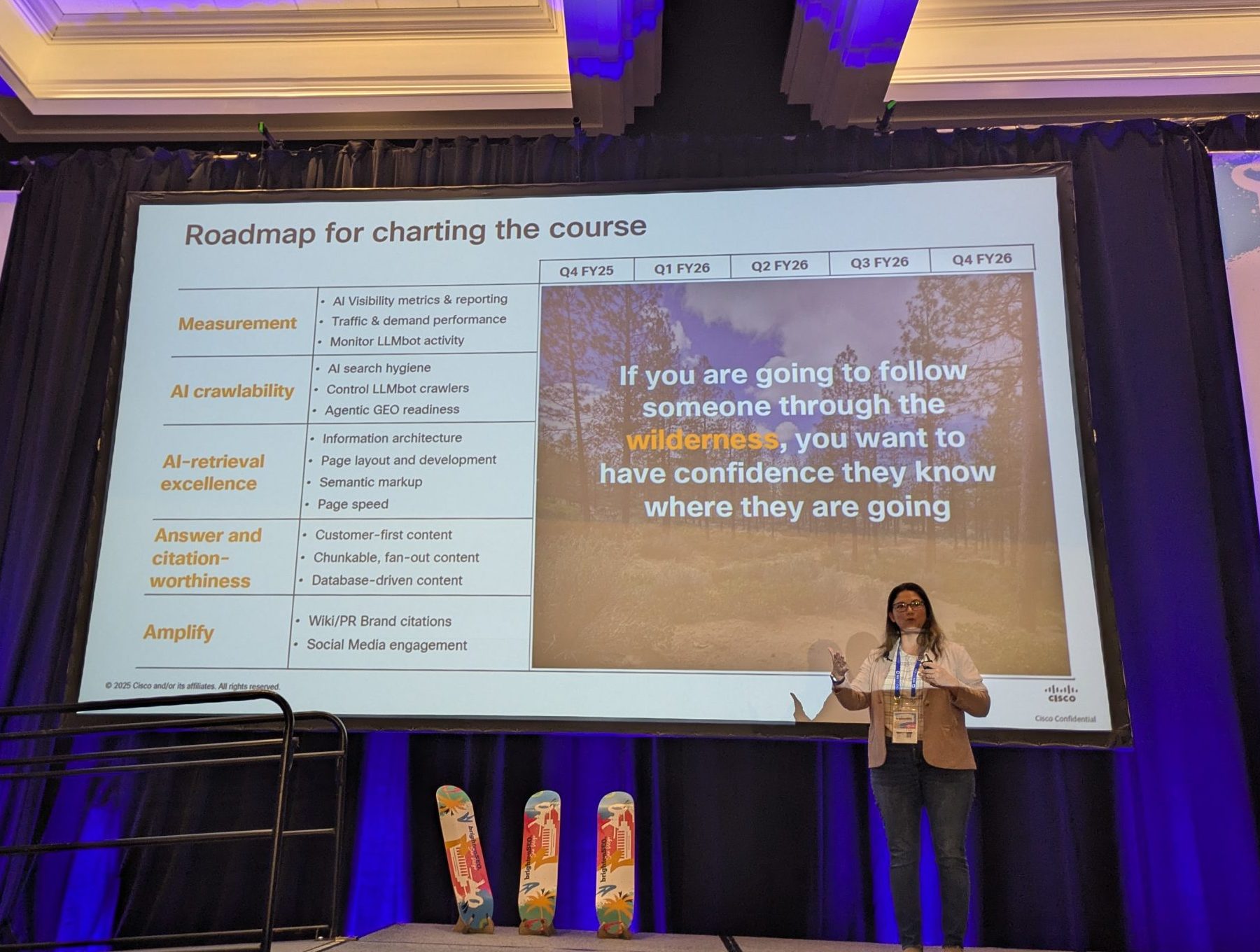
This framework provides a North Star for the organisation: building for an “AI-native, LLM-consumable world” regardless of how the landscape evolves.
Strategic Positioning: Beyond Website Traffic
Melissa challenged teams to think beyond traditional metrics by asking: “What if there was no website?” This thought experiment helps organisations prepare for scenarios where users never visit websites but still engage with brands through AI platforms.
Her grocery shopping analogy illustrated multiple interaction models:
- Traditional (in-store shopping)
- Assisted (online pickup)
- Delegated (delivery)
- Fully agentic (complete automation)
Timing and Organisational Windows
A crucial insight concerned timing. Melissa believes the window for securing executive attention and resources is closing. Once Google introduces sponsored AI listings or ChatGPT adds advertising, executive focus will shift to paid strategies.
This creates urgency around establishing organic AI visibility before paid options dominate the conversation.
Personal Takeaways
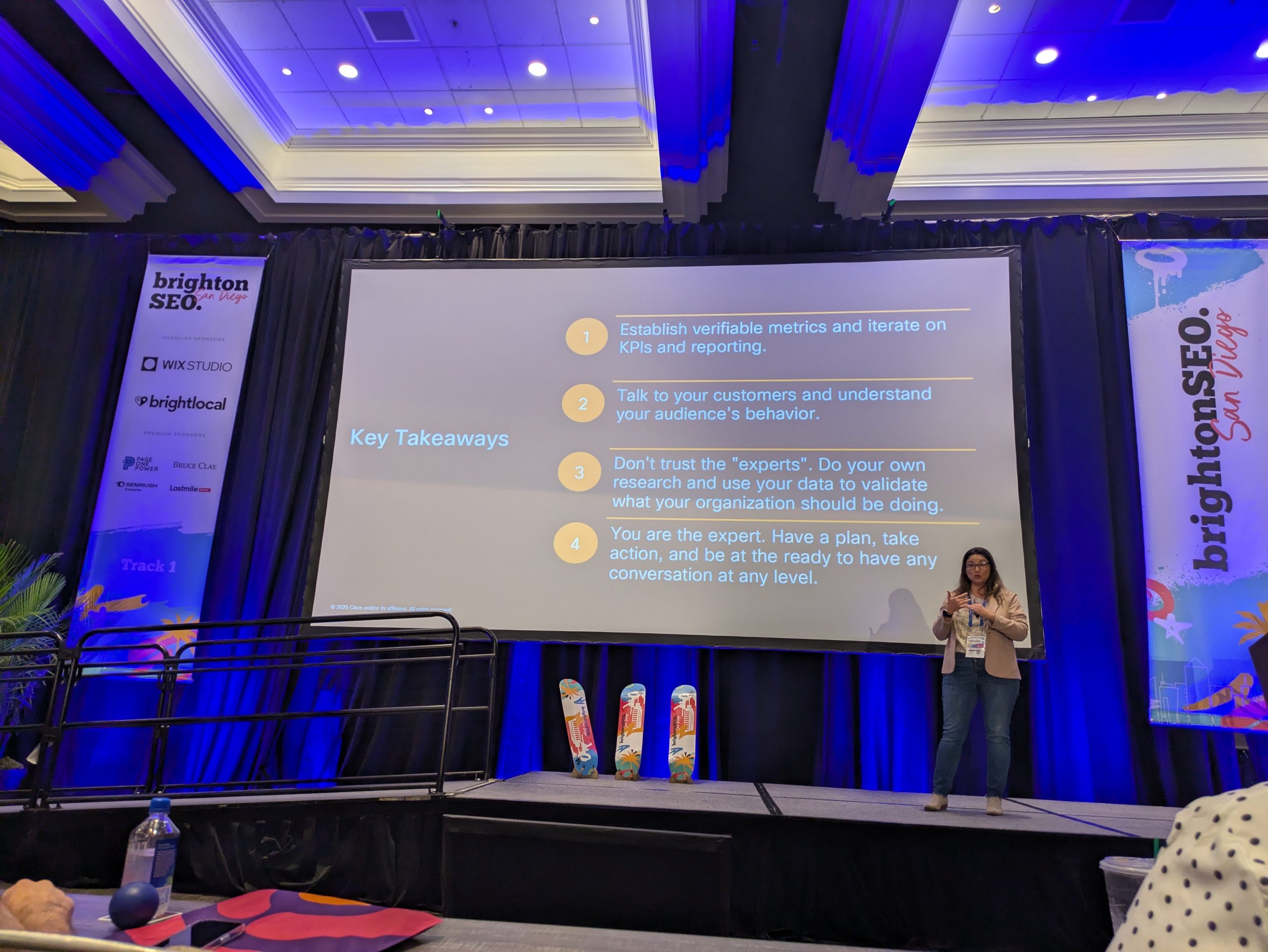
What struck me most was how Melissa emphasised the importance of deeply understanding the “why” behind decisions. Rather than accepting industry best practices at face value, she insisted on researching Cisco’s specific customers and building Cisco-specific insights. This approach felt uniquely suited to large enterprise contexts.
Her perspective was distinctly that of a large organisation—navigating 90,000 people, each with opinions, requires different strategies than smaller companies. For anyone providing services to large enterprises, her structured playbook approach and emphasis on building consensus through data offers valuable lessons in stakeholder management at scale.
The underlying message seemed to be about creating your own answers in an uncertain landscape. There’s no definitive playbook for AI search yet, but rather than waiting for one, Melissa advocated for organisations to define their own “right answer” based on their specific data, customers, and context. In a space without established best practices, having the confidence to commit to a direction—even knowing it might evolve—matters more than finding a universally correct approach.
Written by Ayaka Uchida
CEO, A-Digital Works
This report covers Melissa Jensen’s session “Preparing executives for GenAI search” at brightonSEO San Diego, September 24, 2025.
